Looking for the best dog shampoo for dandruff? Let me tell you about Bruno, a shaggy, miserable Labrador who came into my salon years ago. His owner was at her wits’ end. Bruno’s dandruff was so severe that it looked like a snowfall on his shoulders, and his skin was raw from scratching. We’d tried three different “medicated” shampoos with zero progress. The breakthrough didn’t come from a bottle; it came from a conversation about his new “healthy” salmon-based treats. Bruno was allergic.
This was my hard lesson, forged over 15 years as a professional groomer and canine skin consultant: searching for the “best dog shampoo for dandruff” puts the cart before the horse. The shampoo is your final tool, not your first step.
The truth most generic guides miss is that dandruff is a symptom, not a disease. Your first job isn’t to buy; it’s to diagnose. Let’s ditch the listicles and build a real, actionable plan.
Quick Recommendations: Top Picks for the Best Dandruff Shampoo for Dogs
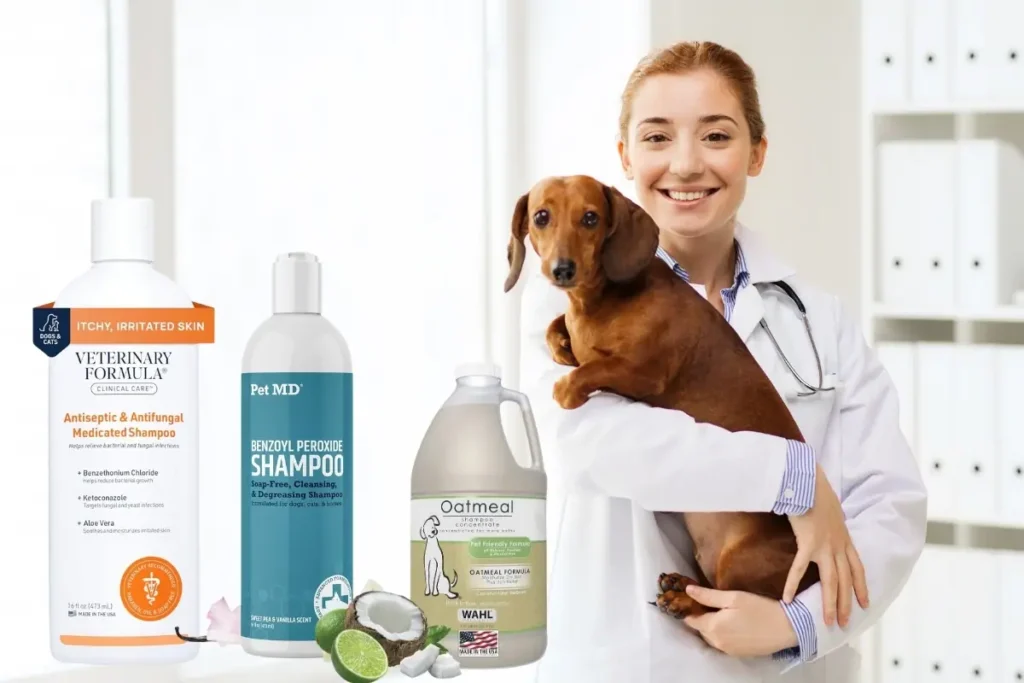
If you’re here for a fast recommendation, here are my top three choices for the best dog shampoo for dandruff, based on hundreds of cases in my salon:
- For Severe, Greasy, or Smelly Dandruff: Veterinary Formula Clinical Care (Salicylic Acid + Sulfur). It’s the most effective over-the-counter medicated shampoo for stubborn scaling and infection.
- For Simple, Dry, Flaky Skin: Earthbath Oatmeal & Aloe. The gold standard for gentle, moisturizing relief. It rinses clean and soothes without irritation.
- For Oily Skin with “Doggy” Odor or Acne: PetMD Benzoyl Peroxide Shampoo. It deeply flushes follicles where grease and bacteria hide—crucial for seborrhea oleosa.
But if you want to know why these work and how to use them correctly, read on. The right technique is 50% of the cure.
Diagnosis – Become a Skin Detective with the S.O.S. Flake Test
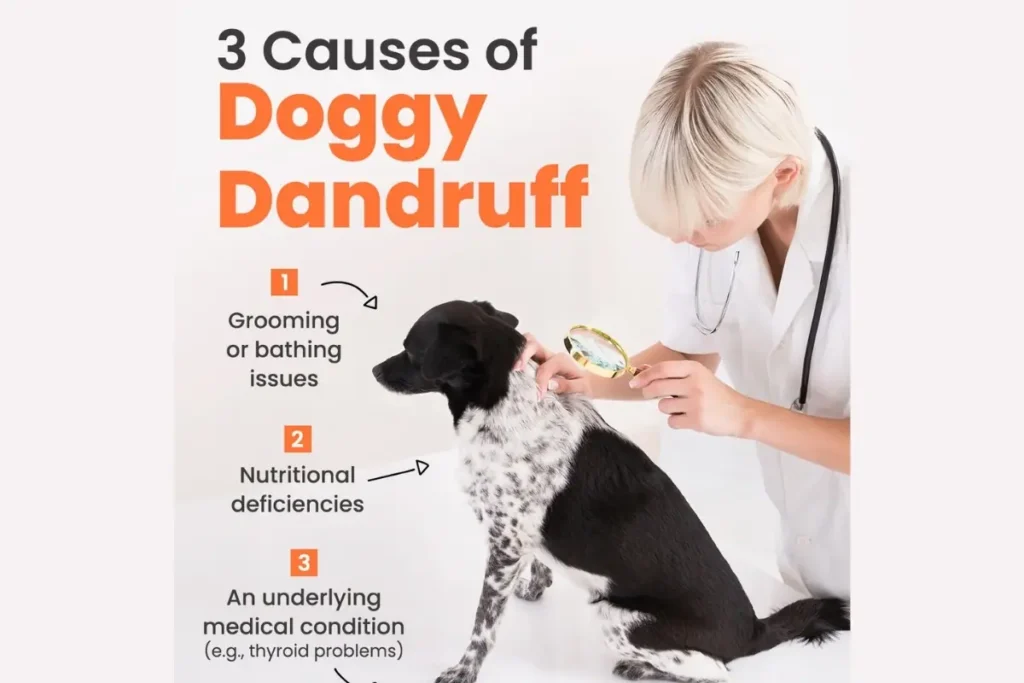
Before you spend a dime, you need to become a detective. Finding the best shampoo for dogs dandruff starts with a simple 60-second check. I call this the S.O.S. test (Smell, Oil, Scale).
S – The “Frito-to-Funky” Smell Test.
Put your nose right to your dog’s skin (not the fur) when it’s dry.
- No smell or faint corn chip scent? Likely simple dryness or seasonal allergies.
- Strong musty, rancid, or old gym sock odor? This is a major red flag. It signals a bacterial or yeast overgrowth (Malassezia). No over-the-counter shampoo will fix this alone; a vet visit is non-negotiable.
O – The “Slide Test” for Oil.
Rub your thumb firmly against the skin on their lower back.
- Feels tight with friction/drag? The skin is parched. It needs humectants and emollients (like oatmeal, aloe, ceramides).
- Feels slick, greasy, or leaves a gritty residue? This is Seborrhea Oleosa—an overproduction of oily sebum. It needs a degreasing, exfoliating formula (like salicylic acid or sulfur).
S – The “Scale Test” & Tape Hack.
Examine the flakes themselves.
- Fine, white, powdery dust? Classic dry skin or “winter dandruff” (Seborrhea Sicca).
- Large, yellowish, greasy plates stuck to the hair? This is a keratinization disorder, confirming oily seborrhea.
- My Pro Hack: Press clear packing tape on a flaky area and stick it to a white notecard. This magnifies the flakes. See tiny, moving specks? Those are Cheyletiella mites (“walking dandruff”)—vet time.
Understanding the Two Main Types: Seborrhea Sicca vs. Oleosa
Your S.O.S. test leads you here:
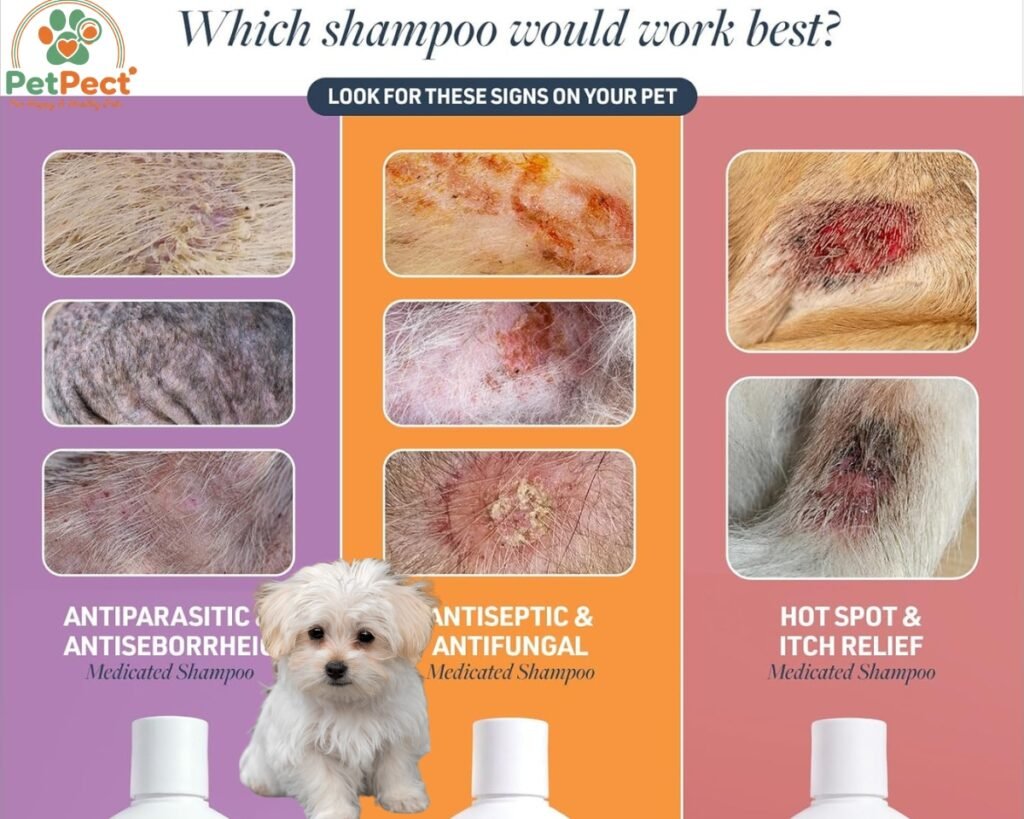
- Dry Dandruff (Seborrhea Sicca): Symptoms: White, loose flakes; dry, dull coat; itching. The Fix: Moisturizing, soothing shampoos.
- Oily Dandruff (Seborrhea Oleosa): Symptoms: Yellowish, greasy flakes; bad odor; clumps of fur. The Fix: Medicated, exfoliating, degreasing shampoos.
The pH Reality Check: Why “Baby Shampoo” is a Lie
Human skin has a pH of about 5.5 (acidic). A dog’s skin pH is between 6.2 and 7.5 (neutral). Using human or baby shampoo destroys their protective “acid mantle.” It’s like putting lemon juice on a paper cut. Within days, you invite bacteria and create a bigger problem.
The Arsenal – Matching the Shampoo to the Cause
Now, and only now, you can match the best shampoo for dogs with dandruff to your diagnosis.
For Dry, Powdery Flakes (Seborrhea Sicca)
- Goal: Hydrate, soothe, and protect the skin barrier.
- Key Ingredients: Colloidal Oatmeal, Aloe Vera, Almond Oil, Ceramides, Glycerin.
- My Go-To & Why: Earthbath Oatmeal & Aloe.
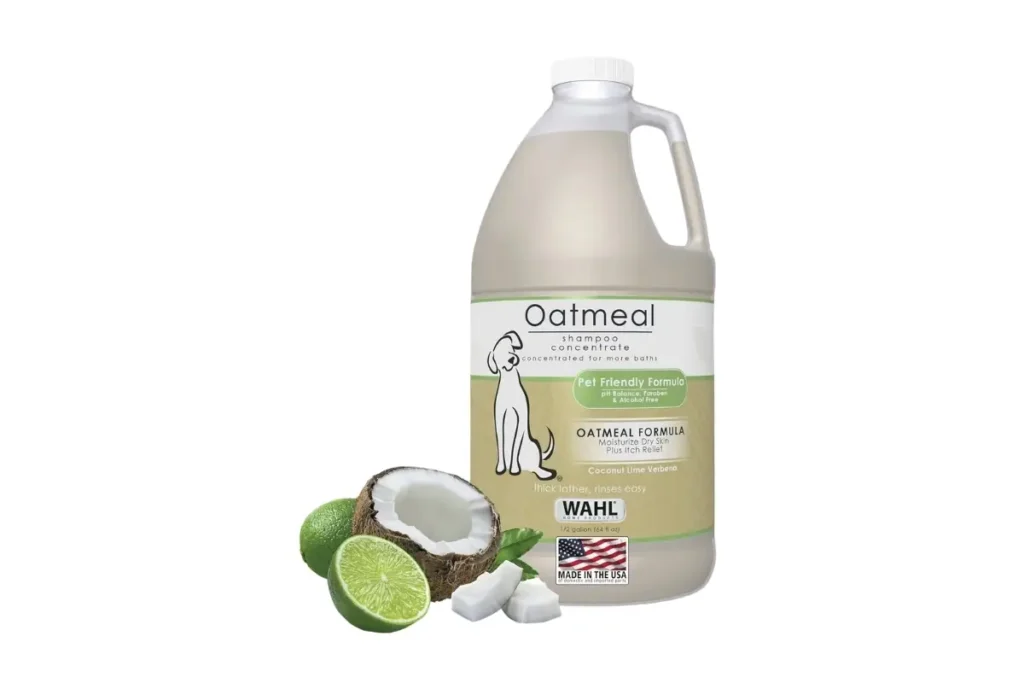
It’s pH-balanced, soap-free, and rinses incredibly clean. Residue is a hidden irritant, and Earthbath leaves none. It’s my default for a moisture reset.
- Also consider: Burt’s Bees Oatmeal Shampoo is a fantastic maintenance wash for dogs with generally healthy skin, but rarely strong enough for true pathology.
For Greasy, Smelly Flakes (Seborrhea Oleosa)
- Goal: Exfoliate dead skin, dissolve excess oil, and regulate sebum.
- Key Ingredients: Salicylic Acid, Sulfur, Benzoyl Peroxide.
- My Go-To & Why: Douxo S3 SEB.
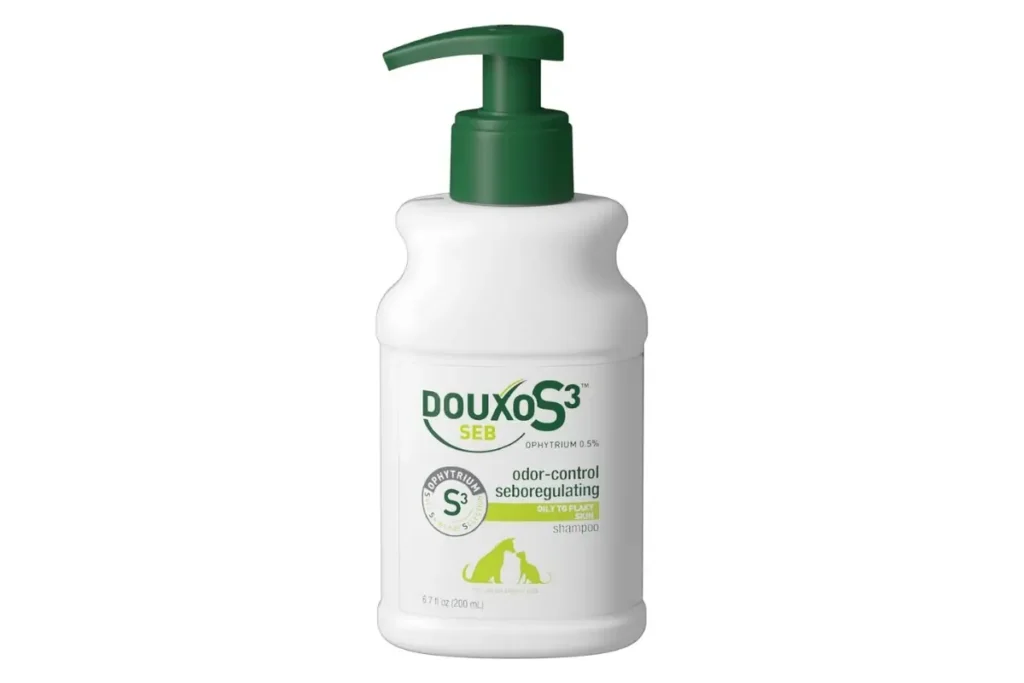
This is veterinary-grade care. Its patented Ophytrium complex doesn’t just strip the skin—it reinforces the skin barrier. Most drug-store tar shampoos are so harsh that they damage the barrier, creating a vicious cycle.
- Powerful Alternatives:
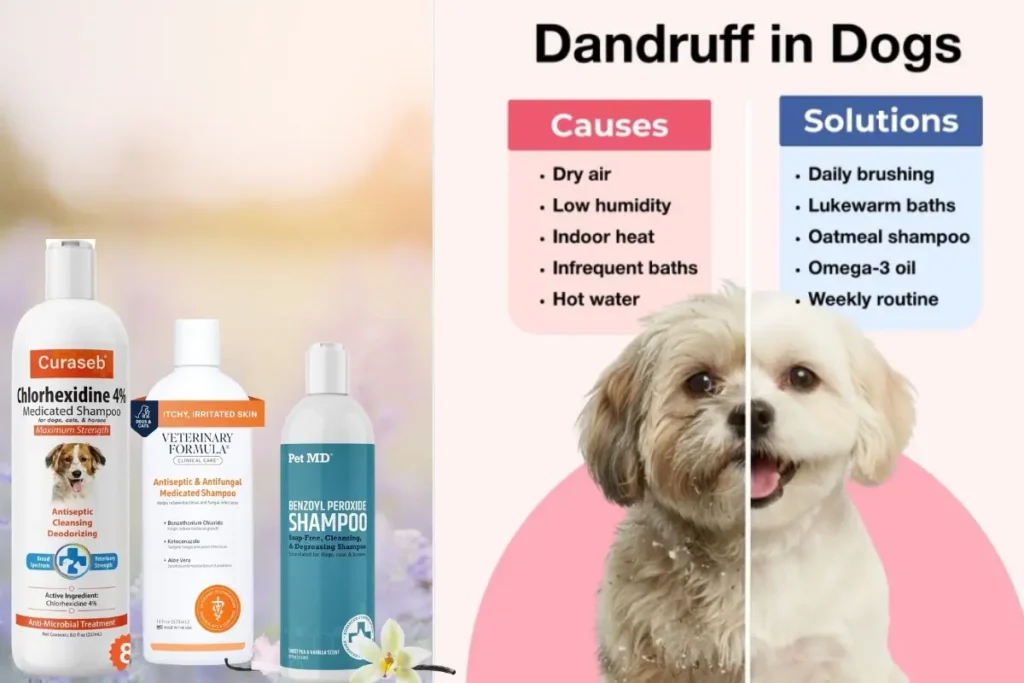
- Veterinary Formula Clinical Care: The most effective OTC medicated shampoo. The 2% Salicylic Acid + Sulfur combo is clinic-grade for severe scaling.
- Pro: Fast, affordable.
- Con: Strong medicinal scent, can be drying (use my dilution hack below).
- PetMD Benzoyl Peroxide: The best for deep follicular flushing. If your dog has “back acne” or a persistent waxy feel, this penetrates pores to clear out grease and bacteria. It’s a potent degreaser.
For Infection & Redness (Odor + Flakes)
- Goal: Treat microbial overgrowth (yeast/bacteria).
- Key Ingredients: Chlorhexidine Gluconate (2-4%), Ketoconazole (1-2%), Miconazole.
- My Go-To & Why: Curaseb Chlorhexidine & Ketoconazole.
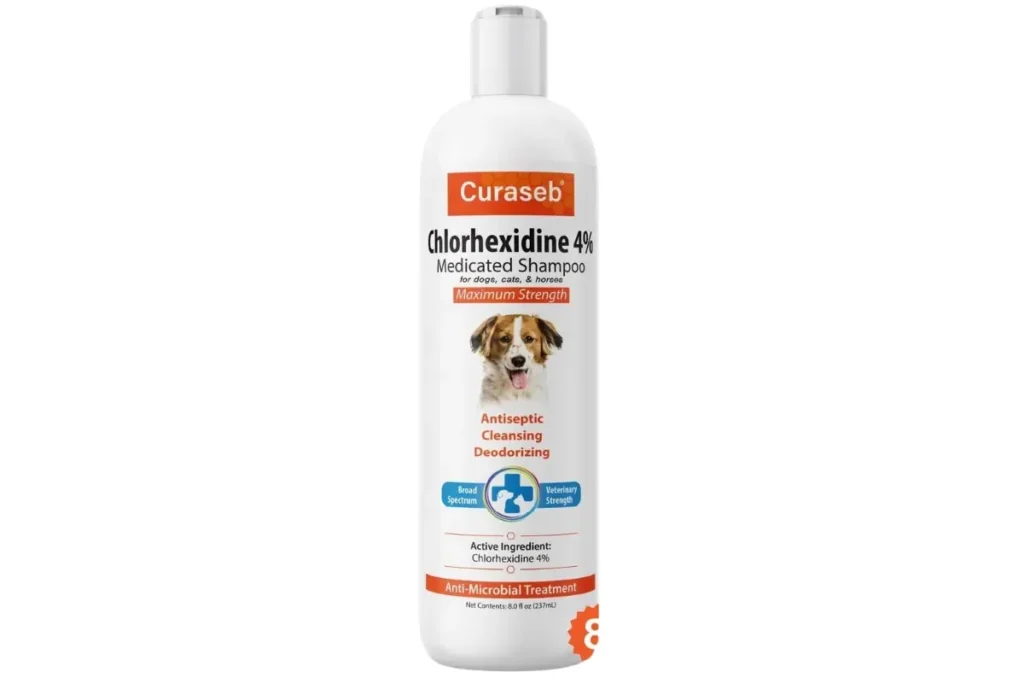
This is a powerful, targeted treatment for diagnosed issues.
- Crucial Note: This is not a “just in case” shampoo. It’s a targeted antibiotic/antifungal. Overuse can lead to resistance.
The Groomer’s Ingredient Cheat Sheet
LOOK FOR:
- Salicylic Acid: Softens and lifts dead skin cells (keratolytic).
- Benzoyl Peroxide: Flushes out hair follicles (excellent for oily skin & acne).
- Chlorhexidine/Ketoconazole: For bacterial/yeast infections.
- Ceramides/Oatmeal: Repairs and soothes the skin barrier.
- Aloe Vera/Vitamin E: Reduces inflammation and redness.
AVOID:
- Artificial Fragrances & Dyes: Common irritants for sensitive skin.
- Parabens: Preservatives that can disrupt hormones.
- Alcohol: Dries out the skin, making flaking worse.
The Protocol – The “Clinical Bath” Secret (Where Most People Fail)
Using the best shampoo for dogs dandruff correctly is half the battle. Here is my salon method:
- The Dry Work (2 mins): Brush your dog thoroughly with a rubber curry brush (Kong ZoomGroom) on the dry coat. This lifts a snowstorm of loose scale, so your shampoo can contact the skin.
- The First Wash – The “Degriming” (1 min): Use a basic, gentle shampoo to remove surface dirt and mud. If your medicated shampoo has to fight through grime, it never reaches the skin.
- The Second Wash – The “Treatment” & 10-Minute Massage (4 mins):
- Dilute your medicated shampoo 1:1 with water in a foaming bottle for even control and to prevent over-stripping.
- Lather it deep into the coat, down to the skin.
- SET A TIMER FOR 10 MINUTES. This contact time is the treatment. The active ingredients need this to penetrate. Don’t let your dog stand there shivering—massage gently. This increases blood flow and efficacy.
- The “Cold,” Thorough Rinse (2 mins): Rinse with lukewarm-to-cool water for at least 3 minutes, twice as long as you think. Hot water inflames skin. Any residue is an irritant.
- The Soothing Follow-Up & Dry (1 min): After rinsing, use a moisturizing conditioner or a leave-in spray with ceramides. Pat dry with a towel—never rub. A microfiber shammy is gentler. Ensure they are 100% dry.
Real-World Proof & Final Warnings
Case Study: Bruno’s 4-Week Transformation
- Week 1: S.O.S. Test + vet cytology revealed allergies with secondary bacterial/yeast infection. Diet change initiated. We used Curaseb shampoo with strict 10-minute contact, twice weekly.
- Week 2: Odor and grease reduced by ~70%. Flakes became drier and whiter—a sign that the infection and oil were under control.
- Week 3: Switched to Douxo S3 SEB to manage seborrhea and heal the barrier. Introduced dry brushing 3x a week.
- Week 4: Skin was smooth, and flakes were minimal. Moved to a maintenance schedule of bathing every 10-14 days.
The fix wasn’t a miracle shampoo. It was: Diagnosis + Correct Product + Correct Protocol.
Critical Warnings
When “Dandruff” Isn’t Dandruff:
If your Tape Test shows tiny, moving specks, you have Cheyletiella mites (“walking dandruff”). No shampoo will cure this. You need a vet-prescribed parasiticidal treatment.
When to See a Vet Immediately:
- No improvement after 2-3 weeks of correct bathing.
- Intense scratching, redness, sores, or hair loss.
- A foul or persistent skin odor.
- Lethargy or changes in appetite alongside skin issues.
Conclusion
Choosing the best dandruff shampoo for dogs is not about grabbing the top-selling bottle. It is about playing detective. Diagnose between dry and oily skin, then pick a shampoo with the right active ingredients. Use it with the correct 10-minute contact time. Be patient. With this method, you can help your dog find lasting relief and a healthy, flake-free coat.
Related Post: Best Dog Shampoo for Allergies Top 7 Picks by Expert 2026
Disclaimer: This guide is based on my professional experience and is for informational purposes only. It is not a substitute for professional veterinary diagnosis and treatment. Always consult your veterinarian for persistent skin conditions.