When your dog is constantly itchy and smelly and licks their paws or has red and greasy spots all over their skin it might not be just allergies. Bacterial and fungal (yeast) infections are very prevalent in dogs whereby, they occur more in dogs that have underlying allergies or lacks a proper flea control. The simple bath, in such situations, will not do any good, and you will require the proper best antibacterial and antifungal dog shampoo applied properly and preferably, with the help of the vet.
This guide covers the functionality of these shampoos, which ones actually count, what the vets tend to recommend, and which one is the safest choice to use on the skin of the dog.
Antifungal and antibacterial dog shampoo
Antibacterial and antifungal dog Shampoo is a medicine formula, which is created to kill bacteria and fungi (such as yeast) that live on the skin of your dog. The organisms tend to proliferate when skin barrier is destroyed by allergies, moisture, fleas, or hormonal issues.
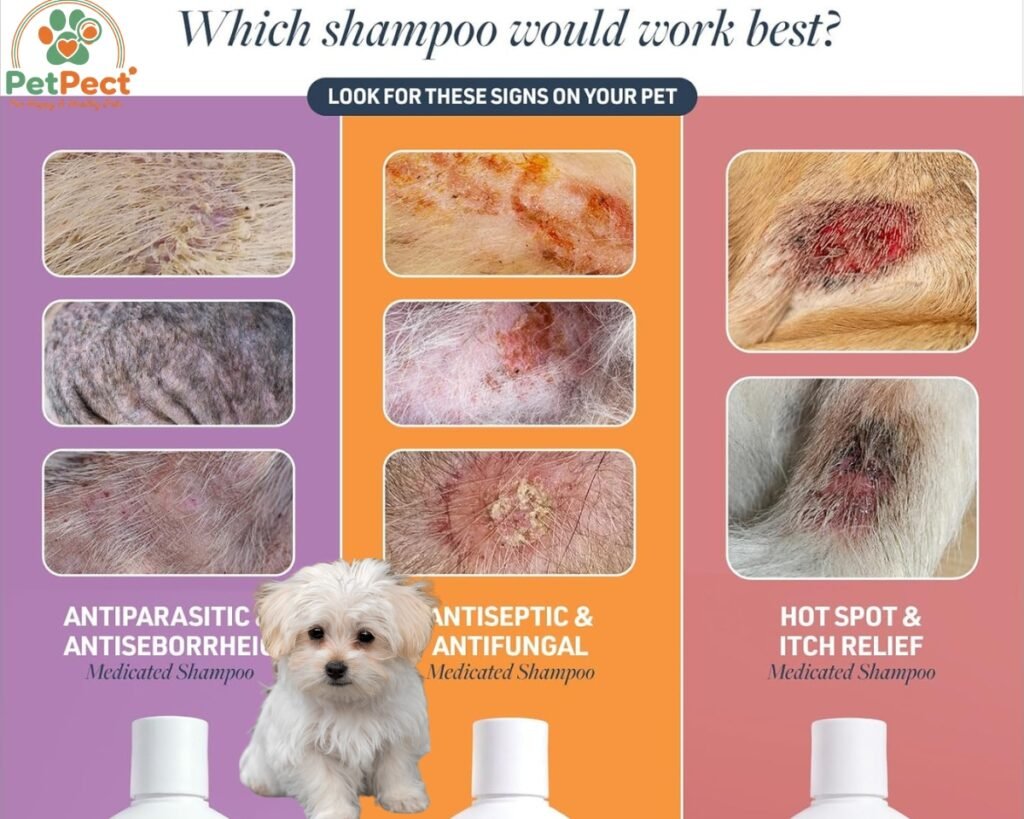
Normal symptoms are that your dog might require a medicated shampoo:
Powerful corn chips/musty smell.
Red, greasy, or darkened skin
Continuous licking or chewing of the paw.
Meanings Recurrent hot spots or ear infections.
Scaly patches, which recur again and again.
These shampoos work by:
Less microbes (bacteria/ yeast ) on the skin.
Washing oil and trash off to allow drugs to get to surface.
Helping barrier repair in combination with calming agents.
They are mighty instruments–but they are not only grooming products. Excessive use or of the wrong form may dry or irritate the skin. This is why they are better in combination with an allergy management plan, flea control, and proper home care which should be approved by a veterinarian.
Best anti-bacterial and anti-fungal dog shampoo (Overview).
The Best antibacterial and antifungal dog shampoo can be found not so much by the brand name as by the ability to select the ingredients in accordance with the particular problem of the skin of your dog. A more powerful medicated wash may be necessary on dogs with oily dirty infected skin, and a less harsh moisturizing formula could work with dogs with mild yeast overgrowth and dryness.
Overall, you would want to seek:
Active ingredients such as chlorhexidine, ketoconazole or miconazole are proven to be active.
Calming ingredients like oatmeal, aloe vera or ceramides.
PH balanced, soap-free dog bases.
Evident guidelines regarding the time of contact and frequency of bathing.
Here are picks akin to vets and their suitability. Always bear in mind: medicated shampoos solve the skin surface infections, but not the problem (allergies, endocrine disease, parasites), thus a veterinarian examination is needed when the problems continue to recur.
Vet Picks: Dog Shampoo Antibacterial and Antifungal.
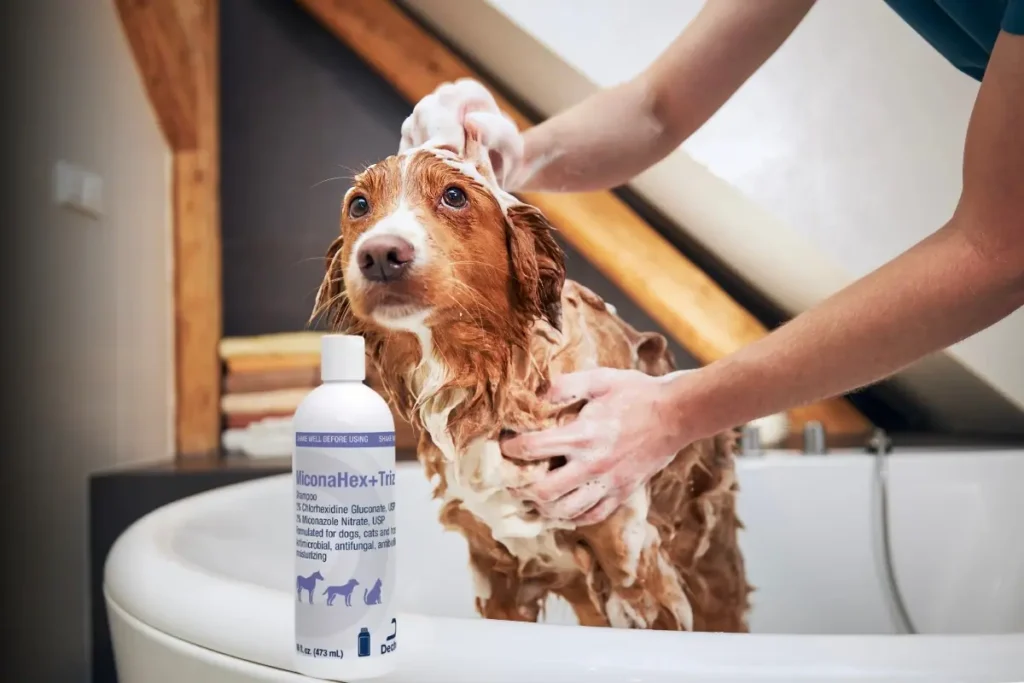
Finding the Best antibacterial and antifungal dog shampoo usually comes down to balancing clinical strength with skin sensitivity. The most effective products on the market combine a broad-spectrum antiseptic (like Chlorhexidine) with a potent antifungal agent (like Ketoconazole).
If you are in a rush and need a quick recommendation, here is the summary of our top winners:
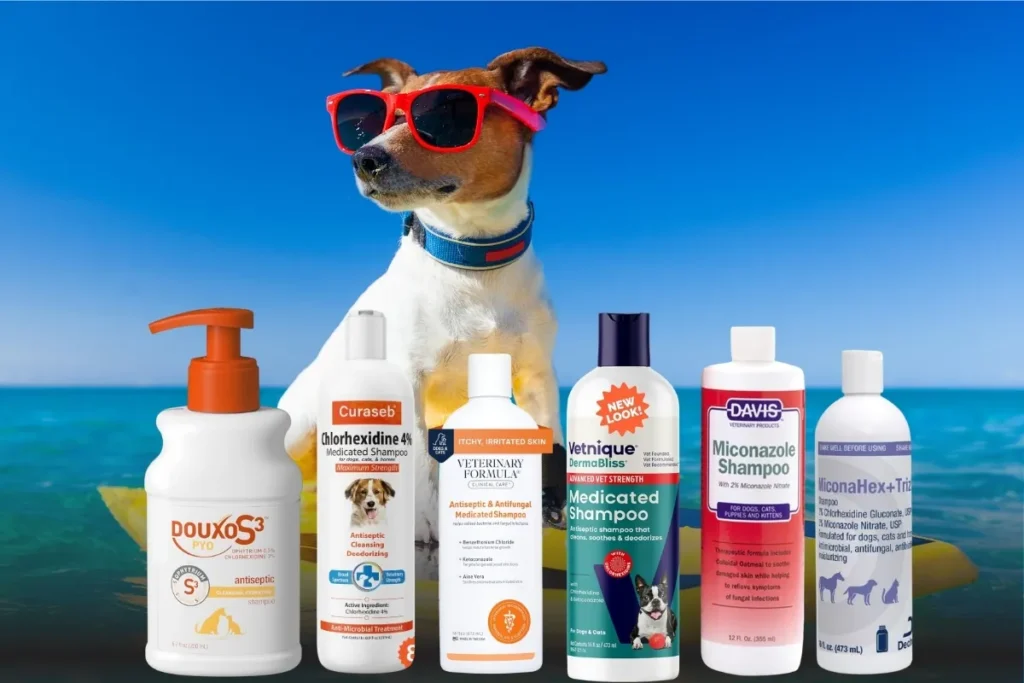
For the best overall value that treats 90% of common bacterial and yeast issues, Veterinary Formula Clinical Care is the undisputed champion. If your dog has deep, stubborn infections that require the strongest medication available without a prescription, Curaseb Chlorhexidine 4% is the heavy-duty choice. However, if your dog has extremely sensitive skin or chronic dermatitis that needs healing alongside disinfection, the vet-recommended Douxo S3 PYO is the premium option that repairs the skin barrier while it cleans.
Below, we dive deep into the full reviews of these top-rated formulas.
Best 7 antibactraial and antifungal shampoo review
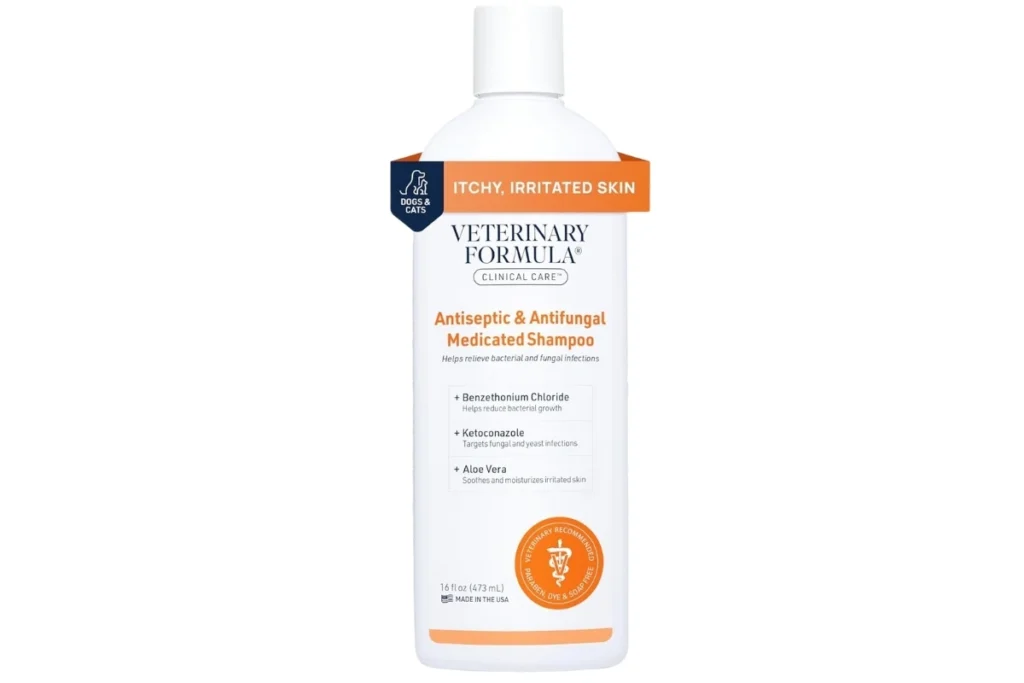
Veterinary Formula Antiseptic and Antifungal Shampoo Clinical Care
Reflectiveness (Best Overall Value and Effectiveness): Farrell and Jolley (2001) note that certain participants’ drugs were classified as highly effective, while others perceived minimal benefit or lacked confidence in the drugs’ efficacy.<|human|>Reflectiveness (Best Overall Value and Effectiveness): Farrell and Jolley (2001) observe that some of the participants rated their drugs as highly effective, whereas some participants felt little benefit or doubted the effectiveness of the drugs.
The Hook: In case your dog has scabby, reddish skin and that characteristic musty odor, this is the first line of attack. It is also considered as the Best budget shampoo dog shampoo as it provides the results of the vet-strength at the prices of the tight-pocketed owners.
Best For:
Yeast dermatitis (Malassezia).
Bacterial Pyoderma.
Ringworm prevention.
Key Ingredients & Benefits:
Benzethonium Chloride: This is an antibacterial compound that removes bacteria that cause odor.
Ketoconazole: It is a potent antifungal which prevents growth of yeast.
Aloe Vera: Relaxes swollen skin to avoid flaking.
Pros & Cons:
Advantages: Unbelievably cheap; can be purchased without a prescription; dual-action.
Cons: 10-minute contact time is needed; medicinal smell.
Curaseb 4 chlorhexidine Shampoo.
Table 1 represents and examines the unique features of the segmented materials and details the methods to apply them in practice while identifying the appropriate materials for particular tasks and their optimal application.<|human|>Table 1 encapsulates and analyzes the peculiarities of the segmented materials and describes the ways to implement them in the field and defines the suitable materials to perform specific tasks and their most efficient usage.
The Hook: Curaseb makes up where the mild shampoos have failed. It is a high concentration of Chlorhexidine, which effectively sterilizes the skin, and that is why the stubborn infections that never go away are the best option.
Best For:
Extreme bacterial infections.
Folds of the skin (bulldogs/pugs) deep.
Stubborn ringworm cases.
Key Ingredients & Benefits:
Chlorhexidine Gluconate (4%): Clinical strength antiseptic to kill staph and bacterium.
Ketoconazole (1%): Cures fungal problems together with the bacteria.
Cucumber Melon Scent: Coats the drug better than the rest.
Pros & Cons:
Pros: American made; extremely strong; nice smell.
Disadvantages: May be drying when applied every day; powerful active components.
Douxo S3 PYO Shampoo
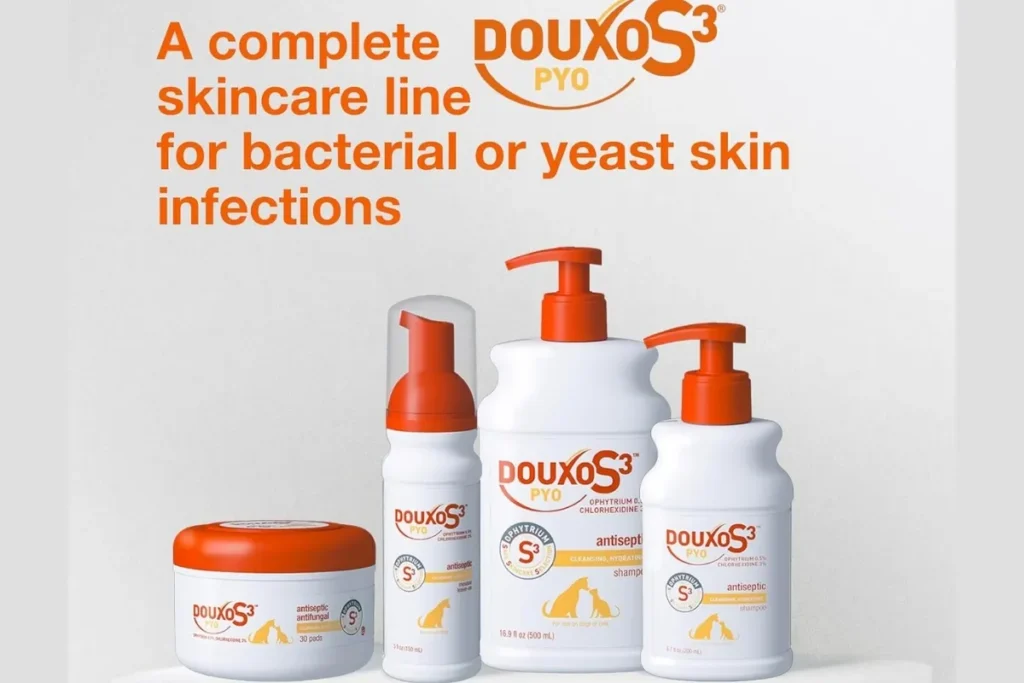
(Best for Sensitive Skin & Restoration)
The Hook: Majority of the medicinal shampoos deprive the skin whereas Douxo S3 PYO heals it. This formula is recommended by dermatologists all over the world, and it works to disinfect, and at the same time act as a rebuilding of the skin barrier, which is less likely to relapse.
Best For:
Dogs having recurrent chronic infection.
Delicate skin not able to take hard chemicals.
Atopic dermatitis.
Key Ingredients & Benefits:
Chlorhexidine (3%): Bacteria and yeast killer.
Ophytrium: This is a natural ingredient that enhances mechanical skin barrier.
Climbazole: This is a gentile antifungal agent.
Pros & Cons:
Advantages: Premium lather; hydrating and curing; paraben-free.
Disadvantages: This is the most expensive on the list.
Pet MD Medicated Shampoo Antiseptic and Antifungal
(Best for Hot Spots)
The Hook: Hot spots (acute moist dermatitis) are contagious. Pet MD provides a sure no-frills formula that dries oozing skin and kills the bacteria that causes the heat to offer your pup instant relief.
Best For:
Hot spots and open sores.
bites made by insects which are infected.
Acne on the chin or belly.
Key Ingredients & Benefits:
Chlorhexidine: Cleans the wound.
Ketoconazole: It prevents the rooting of the fungal spores in the moisture.
Essential Fatty Acids: Aids in conditioning the coat when washing.
Pros & Cons:
Advantages: Made in controlled plants in the US; localized problem.
Cons: It has a strong chemical odor; the bottle cap is weak.
Jax N Daisy Antifungal Antibacterial Shampoo
(Best Natural Alternative)
The Hook: Not all people would like to use artificial chemicals. Jax N Daisy is a new product, Natural antifungal shampoo that treats infection in dogs without using harsh pharmaceuticals and uses essential oils in their power.
Best For:
Owners who want to be holistic.
Mild bacterial issues.
Fleea-bite dermatitis in dogs.
Key Ingredients & Benefits:
Lemon Oil and Tea Tree Oil: This is a natural antiseptic that prevents bacteria and fungus.
Lavender:Soothes the dog and de-stresses the skin.
Grapeseed Oil: Contains antioxidants that aid in the healing of skin.
Pros & Cons:
Advantages: No astringent fumes; pleasant smell of herbs; quick calming down.
Cons: Weaknesses Not effective enough in treating severe ringworm; the essential oils may cause irritation to some dogs.
Davis Mironazole Pet Shampoo.
(Best Targeted Antifungal)
The Hook: Sometimes it is not bacteria–it is just fungus. Davis is an antifungal dog shampoo with a high concentration of Miconazole, which, in its turn, makes it arguably the most efficient antifungal shampoo against pure ringworm or severe yeast instances.
Best For:
Ringworm (Dermatophytosis).
Infection on the ears/paws by yeast.
Dry, patchy skin.
Key Ingredients & Benefits:
Miconazole Nitrate (2%): This is a specific antifungal that interferes with fungal cell membranes.
Colloidal Oatmeal: reliving the itch of the fungus.
Aloe Vera: Provides skin with hydration.
Pros & Cons:
Its advantages: Directly attacks fungus; highly relaxing oatmeal base.
Disadvantages: Lacks no Chlorhexidine (not so effective against bacteria).
Dechra MalAcetic Shampoo
(Best Soap-Free & Acid Based)
The Hook: Yeast hates acid. This shampoo is made with natural acids (Acetic and Boric) instead of traditional poisons to reduce the pH of the skin, which would in turn leave fungus and bacteria with no chance of survival in this environment.
Best For:
Prone dog maintenance cleansing.
Malassezia (Yeast) control.
Degreasing oily coats.
Key Ingredients & Benefits:
Acetic Acid (Vinegar derivative): Dilutes PH to kill bacteria/yeast.
Boric Acid: This is a mild antisepsis and drying agent.
Soap-Free: Non-toxic to flea killer.
Pros & Cons:
Advantages: Special acidic formula; natural cherry blossom fragrance.
Cons: Stingy in case it gets into open, raw wounds.
antifungal dog shampoo
Whilst most of the shampoos may be characterized as dual-action, sometimes you have to use antifungal dog shampoo. This happens the most when it comes to Ringworm (that is really a fungus not a worm) or Malassezia Pachydermatis (Yeast).
Recognizing Fungal Issues
You should have a specific antifungal agent when you notice:
Stained on the paws with rust (as a result of licking).
The skin about greasy, yellow scaly.
Complete circles of hair loss (Ringworm).
Key Ingredients to Look For
The active ingredients that you would want to find in the ideal antifungal dog shampoo include:
Miconazole: Miconazole is very active in terms of treating yeast and ringworm.
Ketoconazole: The platinum in treating serious fungal infections.
Selenium Sulfide: Contain is common in seborrheic dermatitis ( fungus of the dandruff ).
Caution: Although there are owners who seek a Natural antifungal shampoo on dogs using drugs such as Apple Cider Vinegar, they are mostly used as preventive rinses. After a fungal infection has established itself, a veterinary grade ingredient is normally needed to prevent the infection.
Frequently Asked Questions (FAQs).
Q1: What can I do to cure my dogs fungus myself?
In mild cases, it is possible to use a medicated antifungal and antibacterial dog shampoo with Ketoconazole or Miconazole. Wash the dog twice a week and leave the lather to rest at 10 minutes. To make natural home remedies, Apple Cider Vinegar as a 50/50 dilution should be used as a rinse so as to create an acidic environment that fungus does not like but this should not be used instead of vet care when the case is severe.
Q2: Is it possible to apply antifungal shampoo to dogs?
Well, but you have to use dog products. Human antifungal shampoos tend to be excessively acidic on the skin of dogs and may disrupt their skin barrier. It is always advisable to seek a specified antifungal dog shampoo to be on the safe side.
Q3: Which is the most appropriate antifungal shampoo used on dogs?
Ideally, the antifungal dog shampoo to be used should have either 2% Miconazole or 1% Ketoconazole. The reason is that products such as Veterinary Formula Clinical Care or Curaseb are rated best products since they include these antifungals with antiseptics so that they prevent secondary bacterial infections.
Q4: Which is a safe topical antifungal agent in dogs?
Miconazole, Ketoconazole and Chlorhexidine are safe topical ingredients. These are approved by FDA to be used in pet sprays and shampoos. The natural solutions such as diluted Tea Tree oil may be effective but should be applied with utmost care since large doses of these are poisonous to the dogs.
Q5: Can ketoconazole 2 per cent shampoo be used safely in dogs?
I mean, Ketoconazole 1% to 2% is generally safe and effective in dogs when applied accordingly. Many of the various washes used to treat yeast dermatitis and ringworm contain it as the main ingredient given by a veterinarian.
Q6: Is it possible to apply human antifungal to a dog?
It is not usually advisable. The active ingredient (such as Ketoconazole in Nizolar) is fungal in its effect on dogs, but the foundation of human shampoo is based on human skin pH (5.5), whereas the dog is based on a neutral pH (7.5). Human shampoo use may interfere with their acid mantle in order to cause further irritation. Always use a Best antibacterial and antifungal dog shampoo that is produced to be used on pets.
Conclusion
Treatment of skin infections takes time and appropriate products. You are not only washing your dog but you are taking care of your dog by providing it with a high-quality antibacterial and antifungal dog shampoo. It is important to be consistent whether you take the hard hitting Curaseb or the soft acting Douxo S3. Never skip a complete course of baths that is prescribed by the bottle or your veterinarian so that the infection will be permanently removed.
Related post: Best Dog Shampoo for Yeast Infection: Top Picks & Vet Tips