
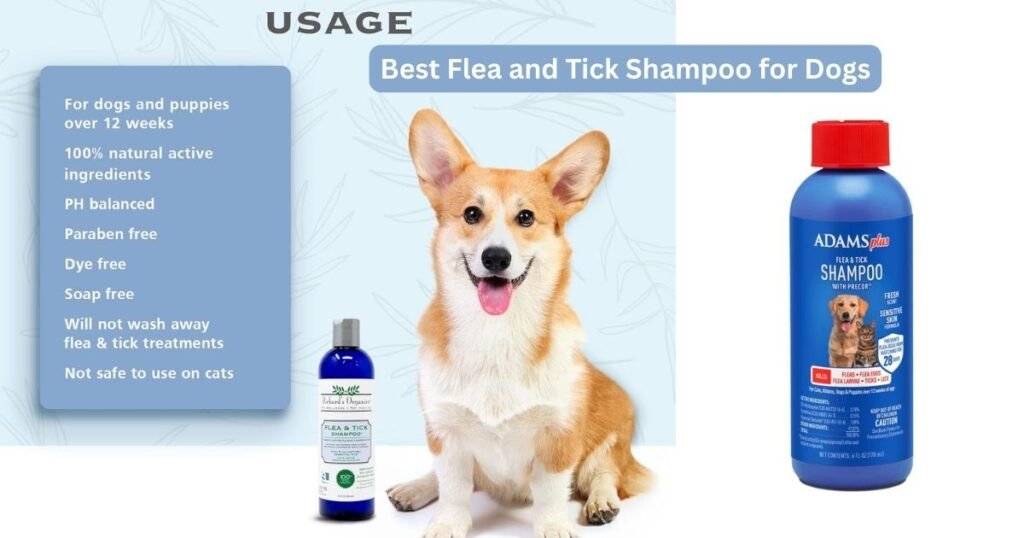
Most pet blogs rank flea and tick shampoos by how good they smell or how much affiliate commission they pay. In my salon, we rank them by The Pesticide Paradox: achieving maximum lethality to the parasite with minimum toxicity to the host.
To find the best flea and tick shampoo for dogs, you must first ignore the brand name and look at the Active Ingredients on the back of the bottle. I categorize them into three distinct tiers.
Tier 1: The Clinical Heavyweights (For Severe, Active Infestations)
If your dog is crawling with fleas and ticks, you do not have time for gentle botanicals. You need a neurotoxin that paralyzes the bugs instantly.
The Gold Standard Ingredient: Pyrethrins (usually combined with Piperonyl Butoxide). Pyrethrins are derived from chrysanthemum flowers. They attack the flea and tick’s nervous system but break down quickly, meaning they don’t linger in your dog’s bloodstream.
What to Understand About Permethrin: Permethrin and other synthetic pyrethroids are highly effective ingredients found in many veterinary-grade flea and tick products. For dogs, they are generally safe and provide excellent tick protection. In fact, they are the active ingredient in trusted products like K9 Advantix. However, permethrin is extremely toxic to cats, so households with both species must use caution. Some dogs with sensitive skin may react to any topical chemical, but permethrin itself is not inherently “harsh” for canines. If your dog has a history of skin sensitivities, consult your vet before using any new product.
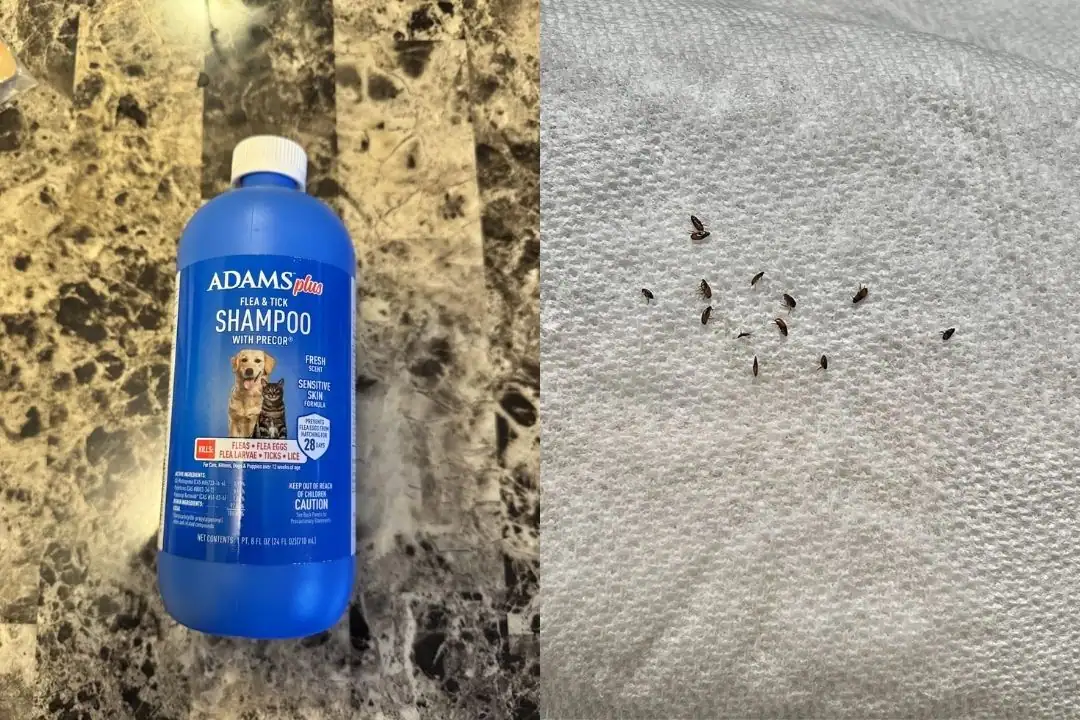
My Top Salon Pick: Adams Plus Flea and Tick Shampoo with Precor.
Why I trust it: It contains Pyrethrins for the adult fleas and ticks, but more importantly, it contains Precor (an Insect Growth Regulator, or IGR). An IGR stops flea eggs and larvae from maturing. Without an IGR, the eggs on your dog will hatch tomorrow, and you are back to square one. For ticks, the pyrethrins provide immediate knockdown, which is critical when dealing with ticks that may carry disease.
Tier 2: The Botanical Disruptors (For Mild Cases and Sensitive Skin)
If your dog only has a few hitchhikers from a hike, or has known chemical sensitivities, we step down to botanicals. This tier works well for mild tick prevention, though for active tick attachment you may still need Tier 1.
The Best Ingredients: Neem Oil, D-Limonene (Citrus extract), Clove Oil (Eugenol), or Cedarwood. These botanicals work through different mechanisms:
- D-Limonene strips the waxy cuticle of the exoskeleton, causing dehydration and death.
- Clove Oil (Eugenol) acts as a neurotoxin, interfering with the insect’s octopamine receptors and short-circuiting its nervous system.
- Neem Oil contains Azadirachtin, a hormone disruptor that prevents fleas and ticks from feeding, molting, and reproducing.
- Cedarwood interferes with pheromone detection, repelling pests and disrupting their life cycle.
Together, these multiple modes of action make botanical formulas effective without relying on synthetic chemicals.
The Danger of “Natural”: Just because it is natural doesn’t mean it is safe. I strictly veto any shampoo containing Pennyroyal (hepatotoxic) and advise caution with high concentrations of any essential oil on broken or inflamed skin.
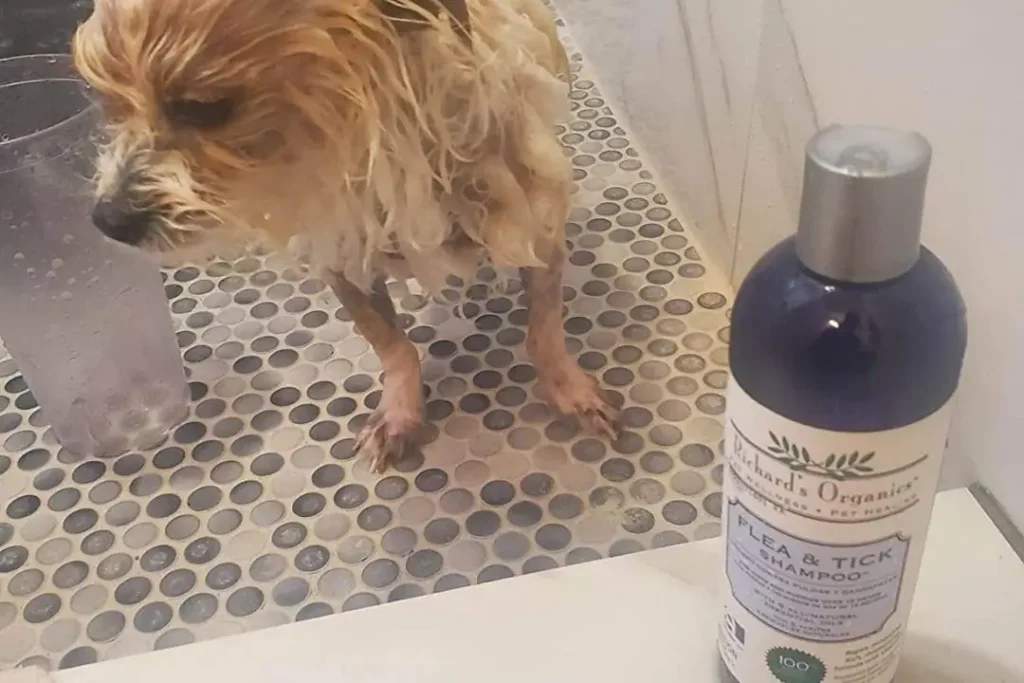
My Top Salon Pick: Richard’s Organics Flea and Tick Shampoo.
Why I trust it: It relies on a science-backed blend of essential oils, including Clove Oil (Eugenol 1.00%), Cedarwood Oil (0.50%), and Peppermint Oil (0.25%). Clove oil provides neurotoxic action against pests, while cedarwood and peppermint add repellent and disruptive properties. The key is the concentration. At 1% in a rinse-off formula, it is effective without posing the liver toxicity risks associated with concentrated, leave-on applications. For mild flea issues on dogs with intact skin, this balanced botanical formula is my go-to.
Tier 3: The Mechanical Kill (For Puppies and Pregnant Females)
Most medicated flea and tick shampoos are strictly for dogs 12 weeks and older. Always check the label. Some products may have different age requirements. When in doubt, consult your veterinarian.
For pregnant or nursing mothers, extreme caution is required. Chemical pesticides can cross the placental barrier, potentially causing birth defects, or be passed through milk and direct skin contact to nursing neonates. The puppies’ underdeveloped livers cannot process these toxins, even through indirect exposure.
My Hack: The Surfactant Smother. We don’t use pesticides here; we use surface tension.
Take original, blue Dawn dish soap (just a dime-sized amount) and mix it heavily with water until it is a thick foam.
The soap breaks the water’s surface tension, causing fleas to drown and ticks to weaken significantly. Note: Ticks are hardier than fleas. You may need to manually remove any ticks after the bath using fine-tipped tweezers, as the soap stuns them but doesn’t always kill attached ticks instantly. This method is incredibly drying to the coat, but it is the only neurologically safe option for a tiny puppy or when chemical exposure risks are too high.
The Triage Chart: Match Your Dog to the Shampoo
| Your Dog’s Profile | The Primary Issue | The Best Active Ingredient |
|---|---|---|
| Healthy Adult Dog | Heavy flea/tick infestation, visible crawling bugs. | Pyrethrins + IGR (e.g., Adams Plus) |
| Allergy-Prone or Sensitive | Mild fleas or ticks, but dog has a history of hot spots or hives. | Botanical blends with D-Limonene, Neem, Clove, or Cedarwood (e.g., Richard’s Organics) |
| Puppy (Under Label Age) or Pregnant/Nursing | Covered in fleas or ticks; chemical exposure risk to developing puppies. | Mechanical Kill (Diluted foaming dish soap + manual tick removal) |
| Flea Allergy Dermatitis (FAD) | Dog is missing hair, skin is raw and bleeding from scratching. | STOP. Do not use flea shampoo. See Case Study below. |
A Note on Ticks: Why They Require Extra Attention
If you live in a wooded area, hike with your dog, or have tall grass in your yard, ticks are a serious concern. Unlike fleas, which live their entire lives on the host, ticks latch on and feed for days. This makes them harder to kill with shampoo alone.
Here’s what you need to know about ticks and flea shampoo:
- Knockdown vs. Removal: A good flea and tick shampoo will kill ticks eventually, but it takes time. The active ingredients need to penetrate the tick’s tougher exoskeleton. This is why the 7-Minute Rule below is non-negotiable.
- Post-Bath Checks: Even after a proper bath with a quality flea and tick shampoo, always run a fine-toothed comb through your dog’s coat 10 to 15 minutes after rinsing. You may find stunned but still-attached ticks. Remove these immediately with fine-tipped tweezers.
- Disease Prevention: Ticks carry Lyme disease, Ehrlichiosis, and Anaplasmosis. Using the right flea and tick shampoo for dogs isn’t just about comfort. It is about protecting their long-term health. If you find an embedded tick after a bath, save it in a baggie and watch your dog for symptoms. Inform your vet.
Real-Life Case Study: “Bella” and the Raw Skin Mistake
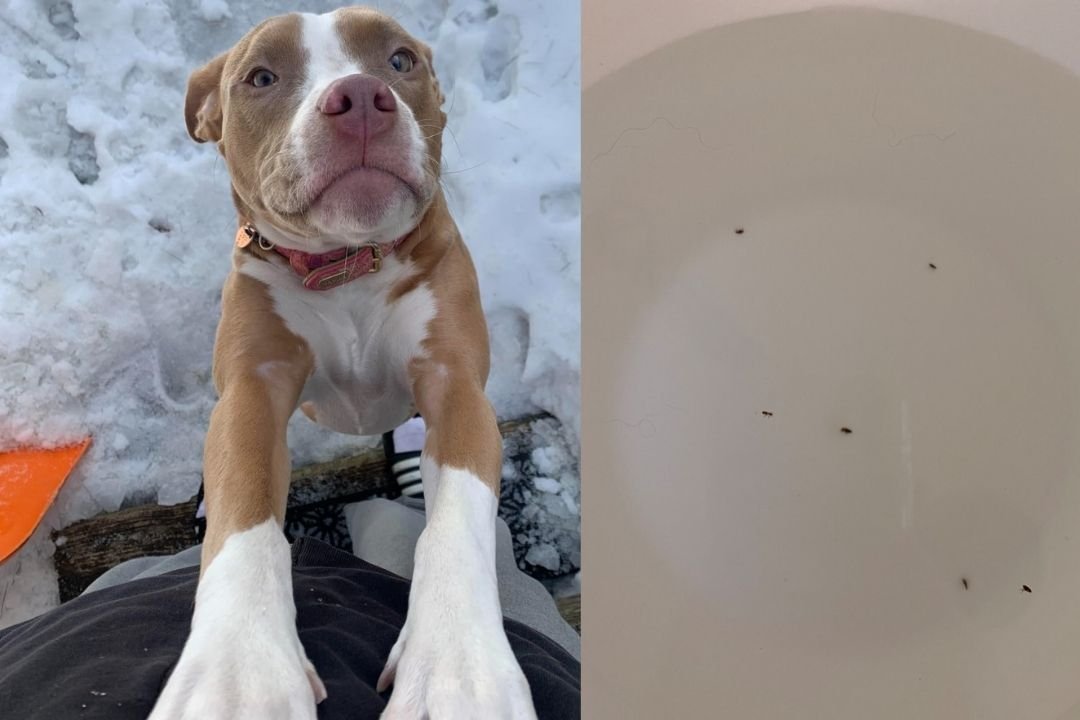
The Client: Bella, a 6-year-old German Shepherd rescue.
The Situation: She had severe Flea Allergy Dermatitis (FAD). Her skin was raw, weeping, and red from constant scratching. Her new owners wanted me to use a maximum-strength flea and tick shampoo to “nuke” the bugs. While ticks weren’t the primary concern here, the protocol for raw skin applies whether you are dealing with fleas, ticks, or both.
My Intervention:
I refused. When a dog has FAD, their skin barrier is completely destroyed. If I applied a chemical pesticide (even a safe one like Pyrethrin) to open, weeping skin, it would absorb directly into her bloodstream and cause agonizing pain.
The Protocol I Used:
- The Capstar Bypass: I had the owner give Bella an oral Capstar pill (Nitenpyram). This starts killing adult fleas from the inside out within 30 minutes, bypassing the skin entirely. (Note: Capstar does not kill ticks, so if ticks had been present, manual removal would still be necessary.)
- The Soothing Wash: Instead of flea and tick shampoo, I bathed Bella in a clinical Chlorhexidine and Ceramide shampoo to treat the secondary skin infection and soothe the open wounds.
The Takeaway: If your dog’s skin is raw and bleeding, the “best” flea and tick shampoo is no shampoo at all. You must use oral or topical veterinary medication for fleas, remove any ticks by hand, and bathe them with a skin-repairing wash instead.
My Hack: The “7-Minute Lather Lock”
Even the best flea and tick shampoo in the world is useless if you apply it wrong. Most owners scrub the dog, immediately rinse, and then wonder why the fleas and ticks are still alive.
Flea and tick shampoo requires Contact Time to penetrate the parasite’s nervous system.
The Neck Ring: Before you wet the dog’s body, apply a thick ring of shampoo directly around their dry neck. Fleas flee from water, and ticks get trapped in the process. If you wash the back first, fleas will sprint for the face, dragging ticks with them or exposing them to the neck ring barrier. The neck ring traps them on the body where the shampoo can work.
The Lather Lock: Lather the entire dog, getting down to the skin (not just the topcoat). Pay special attention to common tick hiding spots: between toes, inside ears, under armpits, and around the tail base.
The Clock: Set a timer for 7 full minutes. Do not rinse early. Ticks require this full contact time for the active ingredients to penetrate their shell. Smear peanut butter on the side of the tub to keep the dog busy while the chemicals do their job.
The Cool Rinse: Rinse with cool-to-tepid water. Hot water increases blood flow (vasodilation) to already-inflamed bites, which worsens itching and irritation. Cool water soothes the skin, reduces inflammation, and keeps your dog comfortable. (The old myth about hot water causing ticks to regurgitate comes from the dangerous practice of using a hot match to remove ticks. Bathwater temperatures are not extreme enough to trigger that response.)
Post-Bath Tick Check: After rinsing, run a fine-toothed comb through the coat, especially around the neck, ears, and feet. If you find any attached ticks, remove them immediately with fine-tipped tweezers. Grasp the tick as close to the skin as possible and pull upward with steady, even pressure. Do not twist or jerk. This can cause the mouthparts to break off and remain in the skin, leading to infection. If mouthparts remain, remove them with tweezers or let the skin heal naturally. Never crush a tick with your fingers.
The Crucial Final Step: Rehydration
Here is the final secret: All effective flea and tick shampoos, whether chemical or botanical, are highly alkaline and strip the natural oils (the acid mantle) from your dog’s skin.
If you skip conditioner, your dog will be intensely itchy tomorrow. You will think the fleas are back, but in reality, your dog just has severely dry skin. Always follow a flea and tick bath with a deep-penetrating, oatmeal or ceramide-based dog conditioner.
Need Flea-Only Options?
If you live in an urban area or apartment where ticks simply aren’t a concern, you may not need the extra potency of a combined flea and tick formula. For mild, flea-only cases, check out our complete guide to flea shampoos for dogs, which focuses exclusively on flea control without the tick-specific ingredients.