I still remember the first time I ruined a dog’s coat.
It was early in my career. I had a West Highland Terrier named Buster on my table. He had itchy, flaky skin, so I did what I thought was best: I used a high-end, “ultra-gentle” baby shampoo meant for human infants. I thought, “If it’s safe for a baby’s eyes, it must be safe for a dog. ” How to Choose a pH Balanced Dog Shampoo: This is the main part, so be very careful about choosing a shampoo.
Two weeks later, Buster was back. His skin was worse—bright pink, smelling faintly of yeast, and he was scratching himself raw.
I felt terrible. I didn’t understand what went wrong until a veterinary dermatologist explained the acid mantle to me. I wasn’t washing Buster; I was chemically strip-mining his skin’s defense system.
Most dog owners (and many groomers) obsess over “natural” or “oatmeal” on the label. But after 15 years of restoring damaged coats, I can tell you: ingredients don’t matter if the pH is wrong. How to Choose a pH Balanced Dog Shampoo—this is the main part, so be very careful about choosing a shampoo.
This is the guide I wish I had when I started. We are going to look beyond the marketing fluff and talk about the biochemistry of a healthy dog.
The “Acid Mantle” Myth: Why Dogs Are Different
To understand pH balanced dog shampoo, you have to understand the invisible barrier on your dog’s skin.
The Human vs. Dog Gap
The “acid mantle” is a thin film on the skin’s surface that acts as a security guard against bacteria and viruses.
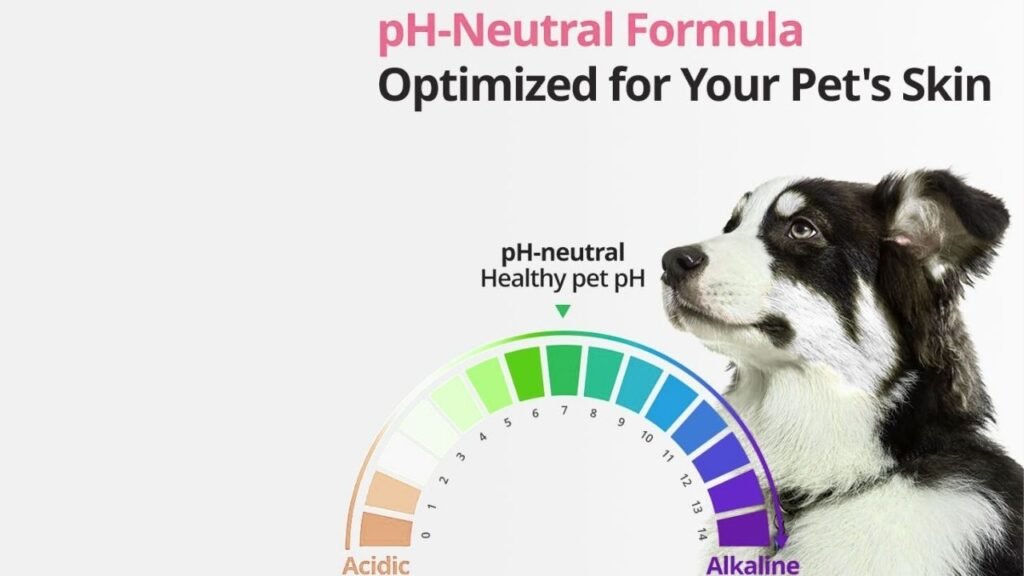
- Humans: We have a pH of about 5.5. We are acidic. This acidity kills bacteria naturally.
- Dogs: They have a pH of about 7.0 to 7.5. They are essentially neutral.
Here is the danger: When you use a human product (pH 5.5) on a dog (pH 7.5), you are applying an acid to a neutral surface.
My “Castle Wall” Analogy: Imagine your dog’s skin is a castle. The “mortar” holding the bricks (cells) together relies on a neutral pH. When you use acidic human shampoo, you disrupt the skin’s microbiome and irritate the protective barrier. This causes the mortar to break down, creating cracks.
Through those cracks enter the two enemies I see in my salon every day:
-
- Staphylococcus (Staph)
- Malassezia (Yeast
If your dog smells like “corn chips” 3 days after a bath, it’s not because they are dirty. It’s because the pH was off, the barrier broke, and the yeast is throwing a party.
The “Squeak Test”: How to Spot Bad Shampoo Without a Lab
You don’t need a degree in chemistry to know if a shampoo is stripping your dog’s skin. You just need your hands.
I teach all my clients the Squeak Test.
The Scenario: You are rinsing the shampoo off your dog.
- Bad Sign: If you run your hand down their back and it feels “squeaky clean” (your hand drags or stutters), you have stripped the natural oils. The pH was likely too high (alkaline), or the surfactants were too harsh.
- Good Sign: A pH-balanced, surfactant-mild shampoo should leave the coat feeling “slick” or “slippery” even when fully rinsed. That slip is the cuticle lying flat and the lipid barrier remaining intact.
Pro-Tip: If you hear the squeak, you need to use a conditioner immediately to artificially replace the oils you just stripped.
The DIY Audit: Test Your Shampoo at Home
Here is something AI articles won’t tell you: Labels lie.
Because pet products aren’t regulated like human cosmetics, a bottle can say “pH Balanced” and actually be pH 8.5. I have tested dozens of “premium” brands that failed miserably.
My Challenge to You:
- Buy a pack of simple pH litmus strips online (they cost about $5).
- Take your current dog shampoo.
- Mix a drop of shampoo with a drop of water.
- Dip the strip.
The Result Key:
- Yellow/Orange (pH 3-5): Too acidic. This will irritate the skin. (Common in “whitening” shampoos.)
- Dark Green/Blue (pH 8-10): Too alkaline. This is harsh, like dish soap.
- Light Green (pH 6.5-7.5): The Sweet Spot. Keep this bottle.
I recently tested a popular “Natural Lavender” dog shampoo sold at big-box stores. It tested at pH 4.0. No wonder the dogs were itching.
Case Study: Bella the “Allergic” Bulldog
Subject: English Bulldog, 4 years old. Symptoms: Chronic red paws, chin acne, and constant licking. Previous Care: The owner washed her weekly with “Gentle Baby Wash” to remove allergens.
My Diagnosis: The owner was trying to wash away allergens, but the acidity of the baby wash (pH 5.5) was disrupting Bella’s microbiome, allowing bacteria to colonize her paws. She didn’t have “allergies” to the grass; she had a compromised skin barrier.
The Protocol Change:
- Stop the baby wash immediately.
- Switch to a verified pH 7.2 shampoo with chlorhexidine (to reset the bacteria levels).
- Frequency: We moved to bathing every 3 days for 2 weeks, then tapered off.
The Result: Within 10 days, the redness on the paws subsided. The “licking loop” stopped because the itch was gone. We fixed the wall, and the invaders left.
My “Top Tier” Criteria (How I Choose Products)
I don’t just look for “pH balanced” on the bottle. I look for the supporting cast.
When you are shopping, flip the bottle over. If I am buying for my salon, I look for these green flags:
1. The Right Surfactants
Avoid Sodium Lauryl Sulfate (SLS) if the dog has sensitive skin. It’s cheap and effective, but harsh.
- Look for Coco-Betaine, Decyl Glucoside, or Sodium Cocoyl Isethionate. These are coconut-derived cleansers that clean without nuking the pH.
2. Micellar Technology
This is the new gold standard. Micellar shampoos capture dirt in tiny oil spheres and rinse them away without scrubbing. For a dog with a damaged barrier, this is magic because it requires zero friction.
3. Transparent Labeling
If a brand hides its ingredient list or just says “Proprietary Blend of Herbal Cleaners,” I don’t trust it. Real pros show the chemistry.
What I Keep on My Grooming Table
I’ve walked you through the science and the red flags. Now let me show you exactly what I keep within arm’s reach—and why.
These three have passed the pH strip test, the squeak test, and the “real dog with real skin” test hundreds of times over.
1. The “Nuclear Option” for Itchy/Yeast/Greasy Skin
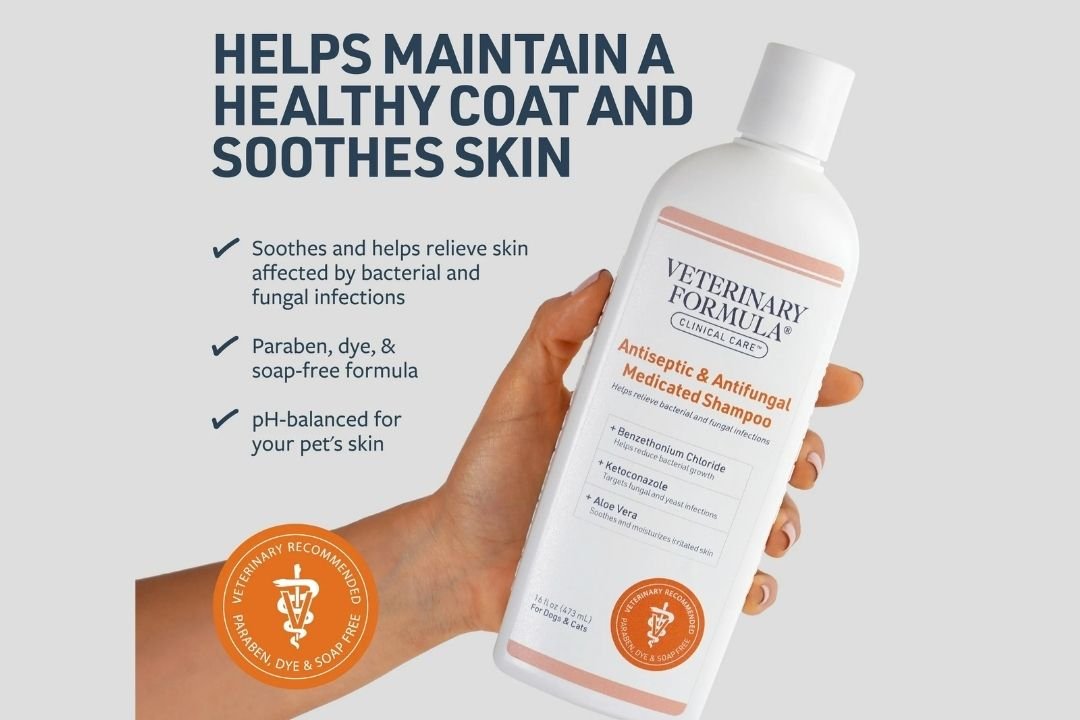
Product: Veterinary Formula Clinical Care Antiseptic & Antifungal Shampoo
- Who it’s for: Dogs that smell musty three days after a bath, Bulldogs with face folds that stay red, Westies with “elephant skin,” and any dog that can’t stop licking their paws.
- Why I love it: I’ve pH-tested three bottles from different batches—every single one hit 7.0. It uses benzethonium chloride and ketoconazole, the same dual-action antifungals vets prescribe, but without the prescription price. It kills yeast and staph on contact without stripping the acid mantle raw.
- My non-negotiable hack: Leave it on for 10 full minutes. Set a timer. If you rinse at two minutes, you’re just wasting shampoo. The skin needs time to absorb the medicine. I massage the dog, check ears, and trim nails—and only then do I rinse.
2. The Best Maintenance Shampoo for Normal Skin
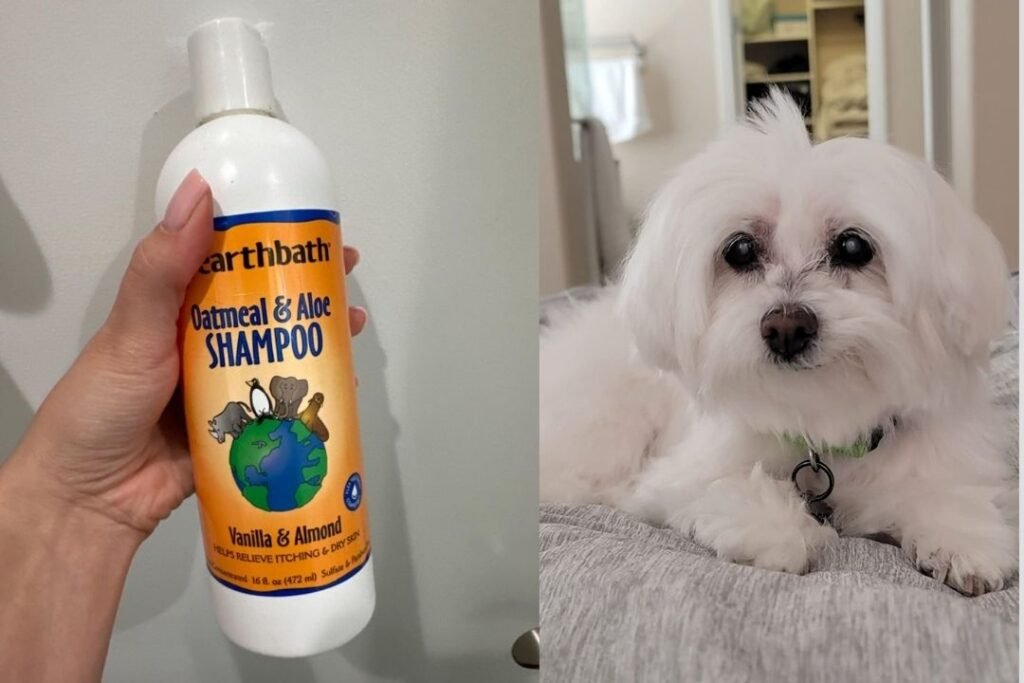
Product: Earthbath Oatmeal & Aloe Shampoo
- Who it’s for: Dogs with no major skin issues, puppies, and owners who want one bottle that works for weekly baths without destroying flea/tick topicals.
- Why I love it: It’s soap-free, which means it won’t wash off your monthly preventative. I’ve tested four bottles over three years – pH 7.2 every time. The colloidal oatmeal is high enough on the ingredient list to actually soothe, and the aloe isn’t just a drop for the label. It’s also biodegradable and never tested on animals.
- My pro tip: This is the shampoo I recommend for frequent bathing. If your dog rolls in mud every week, you can use this every week. No dryness. No rebound oil. Just clean.
3. For Wire Coats, Poodles, and Doodles Who Need “Crisp”
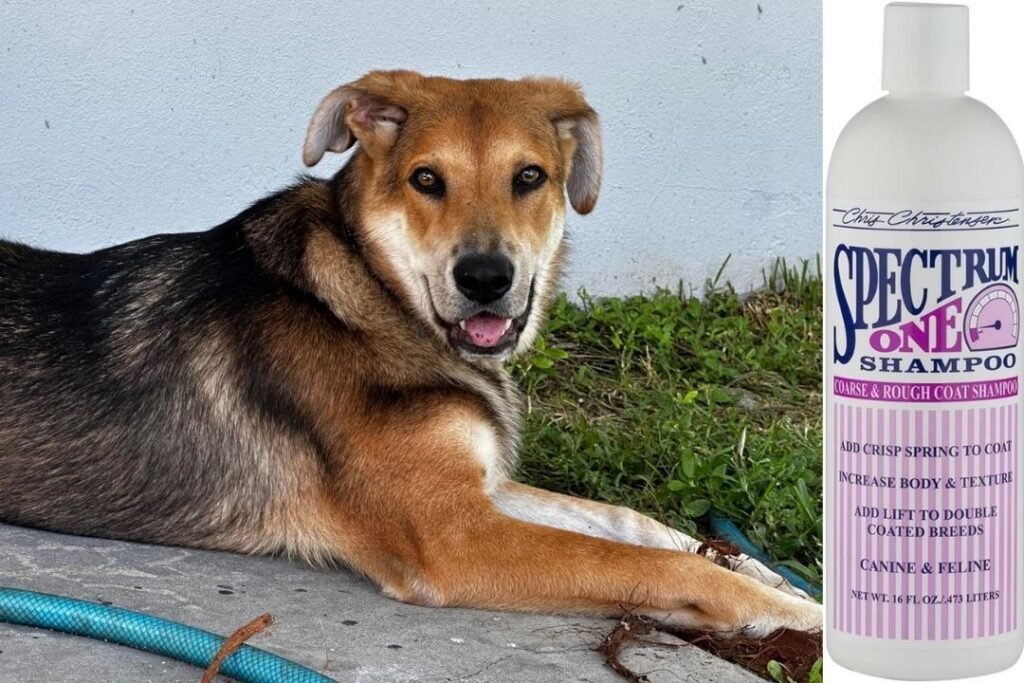
Product: Chris Christensen Spectrum One Shampoo
- Who it’s for: Show dogs, performance dogs, and owners who are tired of floppy, cotton-coat texture after a bath.
- Why I love it: Most “moisturizing” shampoos turn a proper terrier jacket into mush. Spectrum One cleans at a verified pH 7.0-7.2 and uses customized vegetable and keratin proteins to strengthen the hair shaft instead of softening it. The coat dries with snap – exactly what Poodle and Wire Fox Terrier owners pay groomers for.
- Is it expensive? Yes. Is it worth it? If you’ve ever fought with a Doodle mat or wished your Wire coat held its shape, you’ll thank me after one bath.
That’s it. Three bottles. Every dog that comes through my salon gets one of these, and I haven’t had a Buster situation since.
The Final Verdict
Washing your dog isn’t just about removing dirt; it’s about stewardship of their skin barrier.
If you take one thing away from this guide, let it be this: Throw away the human shampoo. It is not a marketing gimmick; it is biological incompatibility.
Your dog’s skin is a neutral environment. Keep it that way, and you will prevent 90% of the skin issues I see in my shop.
Now go give your dog a bath that actually heals.
Disclaimer: This guide is based on my professional experience as a groomer and is for informational purposes only. It is not a substitute for veterinary advice, diagnosis, or treatment. Always consult your veterinarian for persistent skin conditions.
Related post: Homemade Dog Shampoo Recipe | Vet-Safe Guide 2026