Have you ever spent an entire Sunday afternoon battling your dog’s coat, brushing until your arm ached, only to watch them walk across the living room and shake loose a brand-new snowstorm of fur?
Yep. You’re not alone. I see it every single day in the grooming salon.
As a certified groomer (and long-time owner of a Husky-mix who seems to shed purely out of spite), I’ve tried every product and technique on the market. From the cheap “miracle solutions” to the $40 luxury bottles.
And here is the unvarnished truth: deshedding shampoo for dogs doesn’t stop your dog from shedding.
I know. The bottle implies otherwise. But any product claiming to stop the natural cycle of hair loss is either lying or chemically damaging your dog’s coat.
So, what does it actually do? A true de-shedding system doesn’t stop the shed; it forces the loose undercoat out in the tub, rather than on your sofa. By pulling the dead hair during bath time, you’re effectively completing the entire shedding cycle in one session.
But here’s the catch that most dog owners miss: You can buy the most expensive shampoo on the market, but if you don’t understand how your dog’s coat works and how to apply it, you’re literally washing your money down the drain.
In this guide, I’m giving you my complete masterclass on how to choose the actual best deshedding shampoo for your dog’s specific coat, and the exact protocol we use in the salon to force the “coat blow.”
Part 1: Understanding Your Dog’s “Compound Follicle”
Before we talk about products, you need to understand what we’re actually dealing with.
Dogs have what is called a compound hair follicle. Unlike humans, who have one hair per pore, dogs have one primary guard hair surrounded by multiple soft, secondary hairs (the undercoat). The exact number varies by breed and location on the body—a Husky’s back will have far more secondary hairs than a Boxer’s belly—but in dense-coated breeds, it’s common to see up to 15 secondary hairs per follicle.
When a dog “blows coat” during seasonal changes, the follicles release the mature, non-living hair shafts that have completed their growth cycle. This natural process allows the old hair to be shed to make room for new growth. However, these loose hairs get tangled in the primary guard hairs, creating that dense, greyish wall of trapped dead undercoat that I call an “impacted coat.”
A standard dog shampoo just cleans the dirt off this tangled mess. It never reaches the root of the problem.
A true deshedding shampoo, however, is formulated with ingredients that help loosen that trapped undercoat, making it easier to remove during and after the bath.
Part 2: The “Label Audit” – What Makes a Shampoo Actually Work?
When I am stocking my salon, I ignore the marketing on the front of the bottle. I flip it over and look for the ingredients.
Here is exactly what you should be looking for based on your dog’s coat type:
| Ingredient Profile | The Groomer’s Translation | Best For… |
|---|---|---|
| Omega 3 & 6 Fatty Acids | Support healthy skin barrier function and coat condition, creating the right environment for dead hair to release naturally during the shedding cycle. | Double Coats (Huskies, Golden Retrievers, German Shepherds, Malamutes, Aussies). |
| Hydrolyzed Oat Protein | Acts as a humectant, drawing moisture into the hair shaft and smoothing the cuticle. This reduces friction, allowing dead hair to slide out more easily during brushing and rinsing. | Short/Dense Coats (Pugs, Labs, Beagles, Bulldogs). |
| Heavy Silicones (Dimethicone) | Creates massive artificial “slip” for immediate release. Note: Some silicones rinse clean, while others can accumulate with frequent use. In my experience, I reserve heavy silicone-based shampoos for compacted coats rather than weekly use. | Severe Compaction (Dogs that haven’t been brushed in months). |
| Harsh Sulfates (SLS/SLES) | AVOID. These harsh detergents strip the skin’s protective lipid barrier, leading to dryness and irritation. Chronically irritated skin cannot support a healthy coat, which leads to increased brittleness and breakage over time. | No dog. |
🛡️ A Note on D-Limonene: This citrus extract is a powerful degreaser found in some shampoos. It can be effective for oily coats but is also a potential skin irritant. Most importantly, it can be toxic to cats. Never use products containing D-Limonene on cats, and use caution with dogs with sensitive skin.
Part 3: The Groomer’s Shortlist – The Only Shampoos Worth Buying
Once you understand the ingredients, you can make an informed choice. I’ve tested dozens of formulas over the years. These are the three I keep stocked in my professional salon, depending on the coat type in front of me.
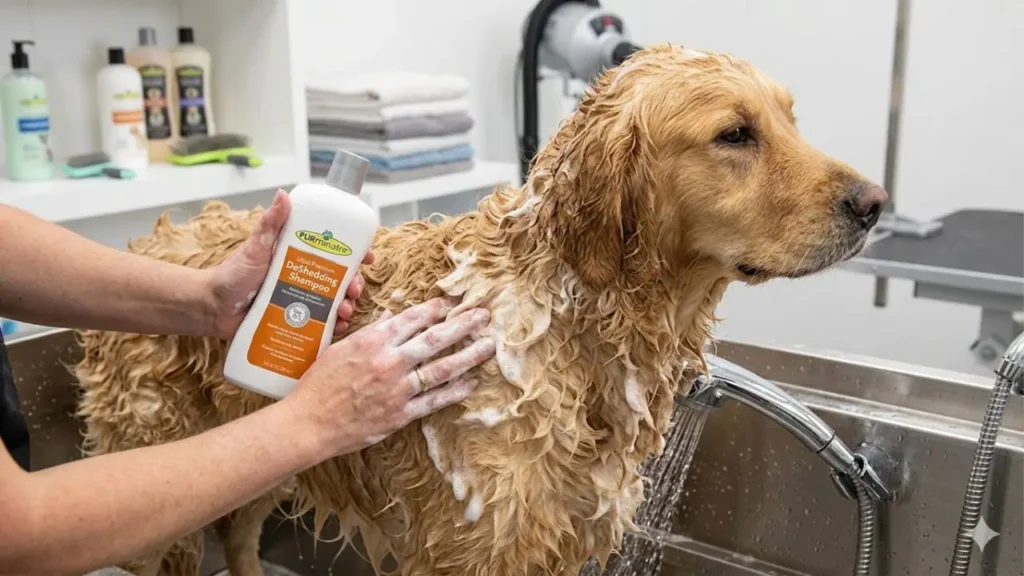
1. The Industry Standard: FURminator DeShedding Ultra Premium Shampoo
Look, it’s famous for a reason. This is the heavy artillery.
- The Science: It relies on a heavy blend of Omega-3 and Omega-6 fatty acids, plus Papaya and Calendula extracts. This combo supports skin health and helps maintain a moisturized environment, which aids in the smooth release of dead undercoat.
- Best For: Dense, double-coated breeds (Huskies, Malamutes, Golden Retrievers, Australian Shepherds).
- The Downside: It’s thick. You must dilute it properly (I use a 10:1 ratio with warm water), or it will take you hours to rinse it completely out.
2. The Sensitive Skin Hero: Earthbath Shed Control Green Tea & Awapuhi
A lot of heavy shedders (like Bulldogs or Pugs) also suffer from sensitive skin. You can’t hit them with heavy industrial deshedders without causing an allergy flare-up.
- The Science: This formula relies on Fair Trade Shea Butter and Glycerin to provide moisture and slip, combined with organic aloe vera and green tea extract to soothe the skin beneath. (Note: This is not the same formula as Earthbath’s Orange Peel Oil shampoo, which uses D-Limonene for degreasing.)
- Best For: Short-haired shedding breeds (Pugs, Beagles, Labradors) or any dog prone to itching.
- The Downside: It doesn’t create as much “slip” as the FURminator brand, so you’ll need to do more active work with a rubber curry in the tub.
3. The Groomer’s Hidden Gem: TropiClean PerfectFur (Specific Coat Formulas)
This is my current favorite line because it acknowledges a fundamental truth: A Corgi’s undercoat behaves differently than a Labrador’s shedding cycle.
- The Science: TropiClean formulated specific shampoos based on coat length and density. Their “Thick Double Coat” formula is excellent for exfoliating the skin and hydrating the heavy undercoat. It’s a tailored approach for your dog’s specific fur type.
- Best For: Owners who want a tailored approach rather than a one-size-fits-all bottle.
- The Downside: Because it’s a specialized approach, you’ll want to read the label carefully to match the formula to your specific dog’s coat type.
Part 4: The “Hydro-Slip” Bathtub Protocol
Now for the most important part. You can buy the best shampoo on my list, but if you just lather it up and rinse it off 60 seconds later, you are throwing your money down the drain.
You must combine the benefits of the shampoo with mechanical extraction.
Here is the exact step-by-step process I use on my grooming table.
Step 1: The Pre-Blow (Dry)
Do not put a shedding dog straight into the water. Water acts like cement on dead undercoat. Take a slicker brush and thoroughly brush the dry dog to break up the “webbing” of the dead hair. This loosens the top layer so the shampoo can penetrate deeper.
Step 2: The “Dilution Drive”
Deshedding shampoos are thick. If you apply a glob to your dog’s back, it will never reach the undercoat. It will just sit on top of the guard hairs.
- My Hack: Buy a cheap plastic condiment squeeze bottle. Put 2 inches of deshedding shampoo in the bottom, fill the rest with warm water, and shake vigorously until it’s sudsy. Use the nozzle to inject the diluted soapy water directly against the dog’s skin, bypassing the topcoat. Safety Note: Only do this with a shampoo that is free of harsh sulfates and strong essential oils. If your dog has sensitive skin, test a small patch first or stick to working the lather in from the top.
Step 3: The Rubber Curry Massage (Crucial)
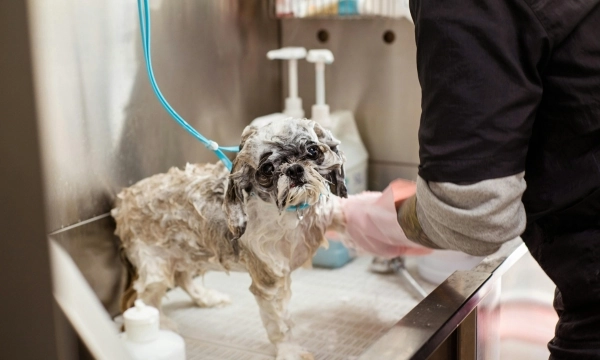
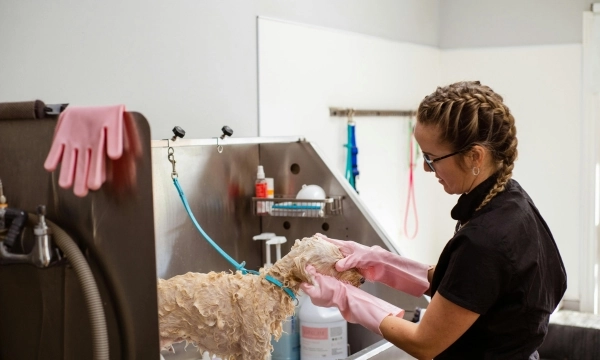
Do not use your fingers. While the dog is fully lathered with the deshedding shampoo, take a rubber curry brush (like a KONG ZoomGroom) and scrub the dog in firm, circular motions.
- Why this works: The shampoo has helped lubricate the coat. The rubber teeth grip the loosened, slippery hair and gently pull it out without scratching the wet skin. You will see clumps of hair start piling up in the tub immediately.
- Important: Stick to the rubber curry brush during the bath. Wet hair is in its most fragile state. Using a sharp wire slicker brush on a wet coat risks snapping healthy guard hairs. Save the metal tools for dry brushing only.
Step 4: The 5-Minute Marinate
Stop scrubbing and let the dog stand there for 5 to 10 full minutes. The moisturizing ingredients need time to penetrate and soften the hair. Set a timer. If you rinse immediately, you get zero deshedding benefits.
Step 5: The “Forced Release” Conditioner
This is a groomer’s golden rule: Shampoo does the cleansing and loosening, but conditioner does the lion’s share of the work in keeping dead coat from getting trapped again. In my experience, skimping on conditioner means you’re only doing half the job.
Shampoo opens the hair cuticle. Conditioner seals it back down. If you skip the conditioner, the cuticle remains open, meaning the hair will tangle easier and trap more dead fur in the coming weeks.
Apply the conditioner, let it sit for a full 3-5 minutes, and rinse with cool water to lock the cuticle down and add shine.
Step 6: The Velocity Dry
If you truly want to minimize shedding at home, towel drying won’t cut it. You need airflow to force the remaining loose, damp undercoat out of the follicle.
A high-velocity dog dryer is the best investment you can make if you own a heavy shedder. If you don’t have one, a hair dryer on the “cool” setting works, but it will take longer. Brush as you dry to remove the loosened fur.
Part 5: The “Aftermath” Warning
When you pull your dog out of the tub after using this protocol, they are going to look worse. Tufts of hair will be sticking out everywhere. They might look like a sad, wet, lumpy version of themselves.
Do not panic. This means the shampoo did exactly what it was supposed to do: it broke the bonds holding the dead coat in.
Once the dog is 100% bone dry, take an undercoat rake and brush them out. Because you used the moisturizing shampoo and conditioner, the hair will fly out effortlessly, painlessly, and in massive sheets.
You will have a mess in your bathroom today, but you will have a clean house for the next four to six weeks.
The Reality Check
No shampoo is going to turn your Golden Retriever into a hypoallergenic Poodle. Shedding is a natural, healthy process for dogs. The goal is not to stop it—it’s to manage it and keep your dog’s skin and coat healthy in the process.
If you invest in a quality shampoo (matching the ingredients to your dog’s coat type), commit to the 10-minute soak, use the right tools in the tub, and thoroughly dry the coat, you’ll see a massive reduction in the tumbleweeds rolling across your kitchen floor.
Now go forth and conquer that coat. Your vacuum cleaner will thank you.
related post: The Best Flea and Tick Shampoo for Dogs: A Groomer’s Tiered Guide