A Groomer’s Masterclass: The Cuticle-Seal Method
Early in my journey, I completely lost my confidence.
I had a client bring in a gorgeous, long-haired Afghan Hound—one of those show-stopping dogs that turns heads on the street. And I absolutely butchered the bath.
In a desperate attempt to save time, I used a highly-rated “2-in-1 Shampoo & Conditioner” I had bought in bulk. I scrubbed aggressively, rinsed quickly, and moved to the drying table.
It was a disaster.
As I tried to blow-dry that beautiful coat, it turned to felt. The brush wouldn’t go through. The hair was snapping. His skin was flaking. I ended up having to shave him down, apologizing profusely to the owner while fighting back tears of my own.
I was mortified. What failed wasn’t my work ethic; it was my fundamental misunderstanding of canine skin chemistry.
That failure sent me down a rabbit hole of dermatological research. I discovered the specific chemical insight that changed my entire career: Shampoo and conditioner do opposite things. You cannot chemically open and close a hair cuticle at the exact same time and expect both jobs done well.
If you are currently searching for the “best dog shampoo and conditioner,” I need to stop you right there.
Most pet owners—and even some amateur groomers—view washing a dog as a single action: removing dirt. But scientifically, bathing is a two-part process. If you do not understand the pH mechanics of a dog’s skin, you aren’t bathing them; you are chemically stripping them.
This guide isn’t a regurgitated list of Amazon affiliate links. This is a breakdown of the Cuticle-Seal Method, the exact framework I use to rehabilitate damaged coats and soothe chronically itchy skin. I’ve bathed over 8,000 dogs in my 15-year career, and this is the wisdom I wish someone had given me before I touched that Afghan Hound.
Part 1: The Chemistry of the Coat (Why 2-in-1 Products Are a Compromise)
Let’s look at the basic biology of your dog’s hair follicle. Each hair shaft is covered in microscopic scales called the cuticle.
Think of it like a pinecone. When the pinecone is open, the scales stand up. When it’s closed, they lie flat and smooth.
The Shampoo Phase (Opening)
To get a dog truly clean, a shampoo must be slightly alkaline. This alkalinity forces the cuticle scales to open up, allowing the surfactants to go in and scrub out the dirt, dander, sebum, and environmental pollutants.
Dog skin is naturally neutral-to-alkaline, with a pH ranging from 6.2 to 7.4. A quality canine shampoo is formulated to match this range.
The Conditioner Phase (Closing)
If you leave the tub now with that open cuticle, you’ve created a problem. That open cuticle will:
- Snag on other hairs (causing mats and tangles)
- Allow moisture to evaporate from the skin (causing dandruff and dryness)
- Leave the hair shaft vulnerable to damage
A conditioner, on the other hand, must be slightly acidic. Its entire job is to smooth those cuticle scales back down, locking in moisture and sealing the hair shaft against the elements.
Here is the undeniable truth: A single product cannot be both alkaline and acidic at the same time and do both jobs well. While chemists have found ways to make 2-in-1s that work reasonably well through a process called coacervation, they’re always a compromise. In my professional experience, separate products deliver noticeably better results—especially for double coats or dogs with skin issues.
The Verdict: Shampoo cleans the hair. Conditioner protects the skin. If you skip the conditioner, you are only doing half a bath.
Part 2: The Canine Acid Mantle (Put Down the Baby Shampoo)
The most common mistake I see is owners using human baby shampoo on their dogs. I understand why—it’s gentle, it’s “tear-free,” and it’s what we use on human babies. Surely it’s safe for dogs, right?
Here’s the science:
| Skin Type | pH Level | Characteristics |
|---|---|---|
| Human Skin | 5.5 to 5.6 (acidic) | Highly acidic “mantle” protects against bacteria and fungi |
| Canine Skin | 6.2 to 7.4 (neutral to slightly alkaline) | Different protective mechanisms, less acidic |
If you use human shampoo on a dog regularly, you risk disrupting their skin’s natural pH balance over time. Baby shampoo is gentler, but it’s simply not formulated to clean a dog’s coat effectively. Repeated use of any human product can lead to dryness, irritation, and skin problems down the road.
My Rule: If it’s not specifically formulated for canine pH, it doesn’t go on a dog in my salon.
Part 3: The “Skin First” Framework
Before we talk about specific products, I need you to understand something that took me years to learn:
You are not washing hair. You are washing skin that happens to have hair growing out of it.
This is the single biggest mistake dog owners make. They focus on the coat—how it looks, how it smells, how it feels—and completely ignore the skin underneath.
Here’s why that matters:
| If You Focus On… | You’ll Buy Products That… | And Your Dog Ends Up With… |
|---|---|---|
| Coat appearance | Heavy fragrances, optical brighteners, coating agents | Smelly dog in three days, dull coat long-term |
| Coat smell | Masking fragrances, “perfume” ingredients | Chemical irritation, allergic reactions, rebound stink |
| Coat softness | Heavy silicones, artificial conditioners | Product buildup, clogged pores, flat greasy coat |
| Skin health | Balanced pH, moisturizing ingredients, gentle cleansers | Healthy coat that naturally smells better and sheds less |
The “Skin First” Framework is simple: Evaluate every shampoo based on how it treats the skin. The coat will take care of itself.
Part 4: The 4-Question Diagnostic (Before You Buy Anything)
When a client walks into my salon with a new dog, I don’t recommend a shampoo until I answer four questions. You should do the same before spending money on another bottle.
Question 1: What Is My Dog’s Skin Type?
This is not a guessing game. Here’s how to actually check:
The Observation Test:
- After petting your dog, look at your hand. Flakes? That’s dryness.
- Run your fingers against the grain of the fur on their back. Greasy residue? That’s oiliness.
- Part the fur down to the skin in three spots: back, belly, and behind ears. What color is the skin? Pink is healthy. Red is irritated. Darkened or black in non-pigmented areas can indicate chronic inflammation.
The Calendar Check:
- Does your dog itch more during certain seasons? (Allergies)
- Do they get “hot spots” in summer? (Moisture-related issues)
- Is the shedding constant or seasonal? (Normal vs. hormonal)
Question 2: What Is My Dog’s Coat Type?
This seems obvious, but you’d be amazed how many people get it wrong.
| Coat Type | Characteristics | Examples | Bathing Needs |
|---|---|---|---|
| Double Coat | Soft dense undercoat, harsh outer guard hairs | Husky, Golden, German Shepherd, Corgi | Volumizing, moisturizing; needs extra drying time |
| Single Coat | One layer, can be silky or coarse | Poodles, Maltese, Yorkies | Hydrating, anti-tangle, often hypoallergenic |
| Short Smooth Coat | Dense, close-lying, often oily | Labs, Boxers, Pit Bulls, Beagles | Degreasing, gentle, rubber curry essential |
| Wire Coat | Harsh, crisp, often hand-stripped | Terriers, Schnauzers, Wirehaired breeds | Texturizing, not over-softening |
| Curly/Wavy Coat | Spirals or waves, prone to matting | Doodles, Portuguese Water Dogs, Bichons | Heavy conditioning, anti-static, detangling |
Question 3: Are There Any “Red Flag” Conditions?
Check for these before bathing:
- Open sores or hot spots
- Bumps, lumps, or growths you haven’t had vet-checked
- Known allergies to specific ingredients (oat, tea tree, etc.)
- Recent surgery or stitches
- Fear-based bath anxiety
Question 4: What’s My Realistic Bathing Schedule?
Be honest with yourself. Are you bathing weekly, monthly, or “when they start to smell like a bog creature”?
| Schedule | What Your Dog Needs |
|---|---|
| Weekly (swimming, messy play, medical reasons) | Ultra-gentle, sulfate-free, extra moisturizing |
| Monthly (average household pet) | Balanced cleanser with good conditioning |
| Every 2-3 months (“when they need it”) | Slightly stronger cleanser, deep conditioning treatment |
| Once or twice a year | Honestly, just go to a professional. Your dog deserves it. |
Part 5: The Ingredient Decoder (What Those Labels Actually Mean)
Here’s something that drives me crazy: Shampoo companies know you don’t read labels, so they fill them with marketing fluff and hide the important stuff in microscopic font.
Let me teach you what to look for—and what to run from.
The “Yes” List: Ingredients That Actually Help
| Ingredient | What It Does | Best For | My Experience |
|---|---|---|---|
| Oatmeal (Colloidal) | Soothes irritation, reduces itching, gentle cleansing. It actually binds to the skin and provides a microscopic protective barrier. | Sensitive skin, allergies, post-surgery | I’ve seen oatmeal shampoos stop acute itching in minutes. It’s not a cure, but it’s immediate relief. |
| Aloe Vera | Cooling, moisturizing, anti-inflammatory. Acts as a humectant, drawing moisture from the air into the newly sealed cuticle. | Sunburn, hot spots, dry skin | Keep a bottle of pure aloe in your grooming kit. You’ll use it constantly. |
| Vitamin E | Antioxidant, skin repair, moisture retention | Aging dogs, damaged coats | I add vitamin E oil to conditioners for senior dogs. Their skin gets thin and dry just like ours. |
| Omega Fatty Acids (topical) | Supports healthy skin barrier function and coat condition, creating the right environment for dead hair to release naturally. | Dull coats, flaky skin | Not as effective as oral supplements, but they help. Think of them as surface support. |
| Honey/Propolis | Natural antibacterial, humectant | Minor skin issues, dry patches | Manuka honey shampoos are expensive but worth it for dogs with chronic dry skin. |
| Ceramides | Rebuilds skin barrier | Compromised skin, post-infection | These are in high-end medical shampoos for a reason. They actually repair. |
| Chlorhexidine (medicated) | Antibacterial, antifungal | Vet-prescribed for infections | This is medicine, not cosmetic. Use only under veterinary guidance. |
The “Maybe” List: Ingredients With Caveats
| Ingredient | What It Does | The Caveat |
|---|---|---|
| Tea Tree Oil | Natural antiseptic, antifungal | Toxic if ingested, can be too strong for cats/small dogs. Diluted in professional products is fine. Straight oil is dangerous. |
| Coconut Oil | Moisturizing, pleasant smell | Can be heavy and cause buildup on some coats. Rinse thoroughly. |
| Silicones (Dimethicone, etc.) | Create slip, detangling, shine | Some are water-soluble and rinse clean. Others build up and dull the coat. If it ends in “-cone” and you’re using it weekly, watch for buildup. |
| Essential Oils (Lavender, etc.) | Scent, calming properties | Dogs’ noses are 10,000-100,000 times more sensitive than ours. What smells subtle to you is overwhelming to them. Less is more. |
The “Absolutely Not” List: Ingredients I Never Use
| Ingredient | Why It’s Bad | What It Hides Behind |
|---|---|---|
| Sodium Lauryl Sulfate (SLS) / Sodium Laureth Sulfate (SLES) | Too harsh for most dogs. Strips natural oils, causes irritation, leads to rebound oiliness and stink. | “Creates rich lather” (Lather doesn’t clean. Rinsing cleans.) |
| Parabens (Methyl-, Propyl-, etc.) | Preservatives linked to skin irritation and potential health concerns | “Preserves freshness” |
| Phthalates | Used to make fragrance last longer. Endocrine disruptors in some studies. | Hidden in “fragrance” or “parfum” |
| Artificial Colors (FD&C, D&C) | Zero benefit. Potential irritants. Stains light coats. | “Beautiful color” (It’s for you, not your dog.) |
| Formaldehyde-releasing preservatives (DMDM Hydantoin, etc.) | Slowly release formaldehyde to prevent bacteria. Known allergens. | “Preserves formula” |
| DEA/MEA/TEA | Foam boosters and pH adjusters. Can be contaminated with nitrosamines. | “Helps create rich lather” |
My Rule: If I wouldn’t put it on my own skin regularly, I’m not putting it on a dog’s skin.
Part 6: The “Big Three” Systems (My Tried-and-Tested Salon Kit)
I have tested dozens of combos on everything from wiry Terriers to drop-coated Shih Tzus. These are the only three paired systems that consistently deliver professional-grade results without compromising the dog’s acid mantle.
1. The Healing Duo: Earthbath Oatmeal & Aloe System
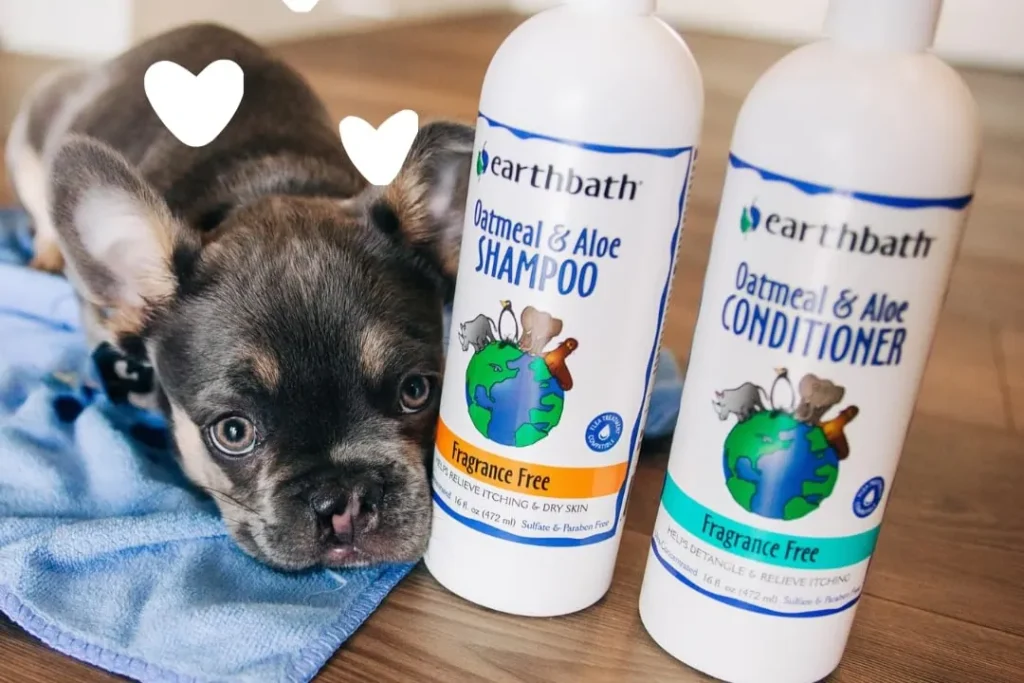
Best For: Dogs with allergies, itchy skin, sensitive skin, or frequent bathers.
The Chemistry: Earthbath uses a colloidal oatmeal base. The shampoo gently lifts environmental allergens (like pollen) without harsh sulfates. Oatmeal doesn’t just soothe; it actually binds to the skin and provides a microscopic protective barrier. The paired conditioner is rich in aloe vera, which actively cools the microscopic inflammation left behind by scratching.
Why it wins: It’s fragrance-free (or naturally scented with vanilla/almond) and has a verified pH that perfectly matches canine skin. This is what I recommend to 80% of my clients.
The Cuticle-Seal Application: Lather the shampoo and let it sit for 3 minutes. Rinse completely. Apply the conditioner and let it sit for a full 5 minutes. If you rinse the conditioner immediately, you have wasted your money. It takes time for the acidity to close the hair scales.
2. The Deshedding Heavyweight: FURminator Ultra Premium System
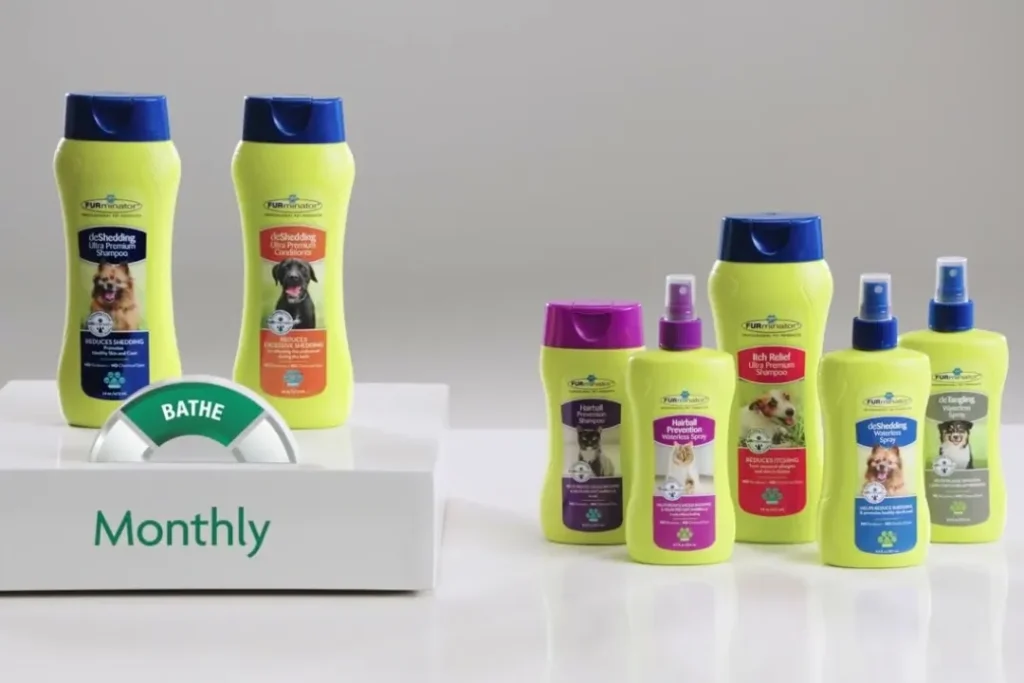
Best For: Double-coated breeds (Huskies, German Shepherds, Golden Retrievers, Corgis, Malamutes).
The Chemistry: This is all about Omega-3 and Omega-6 fatty acids. The shampoo plumps the dead undercoat and supports skin health, while the conditioner provides immense “slip” that allows that dead coat to release.
My Hack ✓: Apply the FURminator conditioner and use a rubber curry brush (like a KONG ZoomGroom) while the conditioner is still in the coat. The dead hair will slide out in the tub, saving you an hour of vacuuming later. I’ve pulled nearly a pound of hair out of a single Husky using this method.
The Downside: It’s thick. You must dilute it properly, or it will take you hours to rinse completely out.
3. The Drop-Coat Miracle: Chris Christensen Spectrum Ten
Best For: Poodles, Doodles, Yorkies, Maltese, and other dogs with “hair” rather than “fur” (continuously growing coats prone to matting).
The Chemistry: Formulated specifically for soft, silky, flowing coats. It utilizes heavy silanes that bind to the hair shaft, making it nearly impossible for the hair to tangle upon drying.
Why it wins: If your dog mats easily in their armpits, behind their ears, or where collars rub, this combo smooths the cuticle so aggressively that friction knots simply cannot form. It’s expensive, but for doodle owners, it’s worth every penny.
4. Bonus: The Antimicrobial System (For When Things Go Wrong)
Best For: Yeast overgrowth, odor issues, hot spots.
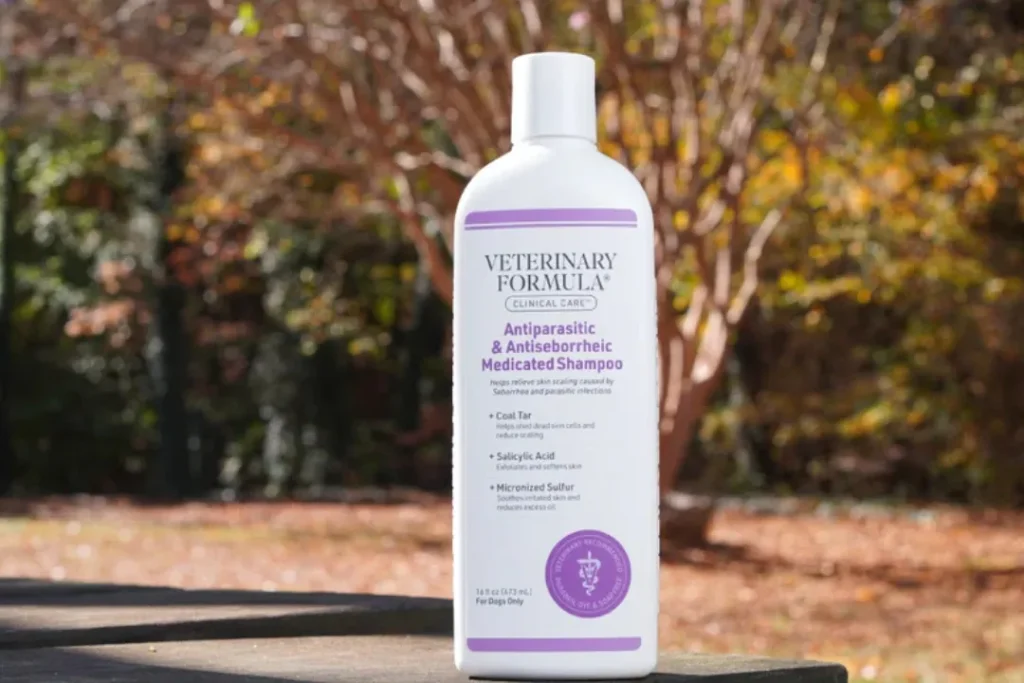
The Chemistry: If your dog smells like “corn chips” or Fritos, they have a yeast overgrowth (Malassezia). You cannot condition a yeasty dog with heavy creams, as it feeds the yeast. You need Coal Tar, Salicylic Acid, and Micronized Sulfur to kill the fungal bloom.
My Pick: Veterinary Formula Clinical Care Antiparasitic & Antiseborrheic Shampoo
The Cuticle-Seal Application: Because you cannot use a heavy cream conditioner here, you must use a water-based, acidic leave-in spray after towel drying to close the cuticle without suffocating the skin. TropiClean’s leave-in conditioner sprays work well for this.
Warning: If you suspect a yeast infection, see a vet. This shampoo is for maintenance after diagnosis, not for self-diagnosis.
Part 7: The Shampoo & Conditioner Matrix (By Dog Type)
Here’s a broader matrix for matching products to your specific dog:
| Dog Type | Shampoo Focus | Conditioner Focus | My Pick |
|---|---|---|---|
| Adventure Dog (hikes, swims, rolls in things) | Deep cleansing, odor control | Moisture replacement | Nature’s Specialties Odor Eliminator |
| Itchy Dog (allergies, sensitive skin) | Soothing, anti-inflammatory, gentle | Extra soothing, cooling | Earthbath Oatmeal & Aloe |
| Double-Coated Dog (Huskies, Goldens) | Undercoat release, moisturizing | Heavy slip, sealing | FURminator Ultra Premium System |
| Oily Dog (Labs, Pugs) | Gentle degreasing, balancing | Lightweight, non-comedogenic | CHI Deep Cleansing & Deodorizing |
| Puppy (first baths) | Ultra-gentle, tear-free | Light, simple | TropiClean Puppy Shampoo |
| Senior Dog (aging skin) | Extra moisturizing, easy-rinse | Heavy moisturizing | Burt’s Bees for Dogs Natural Oatmeal |
| Mat-Prone Dog (Doodles, Yorkies) | Anti-static, detangling | Heavy slip, sealing | Chris Christensen Spectrum Ten |
| “I Don’t Know” Dog | Balanced, gentle, reliable | Balanced, reliable | 4-Legger Certified Organic |
Part 8: The Complete Cuticle-Seal Bathing Protocol
This is the exact process I use on every dog in my salon. Follow this, and you’ll get professional results at home.
Before You Start: The Setup
Gather:
- Shampoo (appropriate for your dog)
- Conditioner (matching or complementary)
- 2-3 towels (old towels you don’t care about)
- Rubber curry brush (ZoomGroom or similar)
- Squeeze bottle for dilution
- Non-slip mat for tub floor
- Cotton balls (for ears)
- Treats (lots of treats)
Step 1: The Pre-Bath Brush (Crucial)
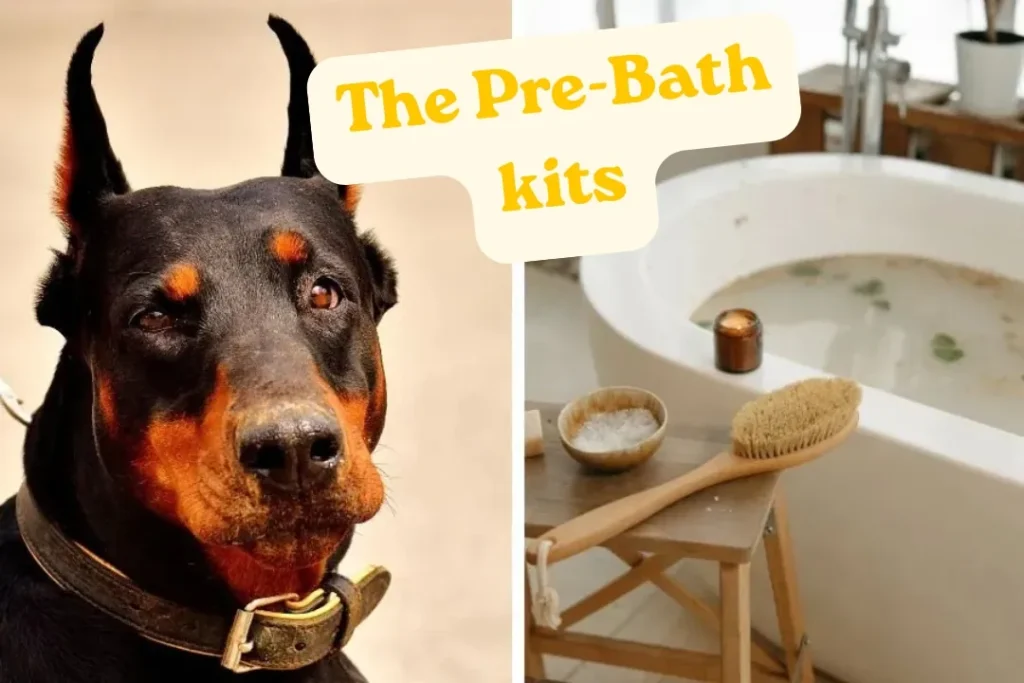
Do not put a shedding dog straight into the water. Water acts like cement on dead undercoat. Take a slicker brush and thoroughly brush the dry dog to break up the “webbing” of the dead hair. This loosens the top layer so the shampoo can penetrate deeper.
If you find a mat you can’t brush out, cut it out now (carefully) or see a professional. Water will make it worse.
Step 2: Ear Protection
Place a cotton ball gently in each ear canal. Not shoved in—just enough to block water. Water in ears = ear infections.
Step 3: The “Dilution Drive” (My Most Important Hack)
If you are squirting a line of thick shampoo directly down your dog’s spine, you are doing it wrong. You will use too much product, you won’t get it down to the skin, and you will never rinse it all out (leading to chemical burns).
The Professional Method:
Buy a cheap plastic condiment squeeze bottle. Put 1 inch of shampoo in the bottom. Fill the rest with warm water and shake vigorously until it’s sudsy. Use the nozzle to inject the diluted soapy water directly against the dog’s skin, bypassing the topcoat entirely.
Why this works:
- The aeration activates the surfactants, meaning you use 80% less product and get twice the lather
- You reach the skin, where the cleaning actually needs to happen
- Diluted product rinses out completely, leaving no residue
Repeat this exact same process for the conditioner when you get to that step.
Safety Note: Only do this with a shampoo that is free of harsh sulfates and strong essential oils. If your dog has sensitive skin, test a small patch first.
Step 4: Wet Down
Start at the rear and work forward. Dogs are most sensitive around the head and face, so save that for last. Use lukewarm water—not hot, not cold. Test it on your wrist like a baby bottle.
Pro Tip: Keep the sprayer/nozzle against the coat as you wet. This helps water penetrate the undercoat instead of just running off the top.
Step 5: Apply Shampoo
Apply your diluted shampoo starting at the back, working forward. Use your hands to work it through the coat down to the skin.
The Massage: Use your fingertips (not nails) in circular motions. You’re not just cleaning—you’re stimulating circulation and checking for bumps or sensitive spots.
Step 6: The 5-Minute Rule
Here’s where most owners fail: They rinse too fast.
Let the shampoo sit for a full 5 minutes. The ingredients need time to work. Set a timer if you have to.
During this time, use your rubber curry brush in gentle circles. You’ll see hair starting to release. That’s good.
Step 7: Rinse Thoroughly
Rinse until the water runs clear. Then rinse again. Shampoo residue is a major cause of skin irritation.
The Squeegee Test: Run your hand against the grain of the coat. If you feel any slipperiness or residue, rinse more.
Step 8: Apply Conditioner
Apply conditioner from mid-back down. Avoid the face unless it’s a specific facial formula.
Work it through with your fingers, then use a wide-tooth comb to distribute evenly.
Step 9: The 5-Minute Rule (Again)
Let conditioner sit for 3-5 minutes minimum. This isn’t optional—it needs time to penetrate and close those cuticles.
My Hack ✓: While the conditioner is soaking, use your rubber curry brush in firm circular motions. The conditioner provides immense “slip,” and the rubber teeth grip the loosened hair and pull it out without damaging the healthy coat. You will see clumps of hair piling up in the tub—that’s hair that won’t end up on your couch.
Important: Stick to the rubber curry brush during the bath. Wet hair is in its most fragile state. Using a sharp wire slicker brush on a wet coat risks snapping healthy guard hairs. Save the metal tools for dry brushing only.
Step 10: Final Rinse (Cool Water)
Rinse with slightly cool water. This helps seal the cuticle and adds shine.
Rinse until the water runs clear and the coat squeaks slightly when you run your fingers through it.
Step 11: The Towel Dry
Do not rub. Rubbing causes tangles and friction damage.
Instead, blot and squeeze. Use one towel to absorb most water, then switch to a dry towel and repeat.
Step 12: The Dry (Crucial for Double Coats)
If you have a double-coated dog, drying is not optional. Wet undercoat that stays wet can lead to skin infections and hot spots.
- High-velocity dryer: Best option. Forces water out and blows loose undercoat free.
- Human hair dryer: Use on cool or low heat. Keep it moving.
- Air dry: Only for short-coated dogs in warm weather. Never let a double-coated dog air dry—the undercoat stays damp for hours.
Step 13: The Final Brush
Once completely dry, give a final brush. This removes any last loose hair and leaves the coat looking professional.
Part 9: The “Aftermath” Warning
When you pull your dog out of the tub after using this protocol—especially if you have a double-coated breed—they are going to look worse. Tufts of hair will be sticking out everywhere. They might look like a sad, wet, lumpy version of themselves.
Do not panic. This means the shampoo did exactly what it was supposed to do: it broke the bonds holding the dead coat in.
Once the dog is 100% bone dry, take an undercoat rake and brush them out. Because you used the moisturizing shampoo and conditioner, the hair will fly out effortlessly, painlessly, and in massive sheets.
You will have a mess in your bathroom today, but you will have a clean house for the next four to six weeks.
Part 10: Real-Life Case Studies
Let me show you how this plays out with real dogs.
Case Study 1: Winston (The Mastiff With the Meltdown)
The Dog: Winston, 5-year-old English Mastiff
The Problem: Chronic skin irritation, musty odor within days of bathing, owner in tears
The History: Owner using 2-in-1 “deodorizing” shampoos every 2 weeks
My Diagnosis: Product buildup from 2-in-1 was trapping oil and bacteria against his skin. The “deodorizing” fragrances were actually irritating his skin further.
The Fix:
- Initial deep cleanse: Used a gentle clarifying shampoo (CHI) to remove buildup
- Conditioning treatment: Applied a deep conditioner with oatmeal and aloe, left for 10 minutes
- New protocol: Switched to Earthbath Oatmeal & Aloe system for maintenance
- Schedule change: Bathe every 3-4 weeks instead of every 2 weeks
The Result: Within two baths, Winston’s skin was pink and healthy. The odor was gone because the bacteria had nowhere to hide. His owner cried happy tears when she brought him in for his follow-up.
Case Study 2: Oliver (The Chronic Itch)
The Dog: Oliver, 3-year-old French Bulldog
The Problem: Intensely itchy year-round, scratching until he bled
The History: Vet ruled out food allergies. Owner was bathing weekly with expensive medicated chlorhexidine shampoo but using no conditioner.
My Diagnosis: I looked at Oliver’s coat. It was dull, brittle, and felt like straw. The owner was using a high-powered, stripping shampoo every week but never using a conditioner. She had completely obliterated his skin’s lipid barrier.
The Fix:
- Stopped the medicated shampoo (it wasn’t needed)
- Switched to a mild, ceramide-based hydrating shampoo
- The Crucial Step: Mandated a 5-minute soak in a heavy ceramide-infused conditioner after every wash to artificially rebuild his moisture barrier
The Result: Within three weeks (three baths), Oliver stopped scratching. He didn’t have a mysterious allergy; his skin was just screaming for moisture.
Case Study 3: Luna (The Husky Who Wouldn’t Stop Shedding)
The Dog: Luna, 3-year-old Siberian Husky
The Problem: “Tumbleweeds” of fur everywhere, owner frustrated
The History: Owner using “deshedding” shampoo but rinsing immediately
My Diagnosis: The shampoo wasn’t getting time to work, and no conditioner was used afterward
The Fix: I used the full Cuticle-Seal Protocol with FURminator system, including the 5-minute soaks and rubber curry in the tub.
The Result: Luna’s owner brought me a bag of the hair that came out in the bath. It weighed almost a pound. She hasn’t seen tumbleweeds since.
Part 11: The In-Bath Diagnostic Chart
As an expert, the bath is where I do my best physical assessments of a dog. When the hair is flat and wet, the skin tells a story.
Use this chart during the shampoo phase:
| What You See/Feel | What It Likely Means | Action to Take |
|---|---|---|
| Tiny black flecks that turn red when wet | Flea dirt (digested blood). You have an active infestation. | Switch immediately to a Pyrethrin-based shampoo system. Treat your home and yard. |
| Greasy, yellow, scaly patches (especially on the back) | Seborrhea (overproduction of sebum). | Use a Salicylic acid-based shampoo; avoid heavy conditioners. |
| Red, raw, localized circles that are hot to the touch | Acute Moist Dermatitis (Hot Spots) . | Stop scrubbing. Rinse gently, dry completely, and consult a vet for a topical steroid/antibiotic. |
| “Corn chip” smell + redness between toes/ears | Yeast (Malassezia) overgrowth. | Use an antifungal shampoo (Ketoconazole or Chlorhexidine). See a vet for diagnosis. |
| Dry, flaky skin with no redness | Simple dryness. | You’re using shampoo that’s too harsh or skipping conditioner. Switch to moisturizing products. |
| Bumps, hives, or swelling during bath | Allergic reaction. | Rinse immediately with cool water. Stop bathing. See a vet if swelling continues. |
This chart represents 15 years of seeing skin conditions in the tub. Print it out. Keep it in your bathroom. It will save you vet bills.
Part 12: The “Problem Solver” Flowchart
Use this quick guide when something’s not right:
| If Your Dog… | The Problem Might Be… | Try This… |
|---|---|---|
| Smells within 3 days of bath | Product buildup or bacteria trapped in coat | Use a clarifying shampoo once, then switch to lighter products |
| Scratches immediately after bath | Allergic reaction to something in the shampoo | Switch to hypoallergenic, fragrance-free formula |
| Has flaky skin after drying | Shampoo too harsh or conditioner skipped | Use moisturizing shampoo, always condition |
| Looks greasy within a week | Shampoo too mild or “rebound oil” from harsh shampoo | Use balanced shampoo, not too harsh or too gentle |
| Develops hot spots after bathing | Trapped moisture in undercoat | Dry more thoroughly, especially double coats |
| Hates bath time completely | Previous bad experience or anxiety | Try “bathroom spa” approach: treats, calm voice, warm room, quick process |
Part 13: When to See a Professional (Or a Vet)
I’m a groomer, not a veterinarian. Here’s when you need someone with more credentials:
See a Vet If:
- Your dog has open sores, scabs, or lesions
- There’s significant hair loss in patches
- The skin is hot to the touch
- There’s a strong, yeasty, or foul odor (different from normal “dog smell”)
- Your dog is scratching to the point of injuring themselves
- You see live fleas or signs of mites
- The problem has lasted more than two weeks despite your efforts
See a Professional Groomer If:
- Your dog is severely matted (attempting to bathe a matted dog will tighten the mats)
- Your dog is aggressive or terrified during baths
- You have a giant breed you can’t safely handle
- You want a “deshed” treatment that removes maximum loose coat
- You’re just tired of the mess and want to treat yourself and your dog
Part 14: My Current Favorite Combinations (By Budget)
After testing hundreds of products, here are the combinations I actually use and recommend:
Budget-Friendly (Under $20 total)
| Product | Why I Like It | Best For |
|---|---|---|
| Burt’s Bees for Dogs Natural Oatmeal Shampoo | Simple ingredients, widely available, gentle | Everyday use, sensitive skin |
| Burt’s Bees for Dogs Natural Conditioner | Matches the shampoo, light, rinses well | Everyday use |
The Combo: ~$16-18 total. Solid, reliable, no-nonsense.
Mid-Range ($20-40 total)
| Product | Why I Like It | Best For |
|---|---|---|
| Earthbath Oatmeal & Aloe Shampoo | Soothes, smells natural (not perfumed), rinses clean | Sensitive skin, general use |
| Earthbath Oatmeal & Aloe Conditioner | Light enough for regular use, adds slip without buildup | Daily conditioning |
The Combo: ~$25-30 total. This is what I recommend to 80% of my clients.
Premium ($40-60 total)
| Product | Why I Like It | Best For |
|---|---|---|
| 4-Legger Certified Organic Dog Shampoo | Certified organic, incredibly gentle, short ingredient list | Ultra-sensitive dogs, health-conscious owners |
| 4-Legger Certified Organic Conditioner | Rich, moisturizing, natural | Dogs needing extra moisture |
The Combo: ~$45-55 total. Worth it for dogs with chronic skin issues.
Professional Grade ($60+ total)
| Product | Why I Like It | Best For |
|---|---|---|
| FURminator Ultra Premium Deshedding Shampoo | Heavy-duty deshedding, salon results | Double-coated breeds in shedding season |
| FURminator Ultra Premium Deshedding Conditioner | The real star—plumps hair, releases undercoat | Double-coated breeds |
| CHI Deep Cleansing & Deodorizing Shampoo | Cuts oil, gentle enough for regular use | Oily coats, between deep cleans |
| CHI Conditioner | Silky, detangling, professional finish | All coat types |
| Chris Christensen Spectrum Ten | The gold standard for mat-prone coats | Doodles, Poodles, Yorkies, show dogs |
The Combo: ~$60-100 total. This is salon-quality. You’ll notice the difference.
Part 15: My “Bath Schedule” Recommendations
How often should you bathe your dog? It depends:
| Type | Frequency | Notes |
|---|---|---|
| Indoor dog, short coat, normal activity | Every 4-6 weeks | Can go longer if they stay clean |
| Indoor dog, double coat, normal activity | Every 6-8 weeks | Too frequent strips natural oils |
| Active dog, outdoor adventures | As needed (every 2-4 weeks) | Rinse after swimming, bathe when dirty |
| Dogs with skin conditions | As directed by vet | Could be weekly with medicated shampoo |
| Dogs who rarely go out | Every 8-12 weeks | More about skin health than dirt removal |
| Puppies | Every 4-6 weeks after first vaccines | Keep it positive and short |
The Golden Rule: Bathe when dirty or smelly, but not more than once a week unless medically necessary.
Part 16: The “One Weird Trick” That Actually Works
I promised you unique advice, so here it is:
The Towel Trick for Smelly Dogs
If your dog gets stinky between baths but doesn’t need a full bath, here’s what I do:
- Wet a towel with warm water
- Add a tiny drop of your dog’s conditioner (literally a pea size for a medium dog)
- Rub the towel between your hands to distribute
- Wipe your dog down thoroughly, focusing on smelly areas (ears, neck, backend)
- Dry with a clean towel
This isn’t as good as a bath, but it refreshes the coat, adds a little conditioning, and removes surface odor without stripping oils. I use this on my own dog after beach trips when I don’t have time for a full bath.
The Bottom Line
Choosing the right shampoo and conditioner for your dog doesn’t have to be complicated. Remember the Cuticle-Seal Method:
- Shampoo opens the cuticle to clean. Let it sit for 5 minutes.
- Conditioner closes the cuticle to protect. Let it sit for 5 minutes.
- Avoid 2-in-1 products for double coats or sensitive dogs. They’re a compromise.
- Avoid human products. They can disrupt your dog’s skin over time.
- Skin first, coat second. Healthy skin grows healthy coat.
- Read labels, not marketing. Ignore the front of the bottle. Flip it over.
- Avoid harsh sulfates, parabens, and artificial junk. Your dog’s skin absorbs what you put on it.
- Match the product to your dog’s actual needs, not the cute dog on the bottle.
- Use the dilution method. It saves product and reaches the skin.
- When in doubt, go gentle. You can always add more cleaning power later.
That Afghan Hound I butchered early in my career? His owner gave me a second chance. I eventually became their regular groomer, and that dog lived to 14 with a gorgeous, healthy coat. The key wasn’t a magic product—it was understanding the chemistry and respecting the process.
Your dog deserves the same.
Related post: Best Dog Shampoo