I still remember the afternoon I almost ruined a client’s relationship with me over a bottle of “miracle” Best Waterless Dog Shampoo.
The dog was a 12-year-old Golden Retriever named “Samson.” He had just undergone hip surgery and couldn’t be lifted into the tub. He smelled heavily of the vet clinic and old sebum. Wanting to help, I grabbed a highly-rated, lavender-scented waterless spray, doused him in it, rubbed it in with my hands, and sent him home.
The next morning, his owner called me in tears. Samson didn’t just smell like dirty dog and fake lavender; his entire hindquarters had turned into a sticky, matted crust. The waterless shampoo had acted like glue, cementing the loose undercoat and dirt right to his skin. I had to go to her house and spend two hours carefully spot-cleaning him with a damp sponge to fix my mistake.
That catastrophic failure taught me the single most important lesson about canine coat care: Waterless shampoo does not make dirt vanish into thin air. It is a chemical binder, and if you don’t physically extract it, you are just making mud.
If you are searching for the “best waterless dog shampoo” because your dog hates the tub, is recovering from surgery, or just rolled in something suspicious on a road trip, stop looking at the scents on the bottle. Here is my Master Groomer protocol for choosing the right formula, and the exact extraction technique you must use to avoid the “sticky dog” syndrome.
The “Bind-and-Pull” Reality of Best Waterless Dog Shampoo
Most internet guides will tell you to “spray, massage, and let dry.” This is terrible advice.
Waterless shampoos (whether foams, sprays, or powders) use mild surfactants and starches to encapsulate dirt and absorb excess lipid oils (sebum). But once that dirt is encapsulated, it is still sitting on your dog. If you just let it air dry, you create a heavy residue that attracts more dirt tomorrow.
You must pair the chemical binder with mechanical extraction.
The Formula Audit: Matching the Mess to the Medium
Not all waterless shampoos are created equal. In my salon, I stock three distinct types because a spray that fixes dusty paws will completely fail against a greasy, rolling-in-garbage mess.
| The Formula Type | The Chemical Mechanic | Best Used For… |
|---|---|---|
| 1. The Dense Foam | Foams contain higher concentrations of surfactants. They penetrate deep into the coat without dripping, breaking down heavy grease and organic matter. | Muddy paws, urine stains on hind legs, spot-cleaning feces. |
| 2. The Liquid Spray | Sprays use odor-neutralizers (like baking soda or enzymatic binders) and light conditioners. They sit on the topcoat. | General deodorizing, dusty coats, wiping down short-haired breeds. |
| 3. The Dry Powder | Usually a blend of cornstarch and clay. It purely absorbs oil and moisture without adding any liquid to the coat. | Oily/greasy coats (like Terriers), or dogs terrified of spray bottle noises. |
The “Big Three”: My Salon-Vetted Waterless Kit
I have tested dozens of waterless products that left my hands feeling like they were coated in hairspray. These are the three I actually keep in my mobile grooming bag.
1. The Deep Cleaner: Wahl Pet-Friendly Waterless No-Rinse Foam
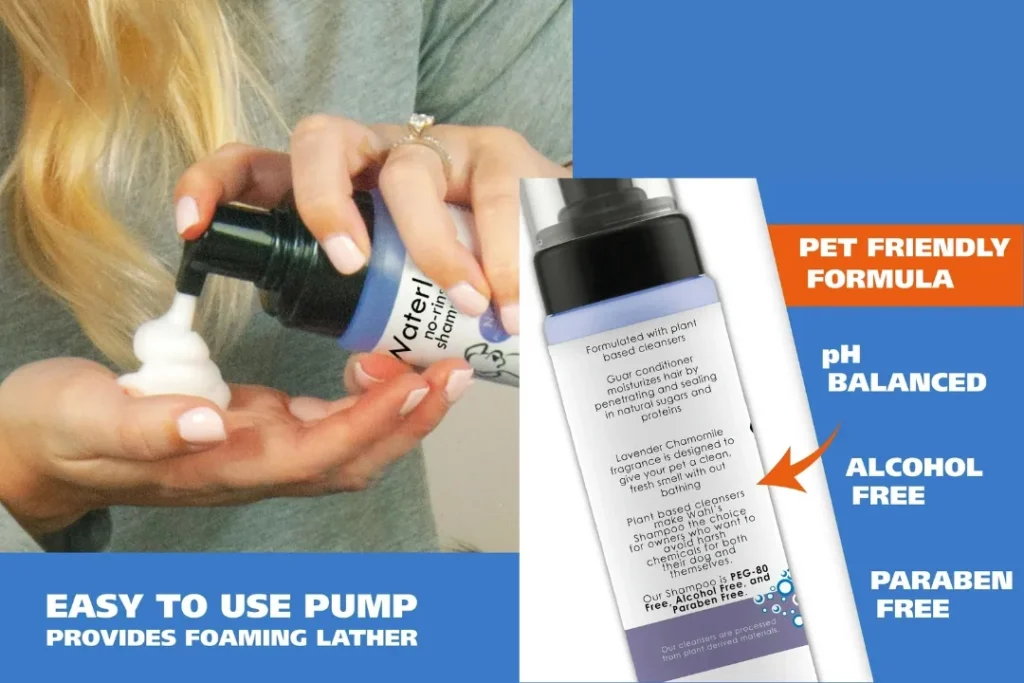
Best For: Spot-cleaning thick coats and lifting urine/mud.
Why it wins: Foams are notoriously sticky, but Wahl’s formula uses plant-derived cleansers that dry remarkably crisp. Because it’s a foam, you can pump it directly into your hand and massage it exactly where you need it without terrifying a bath-anxious dog with a spray nozzle.
2. The Odor Eliminator: Earthbath All Natural Grooming Wipes / Spritz
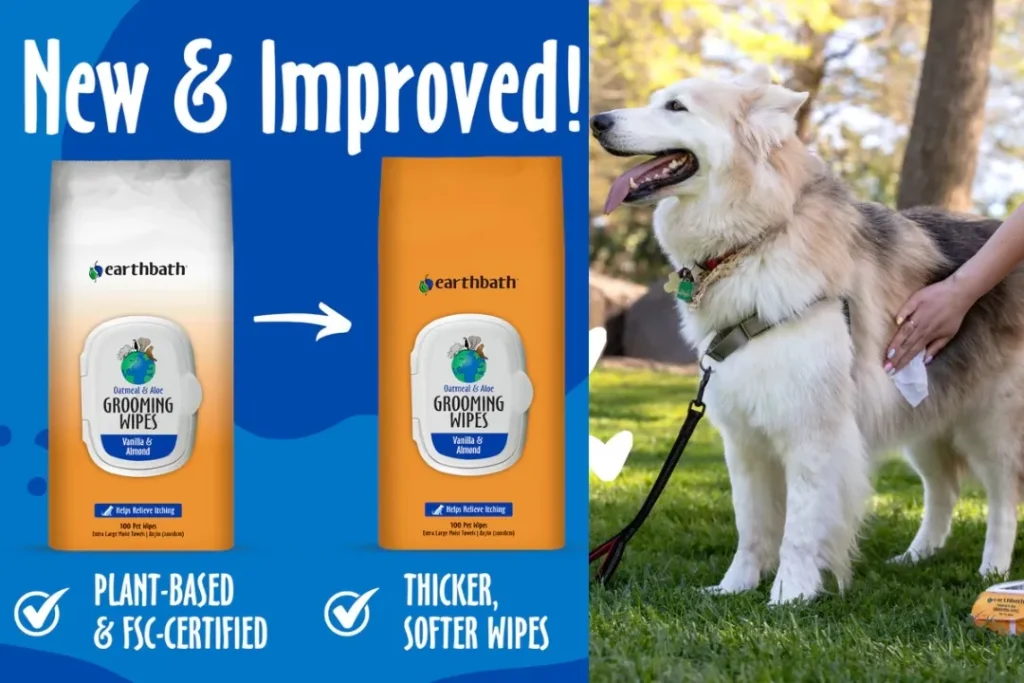
Best For: Road trips, dusty hikes, and quick freshen-ups.
Why it wins: Earthbath doesn’t use heavy synthetic perfumes to mask odors; they use colloidal oatmeal and aloe vera to neutralize the skin, plus a very light botanical scent. It’s incredibly gentle on dogs with environmental allergies. (Note: If you use the spritz, you must wipe it off with a towel—don’t let it air dry).
3. The Oil Absorber: TropiClean Waterless Shampoo (Papaya & Coconut)
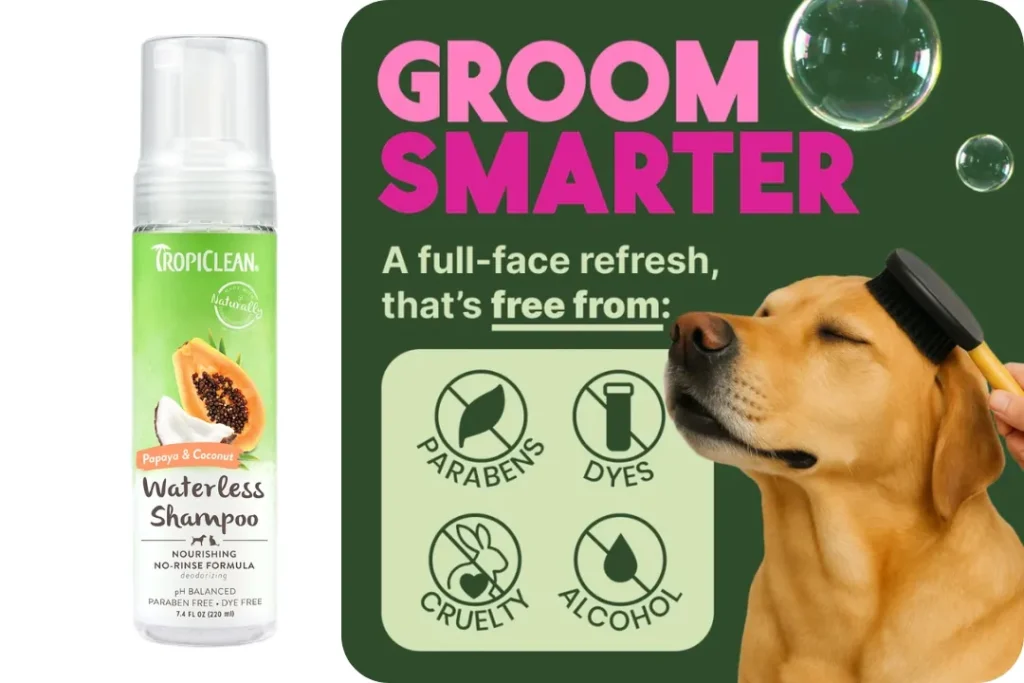
Best For: Breeds prone to greasy coats (Basset Hounds, Cocker Spaniels) or dogs recovering from surgery.
Why it wins: This formula strikes the perfect balance. It cuts through the thick sebum that causes the classic “dog smell,” but it is enriched with coconut and papaya extracts that prevent the hair from becoming brittle after the oil is removed.
source: TropiClean Waterless Shampoo
My Hack ✓: The “Hot Towel Extraction” Method
This is the secret sauce. This is how you use waterless shampoo without leaving your dog feeling like a sticky lint roller.
The Prep: Brush the dog thoroughly before applying any product to remove loose hair.
The Application: Apply the foam or spray generously, massaging it down to the skin level.
The Activation: Let it sit for 60 to 90 seconds. The surfactants need time to bind to the dirt and oils.
The Hot Towel (The Crucial Step): Take a microfiber towel, run it under hot tap water, and wring it out completely so it is just warm and slightly damp. Vigorously rub down the dog with the warm towel.
Why this works: The heat opens the hair cuticle slightly, and the damp microfiber physically pulls the encapsulated dirt and soap residue off the coat.
The Slick out: Once the dog is mostly dry, run a slicker brush through the coat one last time to separate the hairs. The coat will be soft, fluffy, and genuinely clean.
Real-Life Case Study: “Bella” the Post-Op Bulldog
The Client: Bella, an English Bulldog recovering from a severe bout of pneumonia. The vet strictly forbade any stressful activities, including full baths, for four weeks.
The Issue: Bulldogs have deep skin folds. Without bathing, Bella’s face wrinkles and tail pocket were becoming breeding grounds for yeast, smelling strongly of old cheese.
My Diagnostic Action: We couldn’t put her in the tub, but spraying a liquid waterless shampoo into her wrinkles would trap moisture and make the yeast worse.
The Fix: I used the Dry Powder method. I mixed equal parts cornstarch and baking soda (a DIY dry shampoo). I used a soft makeup brush to gently dust the powder directly into her skin folds. We let it sit for 5 minutes to absorb the excess oil and moisture, then used a dry, soft cloth to gently wipe it out.
Note: Baking soda is highly alkaline (pH 9) while canine skin is naturally neutral to slightly alkaline (pH 6.2-7.4). This DIY mix is a temporary emergency fix for moisture absorption, not a treatment for chronic yeast. For ongoing yeast issues, always consult a vet—they may prescribe medicated chlorhexidine or ketoconazole wipes that are formulated for safe repeated use on sensitive skin folds.
The Result: The powder absorbed the lipids the yeast was feeding on and neutralized the odor instantly, keeping her skin dry and infection-free until she was medically cleared for a real bath.
The “To Bathe or Not To Bathe” Diagnostic Chart
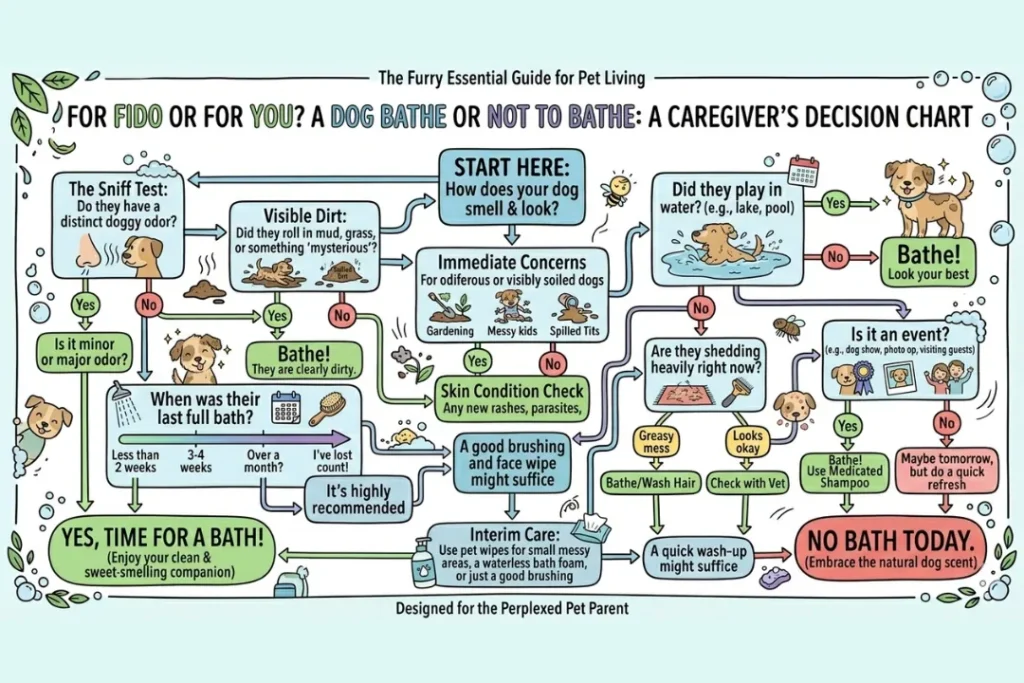
Waterless shampoo is a tool, not a replacement for water. Misusing it can lead to severe dermatological issues. Use my quick-reference chart before reaching for the foam:
| Coat/Skin Condition | Waterless Shampoo? | Real Bath Required? | Why |
|---|---|---|---|
| Post-Surgery (Stitches present) | YES (Avoid the incision site) | NO | Submerging stitches introduces bacteria and risks infection. |
| Rolled in something dead/feces | NO | YES | Foams cannot penetrate deeply enough to remove heavy biohazards. You need a full bath with proper shampoo. |
| Muddy paws after a walk | YES | NO | A quick surfactant wipe prevents over-drying the paw pads from daily washing. |
| Active Fleas / Tick Dirt | NO | YES | You need a full lather and water rinse to break the fleas’ surface tension, drown them, and flush away the debris. |
| Senior Dog (Unable to stand) | YES | NO (Unless medically necessary) | The stress of a tub bath for an arthritic dog often outweighs the benefits of being perfectly clean. |
Final Expert Advice
Waterless shampoo is a brilliant tool, but it is a bridge, not a destination.
It is perfect for extending the time between baths, managing senior dogs, or cleaning up a muddy underbelly after a rainy walk. However, it will never replace the deep-cleansing hydrotherapy of a real bath, which is necessary to fully flush dead skin cells and environmental allergens from the follicles.
Use waterless shampoo for the daily battles, but don’t retire your bathtub just yet.