Seven years ago, I almost quit grooming entirely. I was suffering from massive imposter syndrome, and the catalyst was a Basset Hound named Buster.
Buster was a sweet dog, but he smelled like a moldy basement wrapped in a sweaty gym sock. His owner was desperate. I tried everything—lavender luxury shampoos, deodorizing sprays, $50 boutique colognes. He would leave my salon smelling great, but 48 hours later, the owner would call complaining that the “wet dog” rot was back. I felt like a complete fraud. What was I doing wrong?
My breakthrough came when a veterinary dermatologist pulled me aside and said, “You are trying to perfume a bacterial bloom. You can’t wash away an imbalanced microbiome with flowers.”
If you are frantically searching for the “best dog shampoo for odor,” you need to stop buying products based on what they smell like in the bottle.
Odor is a symptom, not the root cause.
This guide is going to walk you through my proprietary Microbiome-Reset Method, the exact protocol I use in the salon to eliminate chronic odor at the biological level.
Part 1: The Olfactory Diagnostic Chart (Why Does Your Dog Stink?)
Before you put a drop of water on your dog, you need to use your nose. Dogs don’t just “stink” universally. The specific scent tells you exactly what organism is multiplying on their skin.
If you use a basic oatmeal shampoo on a yeast infection, you are literally feeding the fungus. Use this chart to diagnose the smell before you choose a product:
| The Smell (Be Honest) | The Root Cause | The Biological Reality | What You Actually Need |
|---|---|---|---|
| “Corn Chips” or Old Popcorn | Yeast (Malassezia) | Yeast thrives in moist, dark areas (paws, ears, armpits). It feeds on starches and sugars. | Antifungal/Chlorhexidine Shampoo. Strictly avoid oatmeal or heavy conditioners. |
| Rancid Grease or “Dirty Hound” | Excess Sebum (Seborrhea) | The dog’s sebaceous glands are overproducing oil, which oxidizes and goes rancid in the air. | A degreasing/salicylic acid shampoo to strip the oxidized lipids. |
| Rotten Eggs / Skunk / Dead Fish | Environmental / Anal Glands | They rolled in something dead, got skunked, or expressed their glands on their hindquarters. | For organic rot: Enzymatic shampoo. For skunk: Oxidation-based neutralizer (peroxide mix or dedicated skunk product). |
| Sour / Mildew / Wet Towel | Trapped Moisture | The undercoat wasn’t dried properly after the last bath, allowing bacteria to breed near the skin. | Deep cleansing surfactant + a high-velocity blow dry. |
Part 2: The “Microbiome-Reset” Method
Here is where most dog owners fail: They wet the dog, apply shampoo, scrub for 60 seconds, and rinse.
If you do that, you are only washing the tips of the hair. The odor-causing bacteria lives on the skin. Here is the 5-step method I developed after the “Buster” incident to fix chronic odor for good.
Step 1: The Mechanical Prep (Breaking the Barrier)
Bacteria and yeast protect themselves under a layer of the dog’s natural oils (sebum).
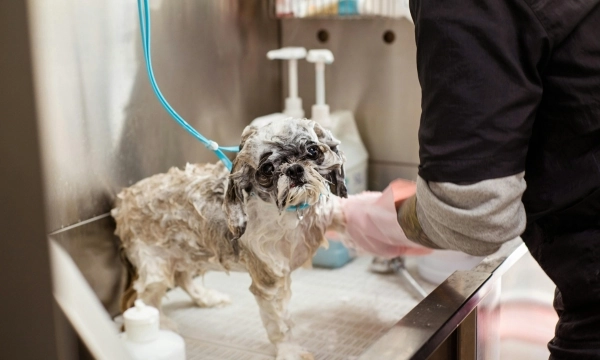
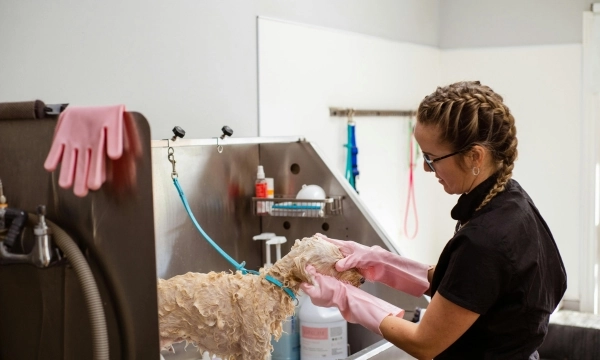
- My Hack: Do not put shampoo on a dry or barely-wet dog. Soak the dog to the bone with warm water. Then, take a rubber curry brush (like a Kong ZoomGroom) and vigorously massage the wet coat for 2 minutes before adding soap. This physical friction breaks up the waterproof sebum layer so the shampoo can actually reach the skin.
Step 2: The “Pore-Purge” Double Wash
If your dog has chronic odor, a single wash will never work. Surface oils will completely deplete your expensive medicinal shampoo before it can reach the skin.
- Wash 1 (The Stripper): Use a fast-lathering, basic clarifying pet shampoo. Scrub the dog quickly and rinse immediately. This removes the “canopy” of surface dirt and heavy oils.
- Wash 2 (The Treatment): Now, apply your targeted odor shampoo (recommendations below). Because the surface oil is gone, these active ingredients can penetrate deep into the hair follicles where the microbes actually live.
Step 3: The 10-Minute Dwell Time
Apply your targeted shampoo and work it into a thick lather.
Now, set a timer for 10 minutes. Do not rinse early. If you are using a medicated or enzymatic shampoo, the active ingredients require time to work—whether that means breaking down bacterial cell walls or digesting organic proteins. If you rinse in 3 minutes, you just wasted your money.
Critical Note: Keep the coat wet during this time. If the lather starts to dry, spritz the dog with a little warm water or cover them with a warm towel to trap moisture. Some ingredients need to stay wet to activate properly.
Pro tip: Smear peanut butter on the tub wall to keep your dog occupied while you wait. This makes the 10 minutes fly by for both of you.
Step 4: Rebuild the Barrier
When you strip a dog’s coat of its smelly, oxidized oils, the skin will panic. If you don’t replace that oil, the dog’s body will overcompensate by pumping out double the sebum the next day, and the smell will return with a vengeance.
Always, always follow a heavy deodorizing bath with a lightweight, hydrating dog conditioner.
The Technique: Focus the conditioner on the hair shafts and tips to seal the cuticle. Choose a conditioner that is oil-free or specifically labeled for sensitive skin so you don’t clog the pores you just cleaned. Let it sit for 2-3 minutes, then rinse thoroughly. This tells the skin, “Relax, we are moisturized—you don’t need to produce any more oil.”
Step 5: The Bone-Dry Seal
Towels are not enough. If your dog has a double coat (like a Golden, Husky, or German Shepherd) and you leave them damp, you are creating a humid greenhouse for bacteria to immediately repopulate.
You must use a blow-dryer until the hair is separated and the skin is completely dry to the touch.
Important: A human hair dryer is often too weak to penetrate thick fur. If possible, use a high-velocity dryer made for dogs. Always use a cool or warm setting—never hot.
To check: Part the hair down to the skin on their back and behind the ears. It should feel warm and dry, not cool and damp.
Part 3: The True Best Dog Shampoo for Odor (A Groomer’s Arsenal)
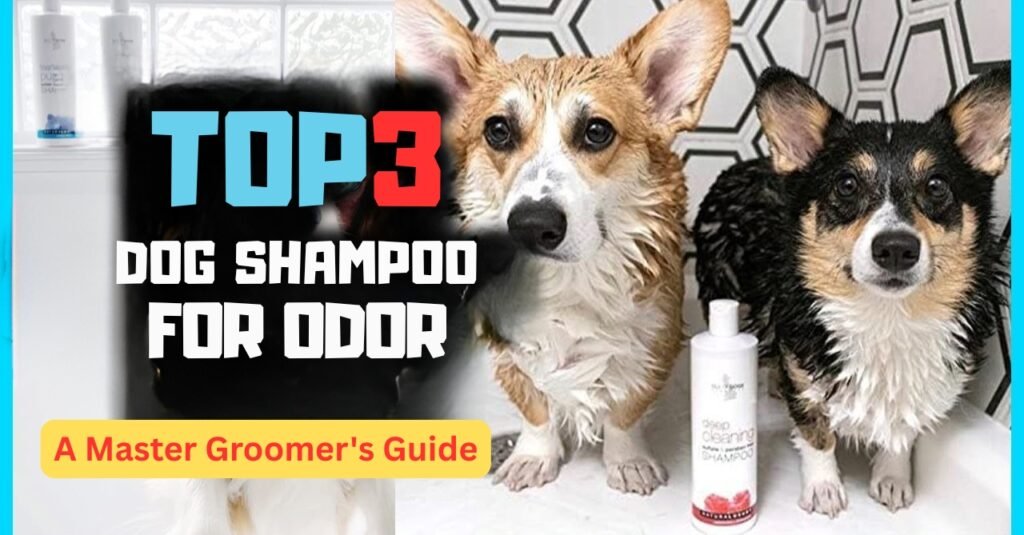
I don’t care about cute packaging. I care about active ingredients. Here are the three bottles I rely on to fix severe odor issues, categorized by the root cause we identified in the chart above.
1. For the “Corn Chip” Yeast Dog
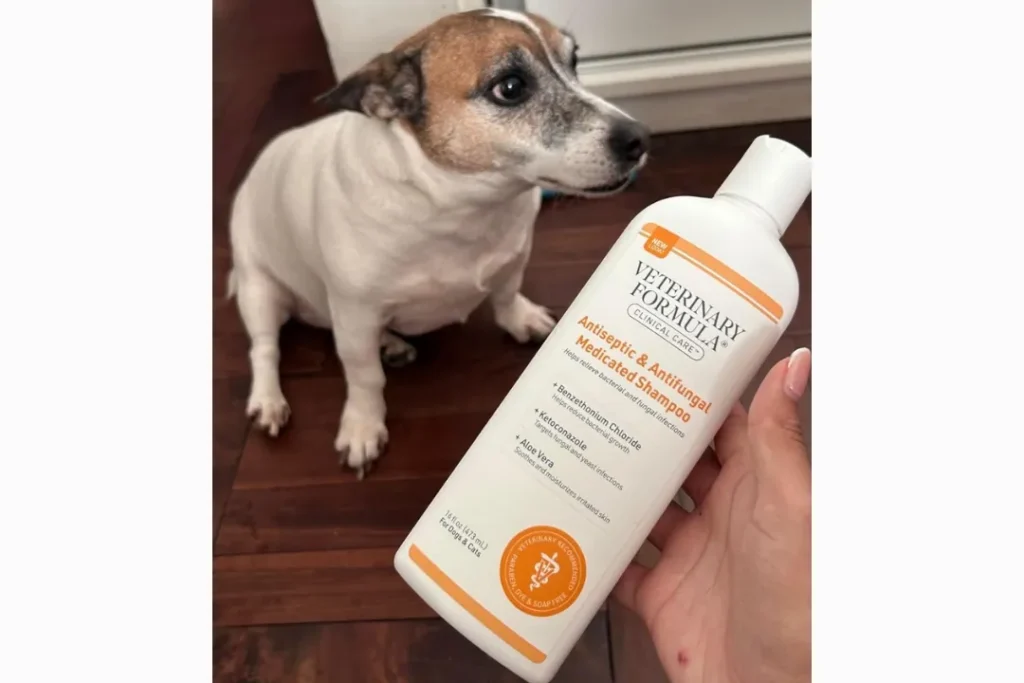
Top Pick: Curaseb Antifungal & Antiseptic Medicated Shampoo
- The Science: This contains Chlorhexidine and Ketoconazole—the veterinary gold standard for treating yeast and bacteria. It doesn’t mask the smell; it actively kills the Malassezia yeast and bacteria that are causing the fungal bloom.
- Case Study: I used this on a Westie who had black, yeasty, stinking skin. After three baths (spaced a week apart) with the 10-minute dwell time, his skin turned pink again and the odor vanished completely.
- Warning: It has a clinical, medicinal scent. It won’t make your dog smell like a tropical breeze, but it will make them smell like nothing. And nothing is exactly what we want.
- Best For: Dogs with folds (Bulldogs, Pugs), floppy ears (Spaniels), or chronic paw-lickers.
2. For the Greasy “Hound” Smell (Seborrhea)
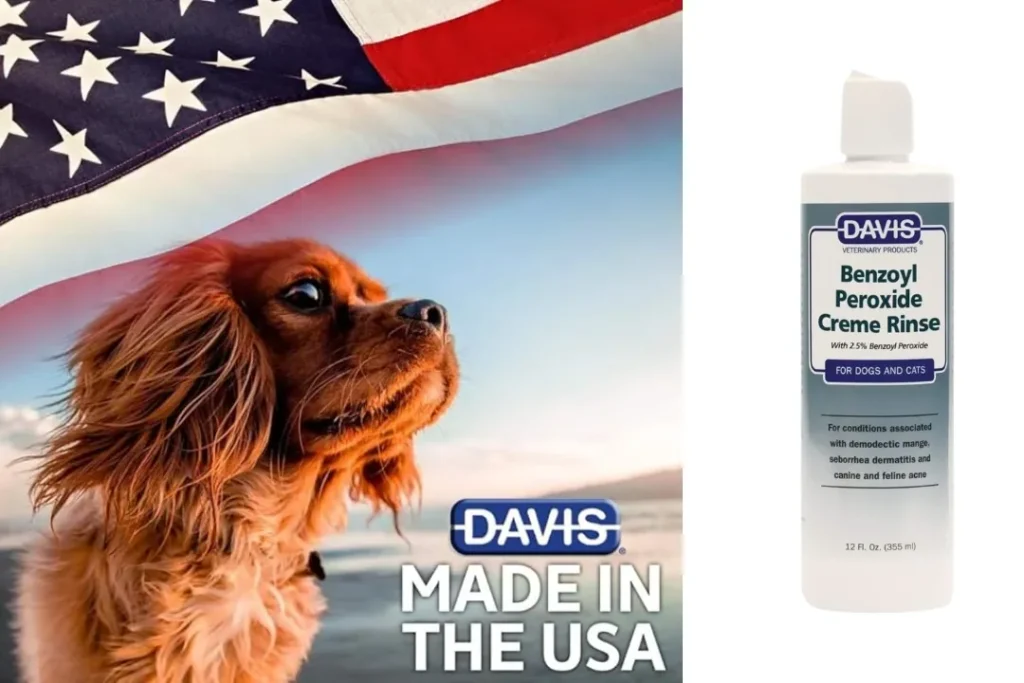
Top Pick: Davis Benzoyl Peroxide Shampoo
- The Science: Breeds like Basset Hounds, Cocker Spaniels, and Labs often suffer from greasy coats that go rancid. Benzoyl Peroxide is lipophilic (fat-loving) and keratolytic—meaning it literally flushes out the hair follicles, dissolving the rancid grease while helping to break down and shed the dead, greasy skin cells trapping the odor.
- My Experience: This was the cure for Buster. Once I stripped the rancid oils from his hair follicles, the “old basement” smell disappeared.
- Note: This can be drying. This is where Step 4 (The Barrier Rebuild) becomes essential. Follow up with a light, non-oily conditioning rinse only on the hair tips.
- Best For: Sporting breeds, Hounds, and dogs that feel “greasy” to the touch.
3. For the “Rolled in a Dead Thing” Emergency
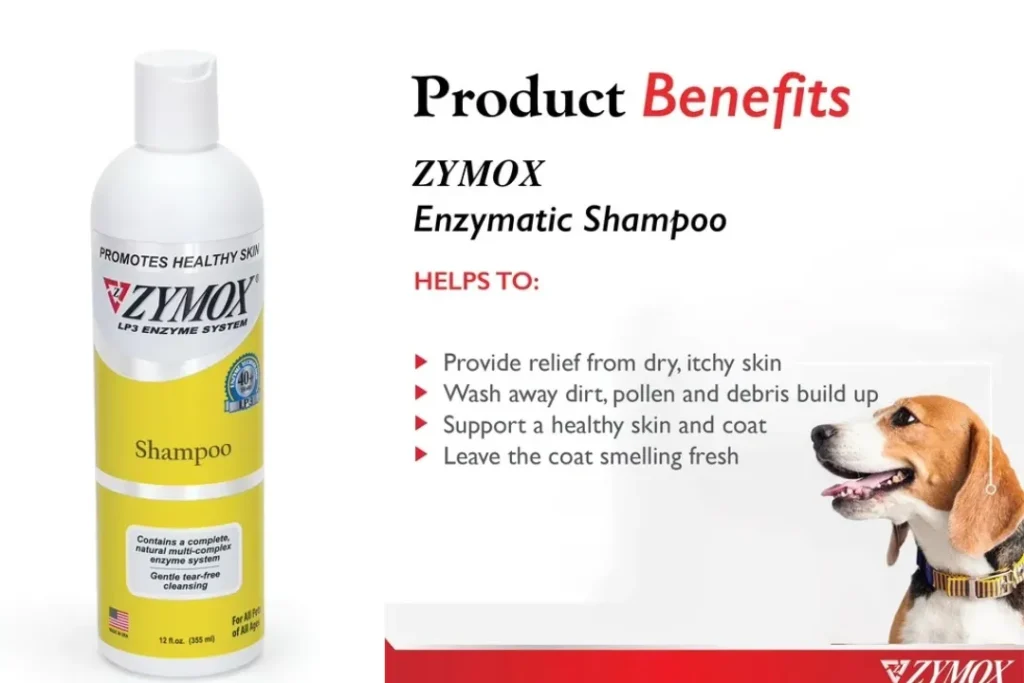
Top Pick: Zymox Veterinary Strength Enzymatic Shampoo
- The Science: When your dog rolls in feces, vomit, or decaying organic matter, the smell is bound by complex proteins. Regular soap just spreads it around. This shampoo uses the LP3 Enzyme System (Lactoperoxidase, Lysozyme, and Lactoferrin) to physically digest and break the molecular bonds of the organic material. Think of enzymes as microscopic pac-men that literally digest the protein bonds of the foul matter.
- My Hack for Organic Rot: Apply the enzymatic shampoo directly to the dry coat, massage it down to the skin, and let it sit for 10-15 minutes. This gives the enzymes time to digest the organic matter. Then rinse thoroughly with warm water and follow with a gentle conditioner if needed.
- Best For: Farm dogs, hikers, and the “rolling in the grass” enthusiasts.
Case Study: “Roxy” and the Stagnant Pond
The Client: Roxy, a 4-year-old Black Lab.
The Issue: Roxy loved swimming in a stagnant, algae-filled pond behind her house. Her owners had bathed her three times with a generic oatmeal shampoo, but she still smelled like toxic swamp gas.
My Diagnostic: Oatmeal is a carbohydrate that hydrates the skin; it does nothing to break down algae proteins. In fact, the wet oatmeal was likely trapping the swamp water against her skin.
The Fix: I used an enzymatic shampoo (like Zymox). I applied it directly to her dry coat before adding water (to let the enzymes attack the pure organic material first). After a 10-minute soak, the enzymes had digested the organic bonds. One rinse, and the swamp smell was permanently gone. A quick conditioning rinse sealed the cuticle, and she was back to her happy, pond-swimming self without the odor.
The Hard Truth About Deodorizing Sprays
As a closing note from someone who has bathed thousands of dogs: Throw away the cheap doggy colognes.
Spraying artificial lavender over an active yeast infection is like spraying air freshener on a garbage fire. It doesn’t put out the fire; it just makes the smoke smell weirder.
Diagnose the smell. Use the Microbiome-Reset Method. Apply the correct active ingredient. Rebuild the barrier.
Treat your dog’s skin like the living, breathing ecosystem it is, and you will never have to hold your breath while cuddling them on the couch again.
Related Post: A Groomer’s Guide to the Best Deshedding Shampoo for Dogs