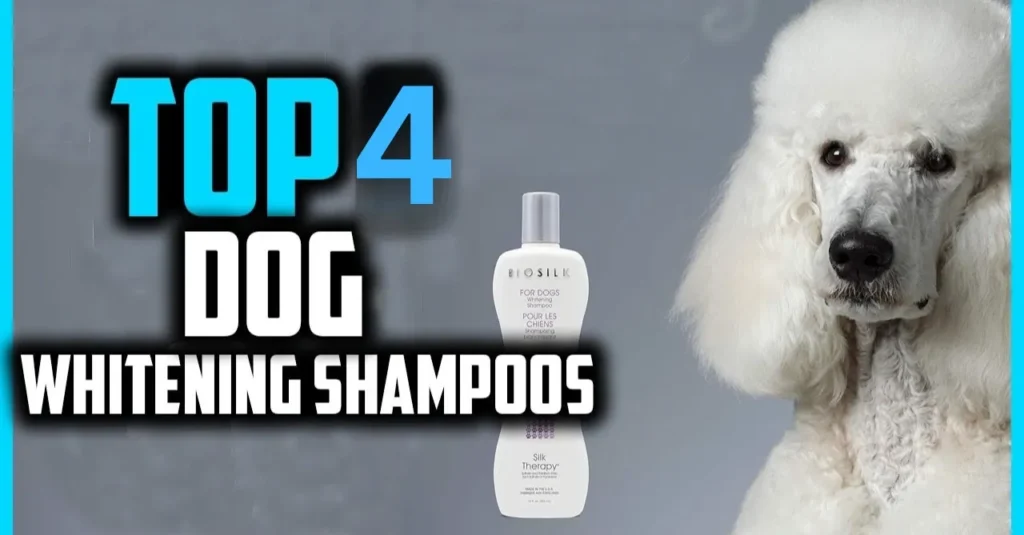
The biggest secret in the grooming industry is that a true whitening shampoo for dogs is actually a translucent purple or blue dye.
Yellow and purple are opposites on the color wheel. When a white dog’s hair becomes stained, it takes on a yellow or brassy hue. When you apply a purple shampoo, the purple pigment deposits into the open hair cuticle, neutralizing the yellow. To the human eye, the combination of yellow and purple reflects back as pure, brilliant white.
However, if you apply purple pigment over a coat that is heavily caked in grease and dirt, the pigment binds to the dirt, not the hair. When you rinse, the dog just looks muddy and grey.
To achieve a show-dog white, you must understand coat porosity, diagnose the specific stain type, and use the Three-Stage Optical Protocol.
Part 1: The Stain Diagnostic Chart
Before You Wash, You Must Diagnose
Most owners grab the nearest whitening shampoo and hope for the best. This is why 80% of whitening attempts fail. Optical brighteners cancel out yellow, but they do absolutely nothing for red tear stains.
Use this chart to identify what you’re actually dealing with:
| Stain Color | Biological Root Cause | Required Treatment | Will Purple Shampoo Work? |
|---|---|---|---|
| Rusty Red / Brown | Porphyrins. Iron-containing molecules excreted through tears, saliva, and urine. (Common around eyes, mouth, and paws) | Keep area dry, use topical astringents to alter the tear tract environment, and address underlying allergies or health issues | No. Purple cannot fix iron oxidation. You need environmental management, not color correction. |
| Dingy Yellow / Brassy | Urine, sun oxidation, or sebum. Natural oils or urine have oxidized on the coat. | Optical brighteners (purple/blue shampoos) | Yes. This cancels yellow wavelengths. |
| Dull Gray / Ashy | Environmental smog and micro-particulates trapped under the hair cuticle. | Clarifying shampoos first, then optical brighteners | Only after clarifying. You must scrub the dirt out before whitening. |
Part 2: The Three-Stage Optical Protocol
Stage 1: The “Canvas Clearing” Wash
You cannot paint a masterpiece on a dirty canvas. Before you ever touch a whitening shampoo, you must strip the coat of environmental oils, saliva, and actual dirt.
Use a high-quality, clear clarifying shampoo (or a deep-cleaning citrus shampoo like Earthbath Light Color Coat Shampoo).
Wash the dog thoroughly and rinse. The dog will likely still look slightly yellow, but the hair cuticle is now clean, open, and ready to accept the color-correcting pigment.
My Hack: Never apply a purple whitening shampoo to a dry or highly porous coat. If the hair is damaged, it will suck up the purple pigment instantly, and you will end up with a blue dog. I always mix my optical brightener 10:1 with warm water in a spray bottle when working on compromised coats, ensuring an even, diluted application.
Stage 2: The Color Correction Deposit
Now, you apply the whitening (purple/blue) shampoo.
The Danger Zone: Do not scrub it wildly into the coat, or you will create uneven patches of color. Massage it in evenly, root to tip.
The Clock: The difference between a white dog and a purple dog is about 3 minutes. Never leave a professional-grade whitening shampoo on for more than 3 to 5 minutes on the first try. Watch the lather—when the white suds turn slightly lilac, it is time to rinse.
Stage 3: The Acidic Seal (Crucial Final Step)
Because whitening shampoos must open the hair cuticle to deposit pigment, they are naturally astringent and can leave the coat feeling slightly harsh or dry.
Never use a whitening shampoo without following up with a deep-conditioning treatment. The conditioner slams the cuticle shut, locking the purple optical brighteners inside the hair shaft while sealing the moisture in. Use a hydrating, slightly acidic conditioner. This makes the white coat shine like glass and prevents new dirt from immediately penetrating the hair tomorrow.
Part 3: The “Big Four” – My Hand-Picked Whitening Arsenal
I have tested dozens of whitening formulas, and many of them are just cheap soap with food coloring that washes right out. These are the clinical-grade formulas I keep at my bathing stations, categorized by the specific job they perform.
Category 1: The Best Optical Brightener (For Yellow/Brassy Coats)
The Industry Gold Standard: Chris Christensen White on White
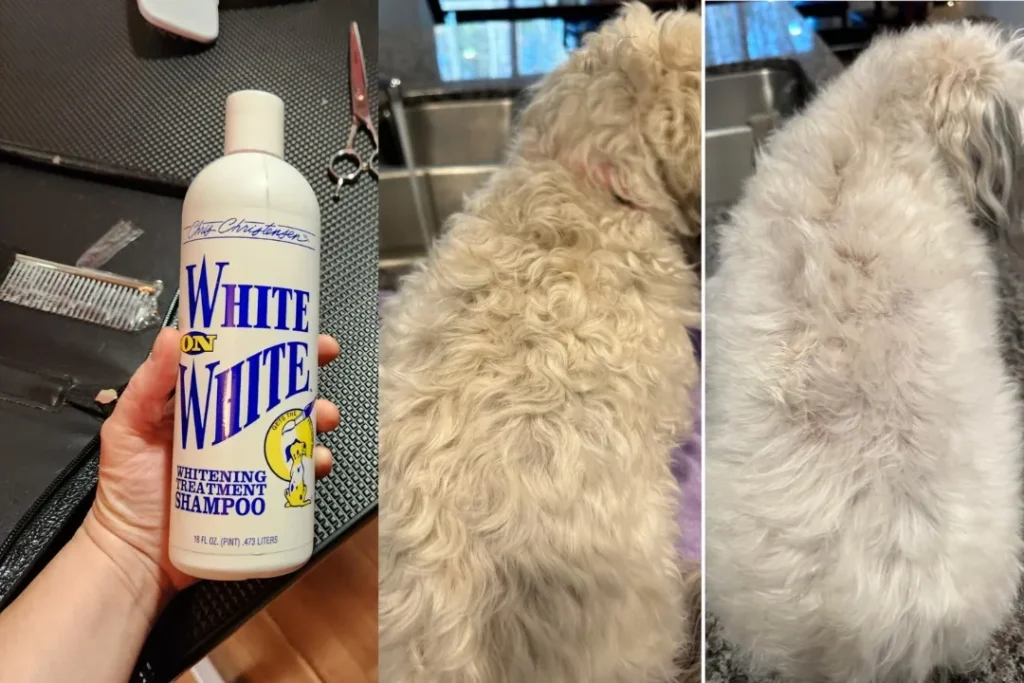
- The Chemistry: This is not just a shampoo; it is an optic intensifying treatment. It does not contain any bleaching agents or harsh chemicals. Its molecular structure is small enough to penetrate the hair cuticle and deposit pigment deep into the shaft, meaning the whitening effect lasts for weeks, not days. It relies entirely on microscopic, semi-permanent violet pigments.
- Best For: Show dogs, Bichons, Poodles, Samoyeds, and heavily brassy/yellow coats.
- The Reality Check: It is incredibly potent. It looks like dark grape juice coming out of the bottle. If you have a highly porous coat (like a heavily damaged or dry coat), you must dilute it, or the hair will grab too much pigment and turn violet.
- My Experience: I use this exclusively on my Samoyed clients. It takes a dull, straw-colored coat and turns it into freshly fallen snow. The effect lasts about 3-4 weeks before the pigment naturally washes out.
Category 2: The Best Optical Maintenance Shampoo (For General Brightening)
The Plant-Powered Brightener: 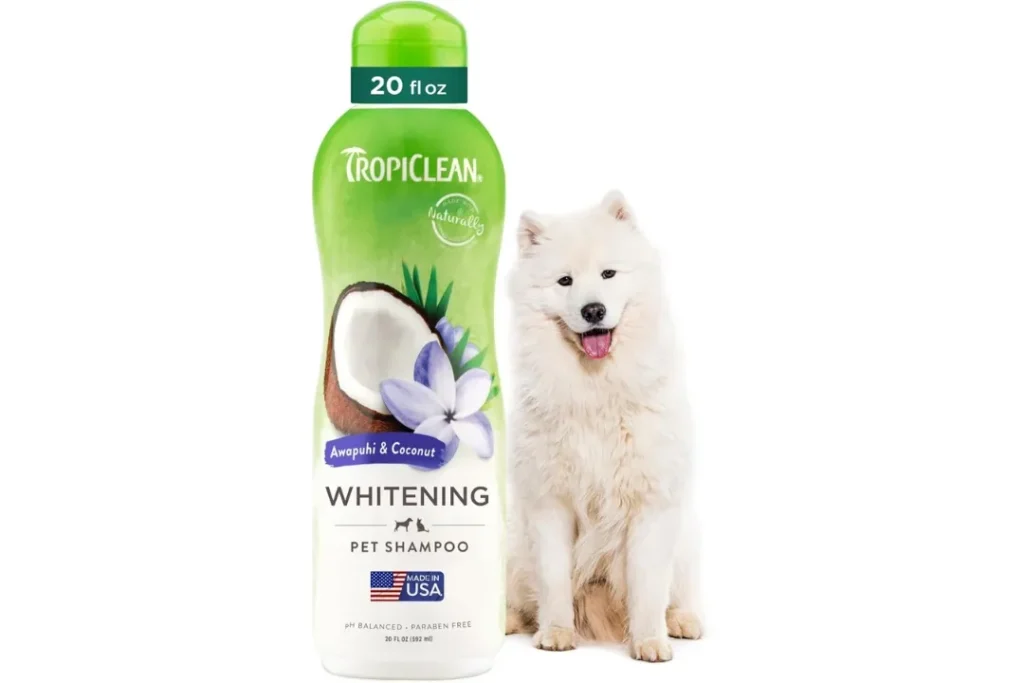
- The Chemistry: TropiClean takes a different approach than heavy pigment deposition. This formula relies on mild, coconut-derived cleansers combined with botanical extracts—specifically awapuhi (wild ginger) and blueberry—to gently lift dullness and enhance the coat’s natural reflectivity. It brightens through gentle cleansing and plant-based optical enhancers rather than depositing significant purple pigment.
- Best For: Dingy paws, general dullness, maintenance between heavy-duty whitening sessions, and dogs with sensitive skin. Think of this as your weekly maintenance wash rather than your heavy correction treatment.
- The Reality Check: This will not transform a heavily brassy yellow coat in one wash. It’s a gradual brightener that works best when used consistently on coats that are already reasonably white.
Category 3: The Gentle Brightener (For Sensitive Dogs)
The Safe Choice: Bio-Groom Super White
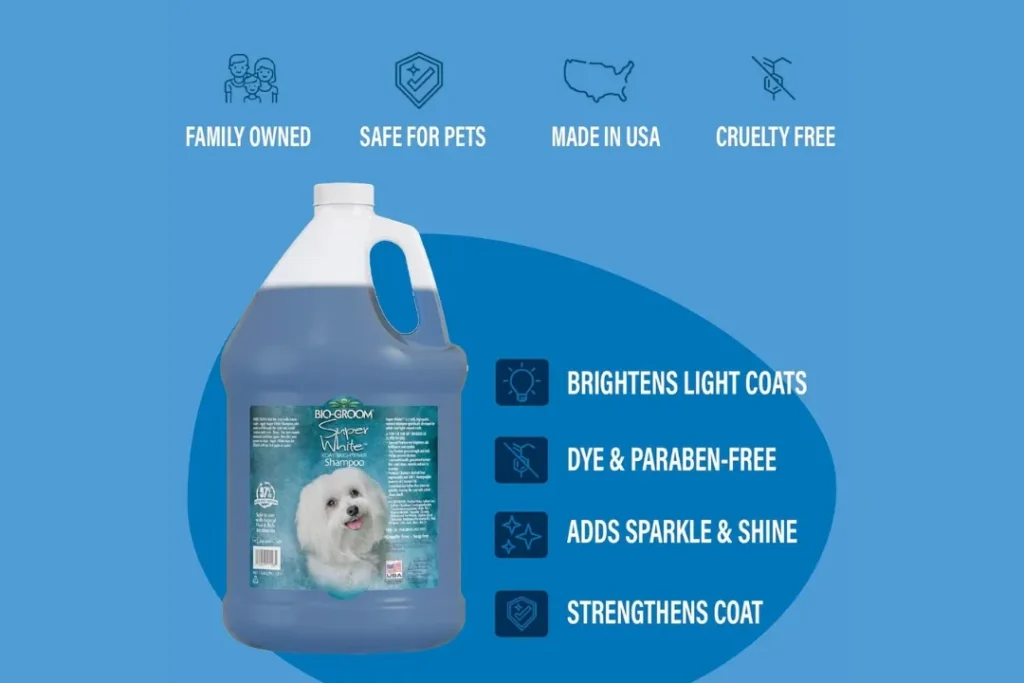
- The Chemistry: Bio-Groom takes a dual-action approach. It uses mild, coconut-derived cleansers (like Sodium Coco Sulfate) for gentle cleaning, combined with pearlescent brighteners (specifically Ethylene Glycol Distearate) that add physical sparkle and reflectivity to the coat. It will not give you the dramatic, instant color-wheel correction of Chris Christensen, but it is exceptionally safe and leaves the coat incredibly soft without stripping the lipid barrier.
- Best For: Puppies, dogs with sensitive skin, or owners terrified of turning their dog blue.
Category 4: The Essential Clarifying Pre-Wash
The Best First Step: Earthbath Light Color Coat Shampoo (Lavender & Chamomile)
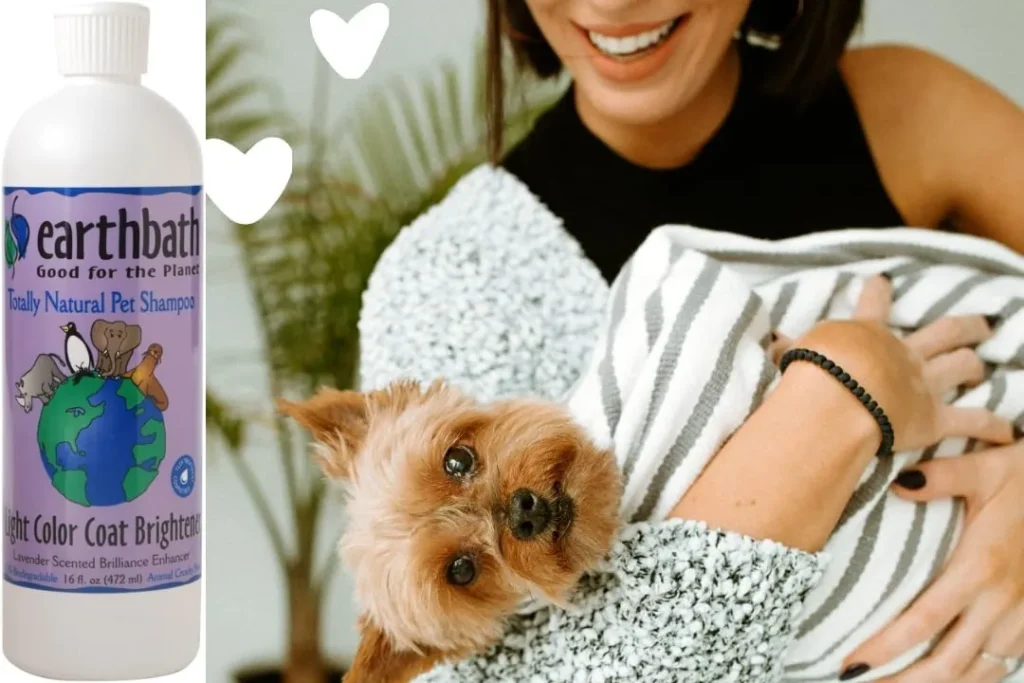
- The Chemistry: I rarely use this as a standalone whitener, but it is my absolute favorite “Stage 1” clarifier. It uses coconut-based cleansers to strip away gray city smog and physical dirt, prepping the hair perfectly for the heavier optical brighteners. Plus, it is incredibly gentle on the skin, preventing the irritation that often comes with double-washing.
- Best For: The opening act. Use this before any optical brightener for maximum results.
Real-Life Case Study: “Casper” and the Porphyrin Problem
The Client: Casper, a 2-year-old Maltese.
The Issue: Casper’s body was pristine white, but his face looked like a rust-colored horror movie. He had deep, reddish-brown stains running from his eyes down his muzzle, and the same rusty color on his front paws from licking them. His owner was scrubbing his face with whitening shampoo every day with zero results.
My Diagnostic: Those aren’t dirt stains; those are Porphyrins. Porphyrins are iron-containing molecules produced when red blood cells break down. Dogs excrete them through tears, saliva, and urine. When porphyrins hit the air and sunlight, they oxidize and turn rust-red. Purple shampoo cannot neutralize rust-red iron stains; it only neutralizes yellow.
The Fix: I instructed the owner to stop the daily shampooing (which was drying out Casper’s delicate facial skin). We switched to a targeted tear stain remover designed to address the root environment—specifically Eye Envy, which uses a combination of mild astringents (like boric acid and witch hazel) and antibacterial agents (colloidal silver) to dry out the tear tract and reduce the bacterial population that often exacerbates porphyrin staining. It doesn’t “digest” the stains; it alters the moisture and bacterial environment so new stains can’t form, allowing the existing stained hair to be grown out or safely trimmed away. Within three weeks of treating the environment rather than the color, Casper’s face was white again.
My Pro Hack ✓: The “Undiluted Sponge-Punch” for Stubborn Spots
If your dog has a deeply yellowed spot (like a urine stain on a hind leg or a heavily licked paw), a standard lather won’t cut it.
- Complete your Stage 1 clarifying wash so the spot is clean.
- Take a small, dense makeup sponge.
- Apply your dark purple whitening shampoo (like White on White) undiluted directly onto the sponge.
- “Punch” or dab the sponge directly onto the wet, yellow stain. Do not rub it around to the surrounding white hair.
- Watch it like a hawk. The second the yellow neutralizes into white (usually 1 to 2 minutes), immediately rinse the area with warm water to stop the pigment deposit.
This technique gives you surgical precision that full-coverage washing cannot achieve.
The Bottom Line on Brightening
Stop trying to bleach your dog. The secret to a brilliant white coat isn’t harsh chemicals; it is understanding coat porosity, diagnosing the specific type of stain, and using the Three-Stage Optical Protocol to outsmart the color wheel.
Treat the hair like glass. Clean it thoroughly, polish it with the correct optical brightener for your dog’s specific stain type, and seal it to reflect the light.
When in doubt, refer back to the Stain Diagnostic Chart. Your dog isn’t “dirty” — they’re likely stained with something that requires a specific approach. Use the right tool for the job, and that blinding white coat you’ve been chasing is absolutely achievable.
related post: A Master Groomer’s Guide to the Best Dog Shampoo for Odor