In my second year of grooming, I had a mental breakdown over a Standard Poodle named “Benson.”
Benson’s owner complained that his skin seemed dry and flaky, so I wanted to go above and beyond. I grabbed the thickest, most expensive, ultra-hydrating Oatmeal & Shea Butter dog shampoo in the salon. I lathered him up, let the heavy moisturizers soak in, and rinsed him off.
An hour later, I had him on the grooming table, shears in hand, ready to give him a crisp, gorgeous “Lamb Trim.” But as I tried to comb his hair up to scissor it, the coat just flopped over. It looked like wet spaghetti. The heavy oils from the shampoo had completely weighed down the hair shafts. Every time I made a scissor cut, the limp hair just bent around the blades. I had created a greasy, un-scissorable mess, and I actually had to drag a wet, half-clipped dog back to the tub to re-wash him with Dawn dish soap just to strip the wax out so I could finish my job.
That humiliating double-bath taught me the golden rule of the Poodle coat: Moisture is the enemy of structure.
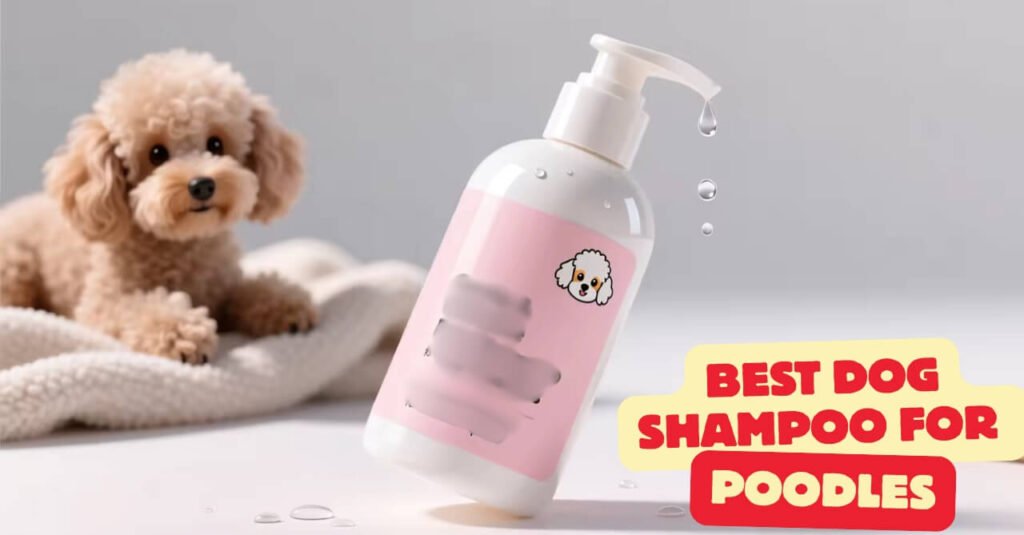
If you have a Poodle (Toy, Miniature, or Standard) and you are buying standard “moisturizing” or “2-in-1” pet store Best Dog Shampoo for Poodles, you are actively destroying the structural integrity of their coat and making them mat twice as fast.
But here’s the paradox: while the hair needs to stay crisp, Poodle skin needs intense hydration because tight curls prevent natural oils from traveling down the hair shaft.
This is what I call the Poodle Paradox—and most owners get it wrong.
Part 1: Understanding the Poodle Coat (The Science)
Let’s clear up a common misconception right away: biologically, there is no difference between “hair” and “fur.” Both are made of the exact same structural protein: keratin.
What makes Poodles different is their hair growth cycle. Most dog breeds have a shorter anagen (growth) phase and a longer telogen (resting/shedding) phase—this is why Golden Retrievers shed constantly and their coat length is limited.
Poodles, however, have a predominantly long anagen phase. Their hair grows continuously, similar to human hair, and the shed hairs get trapped in the surrounding curls rather than falling to the floor. This is why the grooming industry colloquially says Poodles have “hair, not fur”—it’s a useful shorthand, but scientifically, it’s all keratin.
When you use a generic, heavy-lipid shampoo (like oatmeal, shea butter, or argan oil), you are coating those tight coils in microscopic layers of wax. This creates two catastrophic problems:
- The Collapse: The heavy wax weighs the curl down, making the dog look stringy and limp instead of fluffy.
- The “Velcro” Effect: That sticky wax residue traps dust, dander, and shed hairs. Because the shed hairs cannot fall away, they immediately knot into the live hairs next to them. This is how a Poodle goes from “fluffy” to “pelted solid” in a matter of days.
To wash a Poodle correctly, you must use a Texturizing or Volumizing shampoo. You want a formula that cleanses the hair shaft completely bare, leaving it “crisp,” light, and structurally sound.
Part 2: The Poodle Skin Diagnostic Chart
Before we dive into product recommendations, let’s get one thing straight: you cannot choose the right shampoo until you diagnose your specific Poodle’s condition.
Poodles are genetically predisposed to specific dermatological issues—though it’s important to note that these conditions can also appear in other breeds. Part your dog’s curls down to the skin and use this diagnostic chart:
| What You See/Feel | The Biological Root Cause | The Shampoo Profile You Actually Need |
|---|---|---|
| Silver/white scales tightly glued to the hair shafts near the root | Sebaceous Adenitis (SA) — an autoimmune disease where the body attacks its own oil glands. While prevalent in Poodles, it also affects Akitas, Vizslas, and Dachshunds. | Keratolytic (Salicylic Acid) Shampoos. You must dissolve the scales before you can moisturize. |
| Hair feels limp, greasy, or won’t stand up when brushed | Product Buildup. Heavy silicones from shampoos have coated the hair shaft | A Clarifying/Stripping Shampoo. To reset the crisp texture. |
| Dry, brittle ends that snap off; intense static electricity | Lipid Starvation. Tight curls prevent natural sebum from reaching the tips | Evening Primrose or Omega-Heavy Hydrating Shampoos. |
| Coat feels “crunchy” or tangled at the roots only | Invisible Pelting. The top layer is brushed but the undercoat is felted | Volumizing Shampoo + Line Brushing. You need penetration, not just surface cleaning. |
| Red, itchy skin with odor | pH Disruption or Secondary Infection. Often caused by using human products | Balanced, Canine-Specific pH Shampoo + Veterinary consult if persistent |
Part 3: The “Curl-Core” Protocol (Stop Scrubbing Your Dog)
The fastest way to ruin a Poodle’s coat is to wash them like a Golden Retriever. Curly hair cuticles are naturally slightly raised. If you scrub them in a circular motion, they act like Velcro and lock together. Here is the 3-step tub method I use to prevent tub-induced matting.
Step 1: The Squeeze-and-Pulse
Never apply raw shampoo to a dry Poodle. Dilute your shampoo (10 parts water to 1 part shampoo) in a mixing bottle. Soak the dog to the bone, apply the liquid mixture, and use your hands to squeeze the suds into the coat. Pulse your hands open and closed like you are washing a delicate wool sweater.
Do not scrub. Do not rub.
My Hack: Poodle top-knots (the hair on their head) trap massive amounts of dirt and grease. I use a small, soft-bristled facial brush—the kind used for human exfoliation—to gently tap the diluted shampoo straight down into the scalp without tangling the long hair.
Step 2: The Core Hydration
Because we need the texture of the coat to remain crisp, we must deliver hydration directly to the skin without leaving a heavy, greasy film on the hair. Apply a light, water-soluble conditioner formulated specifically for canine pH, let it sit for exactly 3 minutes, and rinse until the water runs completely clear. If you leave conditioner residue in a Poodle coat, the hair will not blow-dry straight.
Step 3: The “Acid-Cut” Rinse
Because Poodles need their hair left “crisp” and bare for volume, you cannot use heavy, creamy conditioners on them. But if you skip conditioner entirely, the hair cuticle remains open, making the hair prone to static and breakage.
How do professional Poodle groomers close the cuticle without adding weight? The Acid Cut.
- Take a clean, empty gallon jug.
- Pour in 2 tablespoons of raw Apple Cider Vinegar (ACV) .
- Fill the rest of the gallon jug with warm water.
- After you have completely rinsed the volumizing shampoo out of your Poodle, slowly pour this heavily diluted ACV mixture over their entire body, massaging it into the skin.
- Do not rinse it out. Squeeze the excess water out and take them straight to the towel.
Why this works (the science): At this safe dilution (roughly 0.8% vinegar), the mild acidity helps smooth the raised keratin scales of the hair cuticle, eliminating static and adding shine. It also helps clear any remaining soap residue. The phrase “restores natural pH” is oversimplified—canine skin is naturally more alkaline than human skin (pH 6.2-7.4)—but this weak acid rinse does help neutralize alkaline soap residue and leaves the coat feeling clean and crisp. (And no, once they are dry, they do not smell like a salad.)
Step 4: The Fluff-Dry Stretch (Non-Negotiable)
You can buy the most expensive Poodle shampoo in the world, but if you let your Poodle air-dry, you have wasted your money.
Air-drying allows the damp curls to shrink, tighten, and lock around each other, forming mats before the dog is even dry. If a Poodle air-dries, the curls will shrink tightly against the skin, trapping moisture and creating an environment conducive to hot spots and skin infections.
To get that professional, velvety Poodle look, you must use a high-velocity dryer and a slicker brush simultaneously to pull the curl straight while it dries. The shampoo cleans the canvas, but the heat and the brush build the structure.
Part 4: The “Big Four”: My Poodle-Specific Salon Kit
I have scissored hundreds of Poodles for both pet homes and the conformation show ring. Based on the science of the Poodle Paradox, here are the three specific, structural formulas I keep at my bathing stations.
1. The Show-Ring Standard: Chris Christensen Spectrum One Shampoo
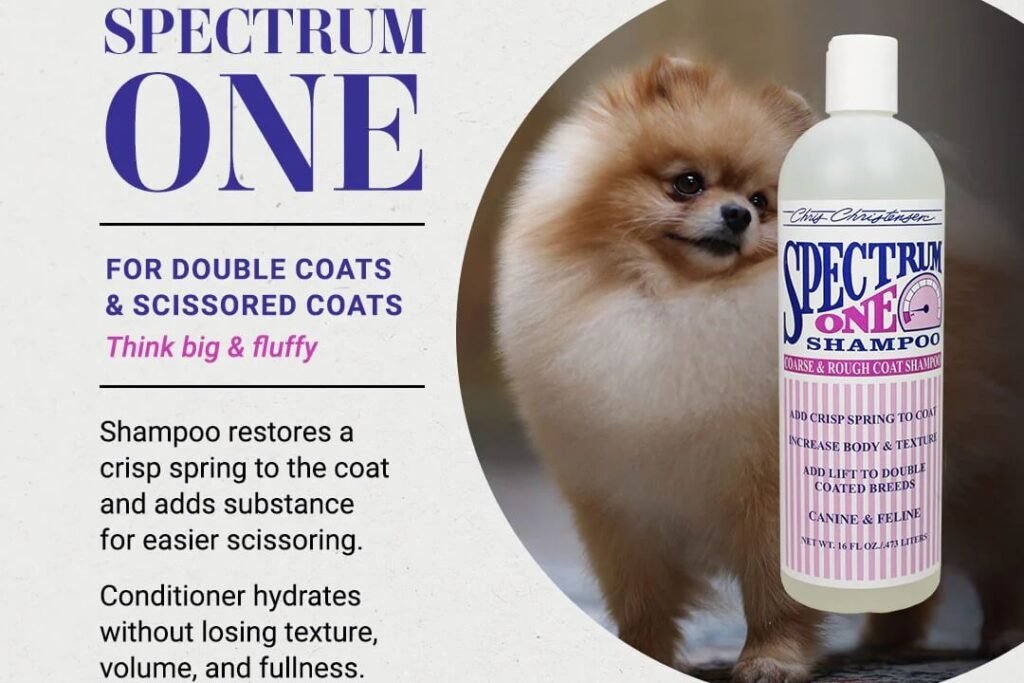
(Also known as “Crisp Coat” in some formulations)
- The Chemistry: This is the absolute holy grail for Poodle groomers. It is chemically engineered for coarse, crisp coats. It does not soften the hair; instead, it uses customized proteins to repair the inner core of the hair shaft. It removes heavy oils, chlorine, and environmental pollutants while respecting the canine acid mantle.
- Best For: Standard Poodles, show dogs, and owners who want to maintain a plush, fluffy, perfectly round topknot that doesn’t flop into the dog’s eyes.
- My Experience: Whenever a client brings in a Poodle whose hair is limp and parting down the middle from cheap pet store shampoos, I use Spectrum One. After one wash and a proper fluff-dry, the hair stands up perfectly straight like a dandelion. The comb just glides through the crisp, separated curls.
- Why it wins: It gives the hair so much structural memory that brushing becomes effortlessly smooth.
2. The Curl Separator: TropiClean PerfectFur Curly & Wavy Coat
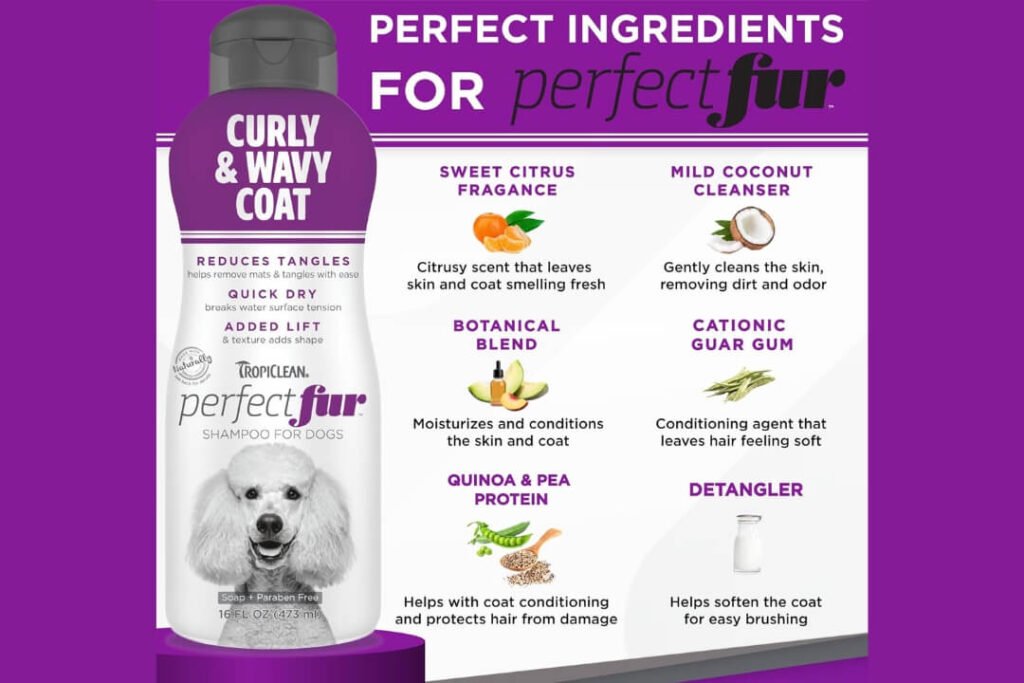
- The Chemistry: Formulated exclusively for Poodles, Bichons, and Doodles, this shampoo uses a highly specific blend of plant proteins (like Quinoa extract). Instead of coating the outside of the hair with heavy silicones, the small-molecule proteins penetrate the porous Poodle hair shaft to build volume from the inside out. It is pH-balanced specifically for canine skin.
- Best For: Everyday pet owners, Miniature/Toy Poodles, and dogs prone to tight friction-matting under their collars or armpits.
- The Reality Check: It lifts the hair beautifully and dries remarkably fast because it doesn’t leave a humectant film on the coat.
3. The Reconstructor: iGroom Texturizing Volumizing Shampoo
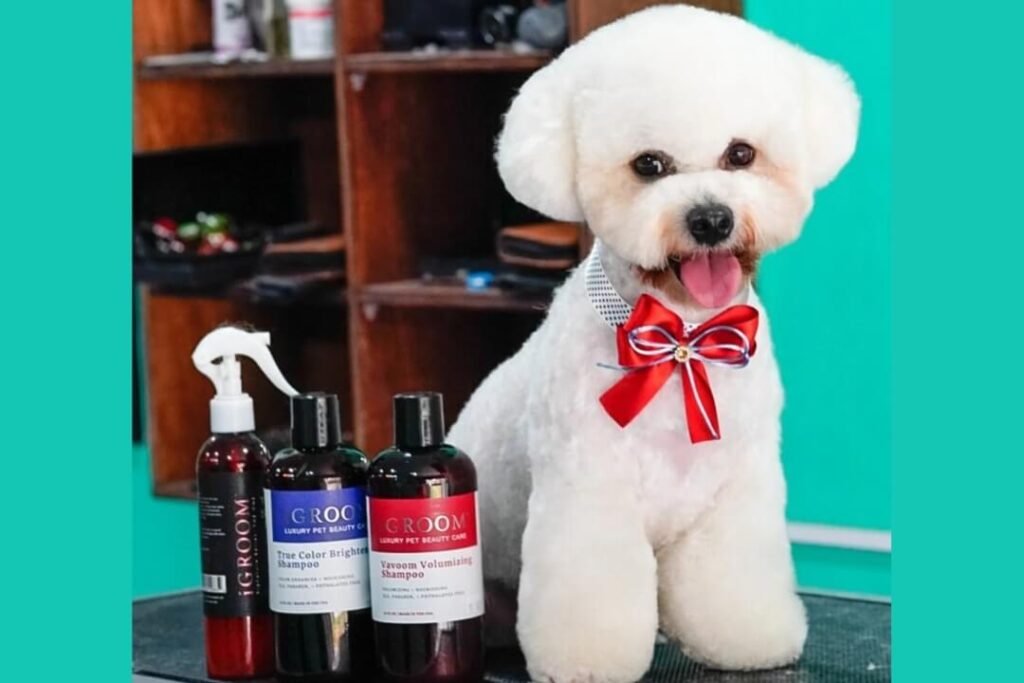
- The Chemistry: Poodle hair is porous and takes a beating from constant blow-drying and slicker brushing. iGroom uses a complex keratin blend that temporarily spackles the micro-tears in the damaged hair shafts, creating an incredibly dense, thick-feeling coat that stands at attention.
- Best For: Poodles with thin, wispy, or damaged coats that struggle to hold a shape.
4. The Dermatological Specialist: For Sebaceous Adenitis and Severe Flaking
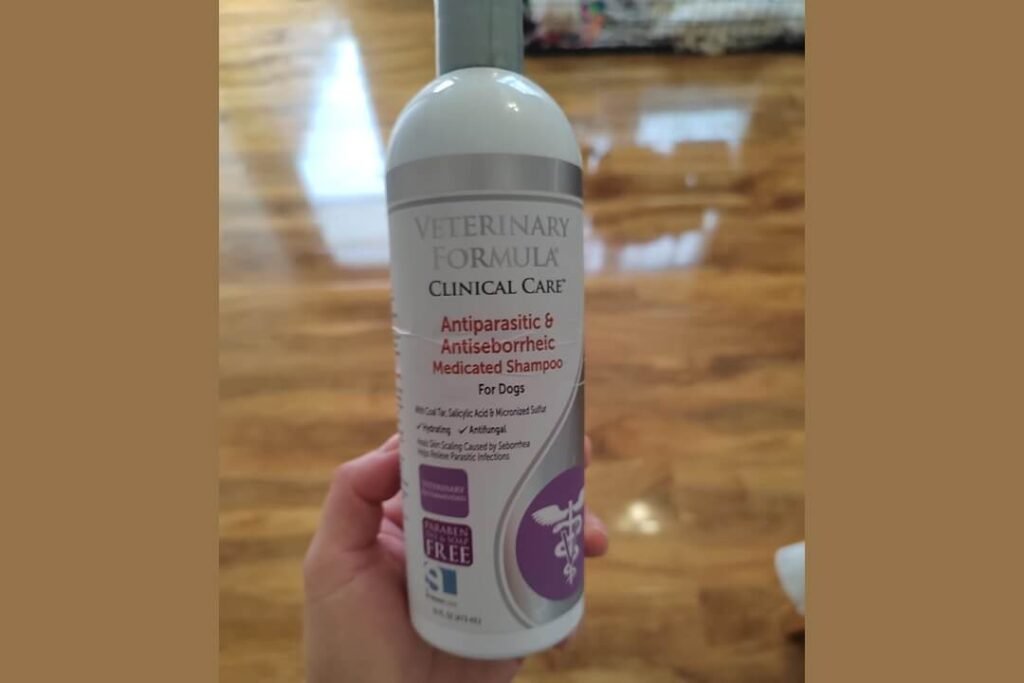
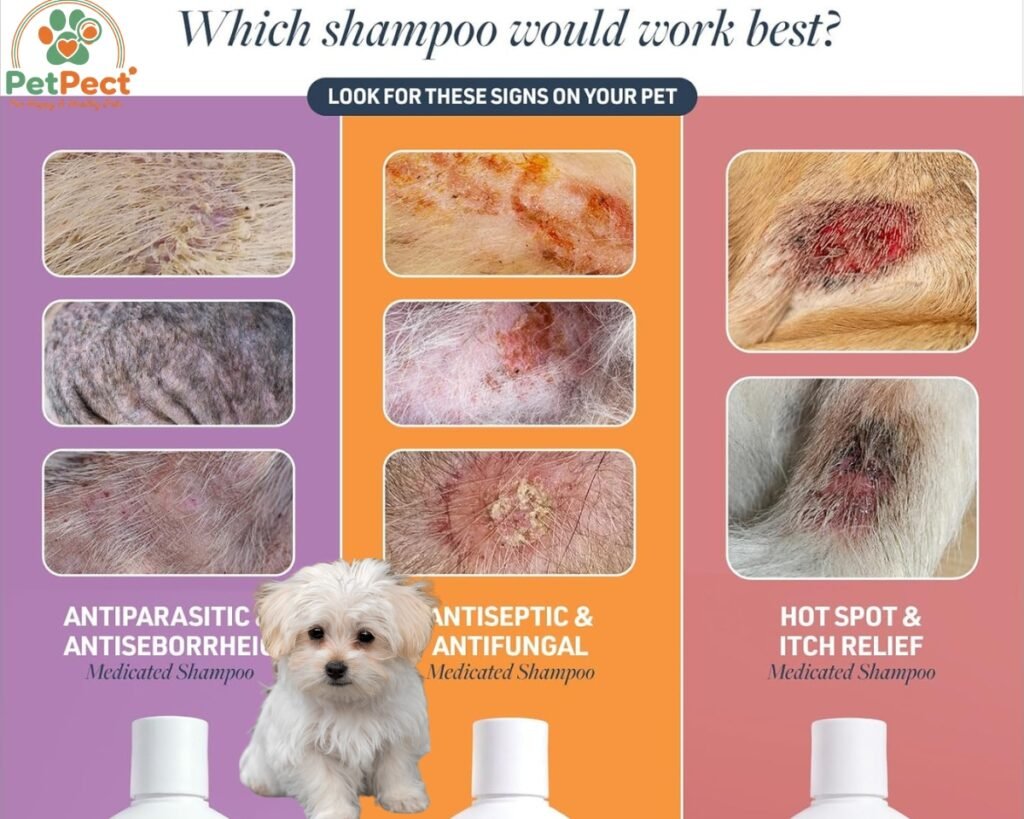
Top Pick: Veterinary Formula Clinical Care Antiparasitic & Antiseborrheic
- The Chemistry: Sebaceous Adenitis creates thick, crusty scales on the skin. You cannot wash this away with oatmeal. You need Coal Tar, Salicylic Acid, and Micronized Sulfur. This formula acts as a keratolytic—meaning it chemically dissolves the thick keratin scales so the skin beneath can actually breathe and heal.
- Crucial Step: This is a medical treatment, not a cosmetic wash. You must leave it on the skin for a full 10-minute dwell time before rinsing, or the chemical exfoliation will not occur. Always consult your veterinarian before using medicated shampoos, as SA requires a comprehensive management plan.
Part 5: Real-Life Case Study — “Duchess” and the Invisible Pelt
The Client: Duchess, a 2-year-old Miniature Poodle.
The Issue: The owner came to me in tears. She swore she brushed Duchess every single night, but I had to shave the dog totally bald. Why? Duchess was suffering from “pelting.” The top inch of her hair was fluffy and brushed, but the half-inch closest to her skin was a solid, impenetrable sheet of felted hair.
My Diagnostic: I asked the owner what shampoo she was using at home. She proudly showed me a bottle of a high-end, human-grade “Deep Moisture Detangling” shampoo.
The Fix: This was a double problem. First, human shampoos are formulated for human skin pH (4.5-5.5) , not canine skin (6.2-7.4) . Using human shampoo disrupts the dog’s acid mantle, leaving the skin vulnerable to bacteria and yeast—which accelerates irritation and scratching. Second, these shampoos are loaded with heavy dimethicones (silicones). The combination meant the owner was effectively gluing Duchess’s shedding hair to her live hair deep at the root while simultaneously compromising her skin health. The brush was just gliding over the top of the silicone slick, never reaching the skin.
I banned the human products entirely. We switched Duchess to a lightweight, silicone-free texturizing shampoo formulated for canine pH (Chris Christensen Spectrum One), and I taught the owner the “Line Brushing” technique. Without the sticky silicone residue and with a healthy skin barrier, the shed hairs fell out naturally into the brush, and Duchess never matted again.
The Bottom Line on Poodle Coats
Owning a Poodle means you own a high-maintenance, continuous-growth coat. Stop fighting the curls with cheap 2-in-1 products or—worse—human shampoos that disrupt your dog’s skin health.
Remember the golden rule: Moisture is the enemy of structure.
Use the Curl-Core Protocol to safely wash the coat without felting it. Use the Diagnostic Chart to identify your Poodle’s specific needs. Maintain the crisp texture with the right protein-based, pH-balanced shampoos. Smooth the cuticle with the Acid-Cut rinse at the proper dilution. And always, always fluff-dry.
Do this, and your Poodle will have that legendary, velvety, show-dog coat that turns heads at the park—without the matting, without the static, and without the tears.
Related Post: Best Dog Shampoo for Golden Retrievers: A Professional Groomer’s Review 2026